Facing an Urgent Crisis, Economic Authorities Shift to Emergency Mode Amid Surging Oil Prices, Inflation, and Exchange Rates
- Input
- 2026-03-09 17:51:23
- Updated
- 2026-03-09 17:51:23
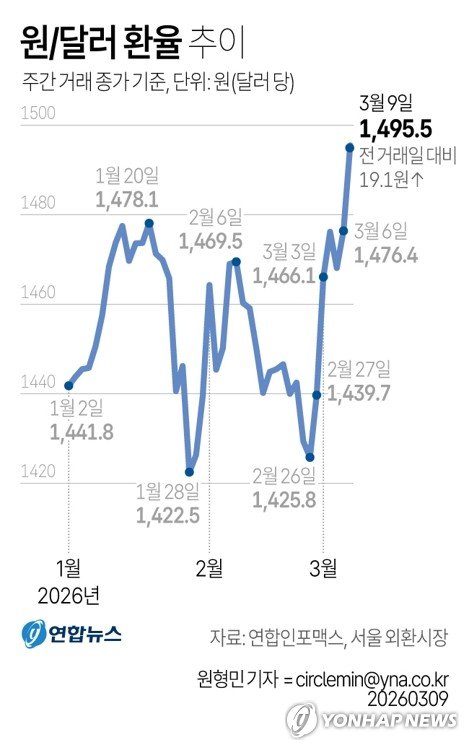
According to The Financial News, international oil prices driven up by the U.S.–Iran war have climbed above 110 dollars per barrel, sharply increasing the impact on the real economy and prompting economic authorities to effectively switch to an emergency posture. The won–dollar exchange rate has also surged past the 1,490-won range, reaching its highest level since the global financial crisis. If the situation deteriorates further, the authorities may have to abandon their previous optimistic outlook and substantially revise economic strategy to respond to stagflation, a combination of high inflation and economic slowdown, amid the triple burden of high oil prices, high inflation, and a strong dollar. The Lee Jae-myung administration’s crisis-response policy in its second year is now facing a major test.
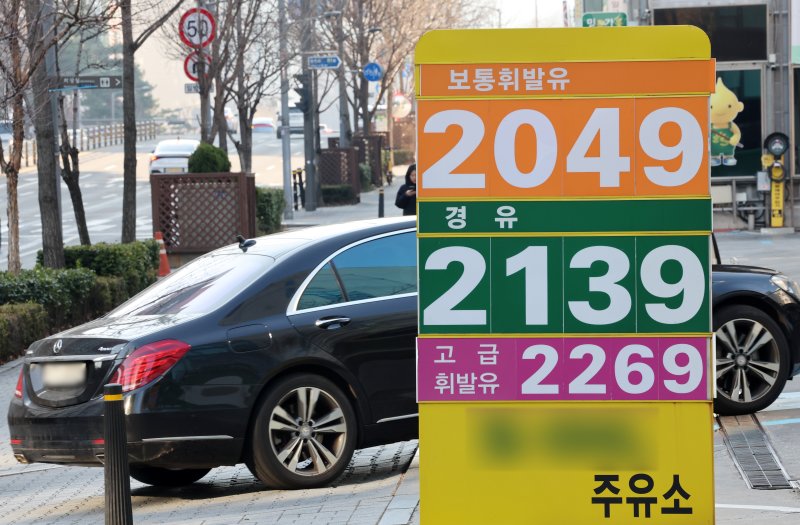
On the 9th, the government decided that, to stabilize the prices of petroleum products such as gasoline and diesel that have surged in recent days, it will start procedures this week to designate maximum prices for petroleum products, while at the same time cutting fuel taxes and providing direct support to consumers.
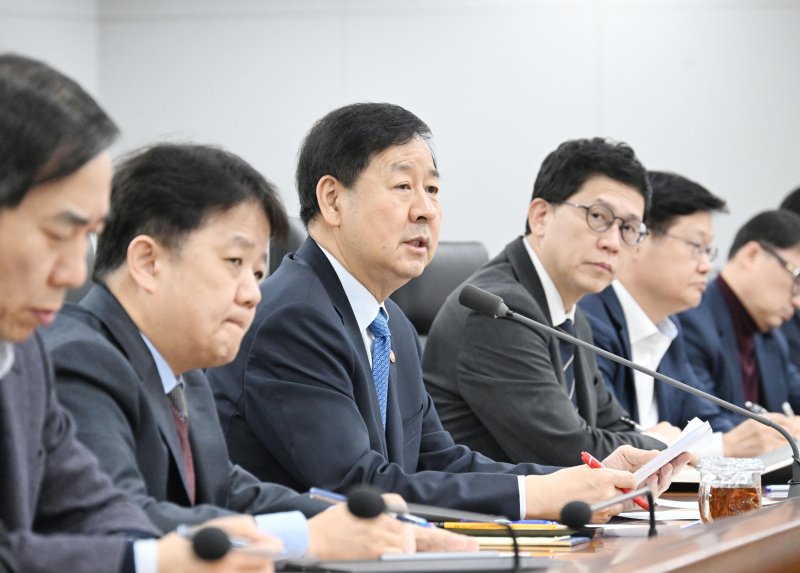
At the Emergency Economic Review Meeting convened that day by President Lee Jae-myung, economic authorities reported these measures, and the president ordered them to "swiftly carry out the relevant procedures." The Ministry of Finance and Economy, the Korea Fair Trade Commission (KFTC), and other related ministries immediately began implementing the measures.
Economic authorities are seeking additional measures to minimize the blow to the real economy. They had originally set this year’s targets at 2% growth and 2.1% inflation, based on oil prices staying in the 60-dollar range, but the U.S.–Iran war has completely changed the economic landscape and created an urgent crisis. Earlier, the Ministry of Economy and Finance (MOEF), in its economic growth strategy released in January, projected that international oil prices, based on Dubai crude, would average 62 dollars per barrel this year, about 10% lower than last year’s 69 dollars.
Kim Jae-hoon, MOEF’s Director-General for Economic Policy, stated, "We are currently reviewing emergency measures under several different scenarios," adding, "Our immediate priority is to prevent the sharp rise in oil prices from spilling over into other consumer prices and the broader economy, through steps such as designating maximum prices for petroleum products and cutting fuel taxes."
One of the government’s key price-stabilization tools in this crisis is a reduction in fuel taxes. Authorities are expected to significantly lower fuel taxes to the legal ceiling—up to 37%—within the next two to three weeks, the period during which international oil price shocks typically begin to feed through to the real economy.
The government is currently maintaining fuel tax cuts of 7% on gasoline and 10% on diesel, and still has room to lower them further up to the maximum 37% reduction allowed without amending the law. Fuel tax cuts can be implemented relatively quickly by revising the Enforcement Decree of the Transportation, Energy and Environment Tax Act and approving the change at a Cabinet meeting. The same approach was used after the Russo-Ukrainian War broke out in February 2022. In the second half of that year, the government raised the fuel tax cut from 30% to the legal maximum of 37%.
At the same time, designating maximum prices for petroleum products is a measure under the Petroleum and Alternative Fuel Business Act, which allows the government to set price ceilings by public notice. However, both before and after such ceilings are imposed, there are concerns about significant friction and side effects, including the need for fiscal spending and compensation for corporate losses.
On this point, Shin Se-don, an economics professor at Sookmyung Women's University, commented, "When the government sets a maximum price for fuel, the key issue is what level it chooses. If it is set at 2,000 won per liter, consumers will feel almost no benefit, but if it is set at 1,500 won, the losses for refiners will be substantial," adding, "It will be very difficult to determine an appropriate benchmark."
In addition, the government can also lower the tariff rate applied under the tariff quota system on crude oil. Reducing the quota tariff rate would cut import costs, which in turn could lower domestic prices of petroleum products such as gasoline, ease fuel cost burdens, reduce transportation and logistics expenses and manufacturing costs, and thereby help alleviate overall inflationary pressure.
Under the 2026 regular tariff quota operation plan, tariff rates on certain fuel types, including liquefied natural gas (LNG) for residential heating, are being kept at the same level as this year, between 0% and 2%, through the first half of the year. MOEF had expected international oil prices to stabilize downward and planned to reduce the extent of the tariff cuts from July, applying a 1% tariff quota rate, but this plan may now need to be adjusted.
If the situation in the Middle East worsens and drags on, the government may also deploy additional tools, such as recovering penalties under the Price Stabilization Act, alongside designating maximum prices under the Petroleum and Alternative Fuel Business Act.
At the same time, economic authorities plan to release stockpiled reserves to manage supply and demand so that anxiety does not trigger speculative demand or hoarding. The Ministry of Trade, Industry and Resources is working on phased releases of strategic oil reserves that can have an immediate impact, in line with its emergency response scenarios.
Economic authorities are also cracking down hard on businesses that exploit the turmoil to raise prices excessively, reduce product quantities, hoard goods, or engage in collusion, issuing repeated warnings to the market. There is speculation that strong measures such as imposing penalties or ordering price readjustments could be announced as early as the first half of the year.
The Korea Fair Trade Commission (KFTC), the competition authority, is conducting intensive inspections of processed foods such as instant noodles that use sugar, flour, and starch syrup as raw materials, as well as the petroleum market. Given that it typically takes at least six months from investigation to actual sanctions, immediate penalties such as fines appear unlikely. However, officials expect that rigorous investigations alone will help restrain price hikes and stabilize perceived inflation, so such broad-based measures are likely to continue for the time being.
In addition, public utility charges such as electricity and city gas rates, which are set in the second quarter, are almost certain to be frozen to help stabilize prices. As the government has pledged to maintain an expansionary fiscal stance, the likelihood has also grown that it will draw up an extra budget of 10 to 20 trillion won to fund oil subsidies, energy supply measures, and other support.
Ju Won, Head of Economic Research Department at Hyundai Research Institute, noted, "Now that there is a clear justification in the form of an economic downturn, if all else fails the government will have no choice but to inject money, and the likelihood of an extra budget in the first half of the year has increased further."
Experts also agree that a prolonged war around the Strait of Hormuz, a vital chokepoint for global oil shipments, and the expansion of the conflict across the Middle East represent a shock that could exceed the impact of the Russo-Ukrainian War.
SONG Yeongkwan, a senior research fellow at the Korea Development Institute (KDI), said, "The government is continuously warning against price collusion and signaling that it will closely monitor capital and foreign exchange markets," adding, "In a domestic market where oil prices and exchange rates are highly volatile, reassuring foreign investors is crucial."
Ju Won added, "With international oil prices already having risen to 119 dollars per barrel due to the war, we are now in an economic crisis," and warned, "If the war drags on for more than a month, it will be inevitable to revise down the 2% growth forecast."
[email protected] Jung Sang-geun, Kim Chan-mi Reporter