Trump Seen Pursuing Cuban-Style ‘Perestroika’ Rather Than Military Operation [Yoon Jae-joon’s World View]
- Input
- 2026-03-10 04:00:00
- Updated
- 2026-03-10 04:00:00
According to The Financial News, there has been growing speculation that the administration of Donald Trump, which arrested and transferred Venezuelan President Nicolás Maduro and his wife on January 3, has now set its next regime-change target on Cuba.
Trump, who is currently conducting joint military operations with Israel against the Islamic Republic of Iran, has repeatedly indicated that Cuba will be his next diplomatic and military focus, and has calculated that the collapse of the Cuban regime is only a matter of time.
However, on the 8th (local time), USA Today reported that the Trump administration is not seeking to overthrow Cuba’s communist government by force. Instead, it is pursuing regime change through economic negotiations that prioritize U.S. interests and is trying to avoid a full-scale confrontation.
The Trump administration is reportedly trying to nudge Havana toward reforms similar to the Perestroika-style market changes that the former Soviet Union undertook in the late 1980s, reforms that ultimately contributed to its collapse. U.S. Secretary of State Marco Rubio, who is of Cuban descent, and other officials are said to have been holding talks with Cuba.
The White House declined to comment on reports that Rubio and other U.S. negotiators held a secret meeting with Raul Guillermo Rodriguez Castro, the grandson of former President Raúl Castro, but senior U.S. officials did not completely deny that such a meeting took place.
The paper reported, citing sources, that the Trump administration is preparing economic negotiations with Cuba and that an announcement could come soon.
After Maduro’s arrest, Trump said that Cuba would collapse once it could no longer depend economically on Venezuela and that a military operation would not be necessary.
On the 6th, Trump again stressed that he is now focused on Cuba, saying it "will collapse soon."
On the 7th, he commented that Venezuela had successfully undergone a historic transition and added, "Cuba is now in its final moments. There will be a better life ahead," suggesting that the end of the communist system is approaching.
Ric Herrero, executive director of the Washington, D.C.-based nonprofit policy group Cuba Study Group, said the shift in U.S. policy from isolating Cuba to encouraging privatization is highly significant and expressed hope that it will also spare Cuba from a humanitarian crisis.
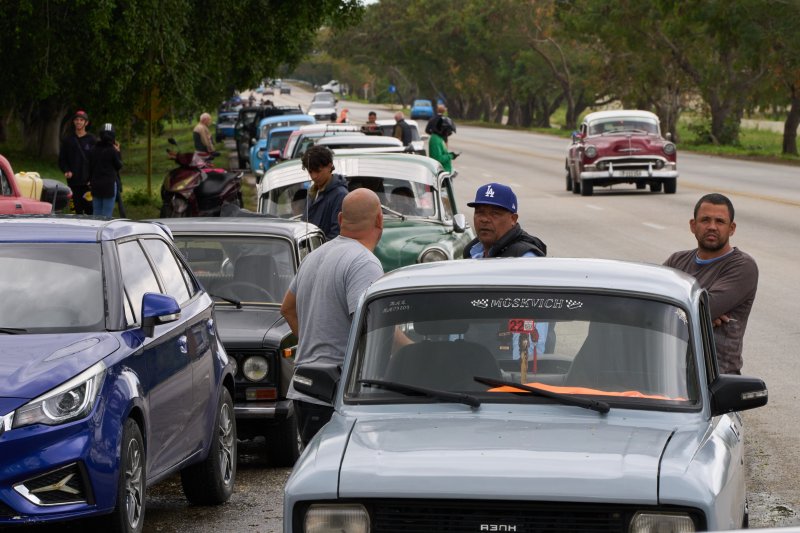
Cuba’s economy has been hit hard since Venezuelan oil supplies were cut off following Maduro’s arrest in January, leading to electricity shortages and other serious economic disruptions.
U.S. intelligence agencies believe that Cuba’s oil reserves will be depleted in a matter of weeks.
Although the detailed terms and exact timing of the talks remain unknown, USA Today reported that they could include easing restrictions on travel to Cuba for U.S. citizens.
The discussions also appear to cover allowing President Miguel Díaz-Canel to leave the country, guaranteeing that the Castro family can remain in Cuba, and negotiations over ports, energy and tourism.
The U.S. government has also hinted at the possibility of partially lifting sanctions on Cuba.
It remains unclear what, in return, Washington is ultimately seeking to obtain from Cuba.
During the administration of Barack Hussein Obama II, the United States restored diplomatic relations with Cuba, and cruise ship and commercial flight services were resumed.
There had been expectations that the Cuban government would follow the path of Vietnam or China by opening up to trade and foreign investment, but it has refused economic reform and clung to communist ideology.
As a senator, Rubio had been a fierce critic of the Obama administration’s conciliatory policy toward Cuba.
USA Today noted that it will be important to watch how Cuban immigrants concentrated in Miami, Florida, respond, given that they have long opposed any contact between the U.S. government and Cuban officials or state-owned enterprises.
In Cuba, an estimated 11,000 small and medium-sized private businesses are operating, ranging from restaurants to online delivery services, mainly in the capital Havana.
John Kavulich, head of the U.S.-Cuba Trade and Economic Council founded in 1994, predicted that the White House is more likely to adopt a strategy of bankrupting Cuba than one of fostering Perestroika-style reforms.
USA Today reported that most visible traces of the 1959 Cuban Revolution have either disappeared or faded, and that Ramiro Valdés, a former vice president and close associate of Fidel Alejandro Castro Ruz and his brother, is now in his 90s. It argued that this situation, combined with the suffering of the Cuban people and the oil embargo, has created a golden opportunity for the Trump administration to bring about meaningful change in Cuba.
Robert L. Muse, a lawyer specializing in U.S.-Cuba trade, said it is a wise choice to try to drive these changes through the private sector.
“In Cuba, there is a growing sense that this year is a year of decision,” Muse said, adding, “This is a stepping stone toward fundamental economic reform in Cuba.”
[email protected] Yoon Jae-joon Reporter