Revolution That Toppled the Monarchy Tarnished by Hereditary Succession: Mojtaba Khamenei Rises
- Input
- 2026-03-09 08:41:49
- Updated
- 2026-03-09 08:41:49
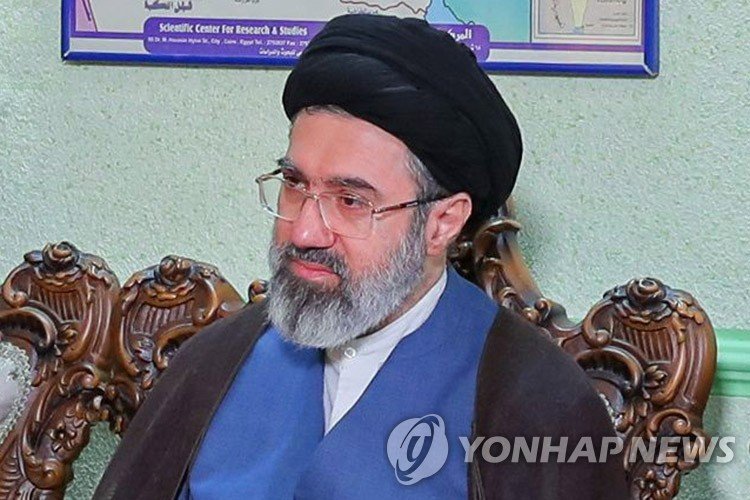
[Financial News] The power vacuum at the top of Iran’s political system was filled quickly after the death of Ali Hosseini Khamenei. On the 8th (local time), the Assembly of Experts elected his second son, Mojtaba Khamenei, as the new Supreme Leader of Iran, setting the core axis of Iran’s power structure back in motion. Mojtaba has long wielded influence from within his father’s inner circle, coordinating military and intelligence affairs and maintaining close ties with the Islamic Revolutionary Guard Corps (IRGC). With this election, he has become Iran’s ultimate authority, both as religious leader and commander-in-chief of the armed forces. Observers say this underscores both continuity in Iran’s power structure and the growing clout of the military. Given the sweeping powers of the Supreme Leader of Iran, his rise is expected to have a significant impact on the country’s foreign policy and military strategy.
From "shadow power" to the pinnacle of authority
Mojtaba Khamenei is the second of four sons of Ali Hosseini Khamenei and has long overseen day-to-day operations at the Office of the Supreme Leader of Iran, the nerve center of Iran’s power, also known as the House of the Leadership (Beit-e Rahbari). Rather than holding formal state office, he has exercised control from behind the scenes, supervising military and intelligence affairs as a "shadow power." He emerged as a key hardliner after being accused of orchestrating the crackdown on protests during the 2009 Green Movement.
His strongest asset is his close relationship with the IRGC. The IRGC is not only the backbone of Iran’s military power but also an extra-legal organization that dominates the country’s political and economic spheres. Mojtaba has built a tight network with the Intelligence Organization of the Islamic Revolutionary Guard Corps (SAS). This connection became a decisive factor in his being chosen as successor over his brothers.
Experts describe Mojtaba as more military-friendly than his father and as someone with strong hands-on intelligence capabilities. Many analysts predict that under his leadership, Iran’s politics will be driven less by religious rhetoric and more by military pragmatism.
Revolutionary ideals collide with accusations of hereditary rule
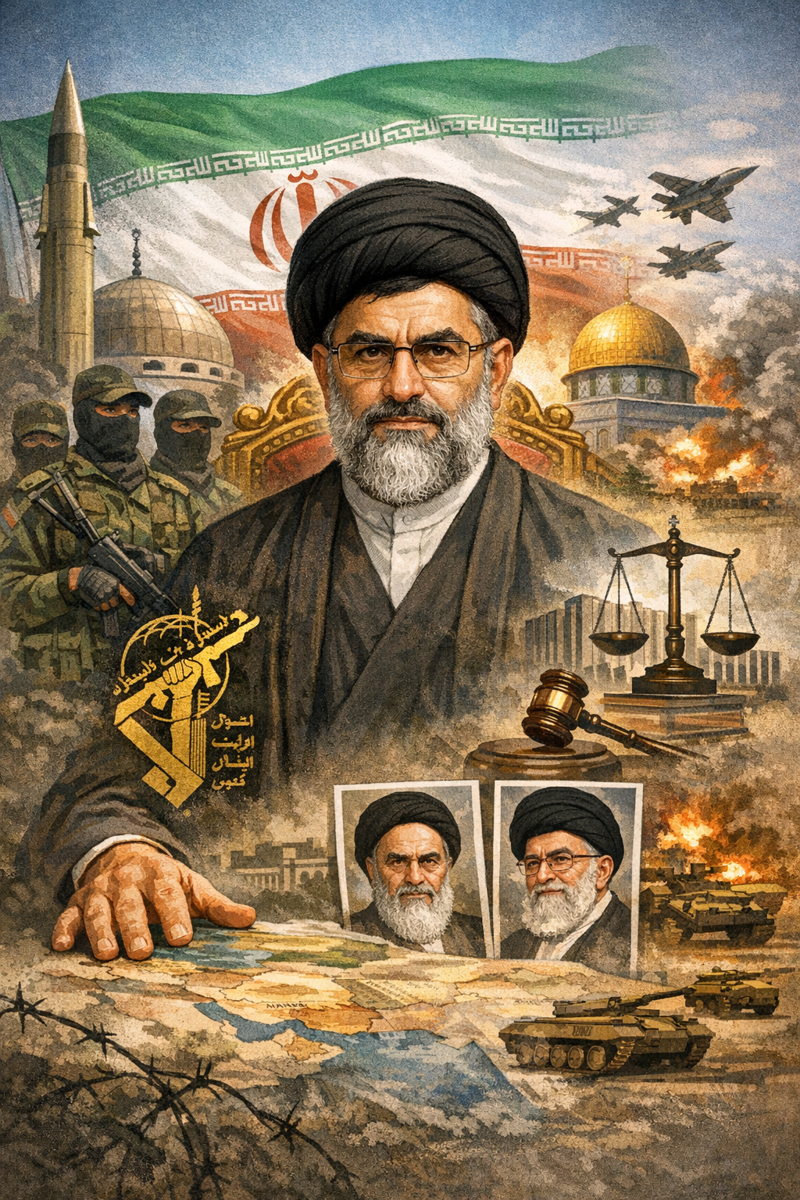
The central controversy surrounding this succession is its legitimacy. The Iranian Revolution of 1979 began by dismantling the hereditary system of the Pahlavi monarchy. The first Supreme Leader of Iran, Ruhollah Khomeini, upheld the principle that "there is no hereditary succession in the Islamic system." For this reason, critics argue that the elevation of his second son, Mojtaba, amounts to a denial of the revolution’s founding ideology.
Inside Iran, Mojtaba’s rise is increasingly being condemned as the "monarchization" of a theocratic regime. In a past report, Mehdi Khalaji, a senior fellow at The Washington Institute for Near East Policy, wrote that "Mojtaba’s ascent marks a transformation of Iran’s political system from religious authority to military dictatorship." Perhaps mindful of such criticism, the Assembly of Experts has tried hard to bolster his religious legitimacy, including by elevating his clerical rank from Hojjatoleslam to Ayatollah during the selection process.
At the apex of state power: unchecked authority of the Supreme Leader
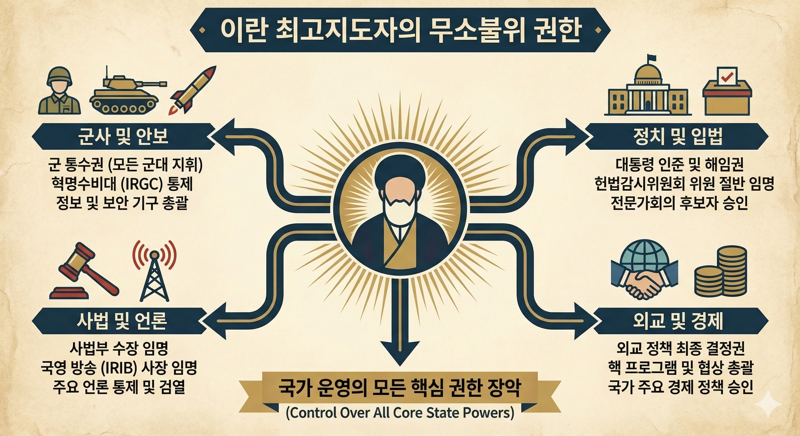
Under Iran’s constitution, the Supreme Leader of Iran is the highest authority in the state. The President of Iran heads the executive branch, but ultimate decision-making power rests with the Supreme Leader. In his role as commander-in-chief, he controls both the regular army and the IRGC and directly oversees the intelligence services and national security apparatus. He also wields sweeping appointment powers, including naming the head of the judiciary, the head of state broadcasting, and half of the members of the Guardian Council.
The Supreme Leader’s influence over foreign policy is equally decisive. Strategic choices that determine the country’s fate—such as whether to continue the nuclear program or how to manage relations with Israel and the United States of America (US)—are ultimately made by the Supreme Leader. Because Mojtaba has risen to power with the full backing of the IRGC, there is a high risk that Iran’s foreign policy will become more aggressive and rigid. Support is expected to increase for the so-called Axis of Resistance, including in the Syrian Arab Republic, Lebanon, and the Republic of Yemen, a trend likely to further destabilize the Middle East.
Tested by public discontent and Trump’s pressure
The situation facing Mojtaba Khamenei is far from easy. Years of Western economic sanctions and chronic inflation have pushed public sentiment to a breaking point. Younger generations, especially Generation Z, show strong resistance to strict religious rules and authoritarian governance. The mass protests triggered by the Death of Mahsa Amini in 2022 exposed deep structural fissures within the Iranian system.
With a weak base of popular support, Mojtaba effectively has two main options. The first is a pragmatic course: swiftly engaging in nuclear negotiations with the West to revive the economy. However, this would likely provoke backlash from hardliners in the IRGC who support him. The second is to intensify rule by fear to suppress domestic discontent. Given his track record, many observers believe he is more likely to choose the latter path.
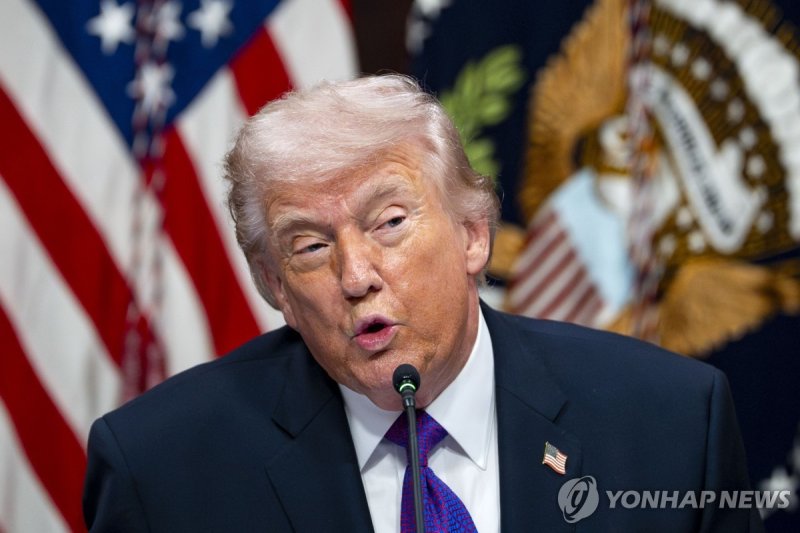
Meanwhile, former US President Donald Trump issued a public warning regarding the selection of Iran’s next Supreme Leader of Iran, declaring that "it must receive approval from the United States" and adding, "otherwise, it will not last long."
[email protected] Kim Kyung-min Reporter