U.S. and Israel Consider Special Operation to Secure Iran’s Nuclear Material
- Input
- 2026-03-09 06:05:02
- Updated
- 2026-03-09 06:05:02
[The Financial News] The United States and Israel are reportedly considering deploying special forces to secure the Islamic Republic of Iran’s Highly Enriched Uranium (HEU). If carried out, the mission would involve sending ground troops into Iranian territory in the middle of a war, raising the risk of a major turning point in the conflict in the Middle East.
Axios reported on the 7th (local time), citing multiple sources, that the United States and Israel have been discussing a special operation in the later stages of the war to secure the Islamic Republic of Iran’s HEU.
The core objective of the operation is about 450 kilograms of 60% enriched HEU held by the Islamic Republic of Iran. Uranium enriched to 60% is considered near weapons-grade and can be further enriched to 90%, the weapons-grade level, within weeks. Experts estimate this amount could be used to produce roughly 11 nuclear bombs.
Separately, the Islamic Republic of Iran is believed to possess more than 8,000 kilograms of Low-Enriched Uranium (LEU). Analysts say that if its enrichment capacity is restored, the enrichment level of this material could be increased further.
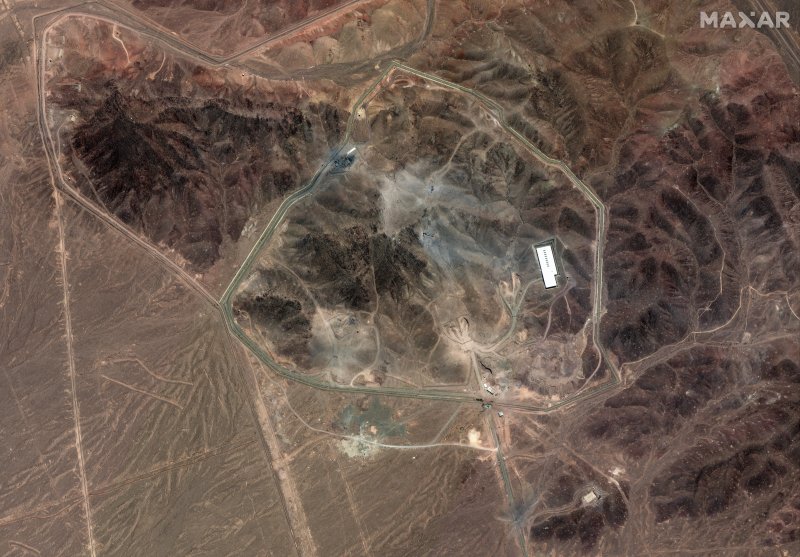
Most of the Islamic Republic of Iran’s HEU is thought to remain in underground tunnels at the Isfahan nuclear facility. Some is reportedly dispersed among the Fordow Uranium Enrichment Plant, the Natanz Nuclear Facility, and other sites. These facilities were targeted in airstrikes by the United States and Israel last year.
Before the airstrikes, inspectors from the International Atomic Energy Agency (IAEA) visited the declared nuclear facilities at least once a day. However, monitoring activities were suspended after the strikes, making it more difficult to track the precise location of the HEU, according to observers.
According to estimates by U.S. regulatory authorities, the HEU could be stored in 16 cylinders, each about 91 centimeters tall. Each cylinder would contain around 25 kilograms, light enough to be transported by vehicle or carried by a person.
The United States and Israel are said to be weighing options that include removing the uranium from the Islamic Republic of Iran and reducing its enrichment level on site. Scientists from the International Atomic Energy Agency (IAEA) may also take part in the operation.
However, the operation is likely to proceed only if it is determined that the Iranian military’s ability to respond has been significantly degraded. It has not yet been decided whether the mission would be carried out by the U.S. military, the Israel Defense Forces (IDF), or as a joint operation.
President of the United States Donald Trump has also not ruled out the possibility of deploying troops. Speaking to reporters aboard Air Force One that day, he said, "Not right now, but at some point we might do that."
Trump also stated that Iran’s military capabilities would have to be severely weakened before any ground deployment. "If we do that, they will have suffered so much damage that they will not even be capable of fighting a ground war," he said.
The New York Times noted, "The fact that the U.S. government is publicly mentioning the possibility of sending ground troops may be intended as a message to pressure Iran to give up its stockpile of uranium."
[email protected] Kim Kyung-min Reporter