"Oil Tops $100"... Retail Investors Leveraged on KOSPI Face a Terrifying Monday [MZ Money Diary]
- Input
- 2026-03-09 07:40:27
- Updated
- 2026-03-09 07:40:27
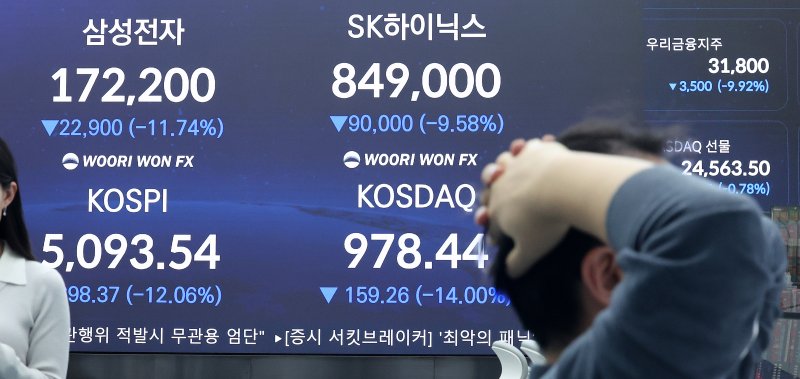
According to The Financial News, geopolitical tensions in the Middle East are sharply amplifying volatility in the domestic stock market. Over the past four trading days, more than 3,000 volatility interruption mechanism (VI) events were triggered in the KOSPI Market, while the KOSPI repeatedly swung between steep declines and rebounds. During this period, both investor trading activity and transactions in leveraged products increased significantly.
Meanwhile, international oil prices have broken above $100 per barrel, and futures on the New York Stock Exchange (NYSE) are tumbling ahead of the week’s opening session. The KOSPI, which is set to open soon, is also expected to experience sharp swings.
VI triggered 3,314 times in four days... up to six times the norm
The Middle East crisis has dramatically widened price swings in individual stocks.
According to the Korea Exchange’s information and data system on the 9th, a total of 3,314 volatility interruption mechanism (VI) events were triggered in the KOSPI Market between the 3rd and the 6th. That works out to an average of 828.5 events per day.
This figure includes not only stocks but also beneficiary certificates, Exchange-Traded Funds (ETF), and Exchange-Traded Notes (ETN).
In January and February this year, the average daily number of VI triggers in the KOSPI Market was 134.3 and 183.4, respectively. The number of activations over the past four days is roughly four to six times higher than usual.
Among individual products, the "NH N2 Monthly Leverage Defense Industry Top5 Exchange Traded Note 92" recorded the highest number of VI events, with 83 triggers during this period. This ETN is structured to deliver twice the performance of the "iSelect Defense Industry Top5 TR Monthly Leverage Index." It was followed by ▲ NH N2 Defense Industry Top5 ETN with 42 events ▲ Kiwoom Leverage K-Defense TOP5 ETN with 35 ▲ N2 Inverse 2X KOSDAQ150 Futures ETN with 33 ▲ Korea Investment Inverse 2X KOSDAQ 150 Futures ETN with 31 ▲ Hana Leverage K-Defense TOP10 ETN with 27.
During the same period, the KOSDAQ market also showed high volatility, with 3,294 VI events triggered.
Sidecars and circuit breakers activated... market plunges then surges
As market volatility widened, index-stabilizing mechanisms were also repeatedly activated.
In this period, the KOSPI saw one buy sidecar and two sell sidecars triggered. In the KOSDAQ market, there were two buy sidecars and one sell sidecar.
On the 4th, when selling pressure intensified sharply, a first-level circuit breaker was activated once each on both the KOSPI and KOSDAQ markets.
Recently, the domestic stock market has been swinging wildly amid escalating tensions in the Middle East. The KOSPI fell 7% on the 3rd after reports of clashes between the United States and Iran, then plunged 12% on the 4th, marking the largest single-day drop on record.
On the 5th, however, bargain hunting flowed in and the index rebounded 9.6%. This was the biggest daily gain since the 2008 global financial crisis.
KOSPI turnover up 43%... brisk rotation among investors
As the market repeatedly surged and plunged, trading among investors also increased sharply.
According to the Korea Exchange, the average daily turnover ratio of listed shares on the KOSPI market from the 1st to the 5th of this month was 2.38%. Compared with last month’s average of 1.66%, this represents an increase of about 43%.
The turnover ratio is calculated by dividing trading volume over a given period by the number of listed shares. A higher ratio indicates more active trading between investors.
Brokerage analysts note that as volatility rises, short-term trading tends to increase.
With tensions in the Middle East escalating, trading has been concentrated in energy-related stocks.
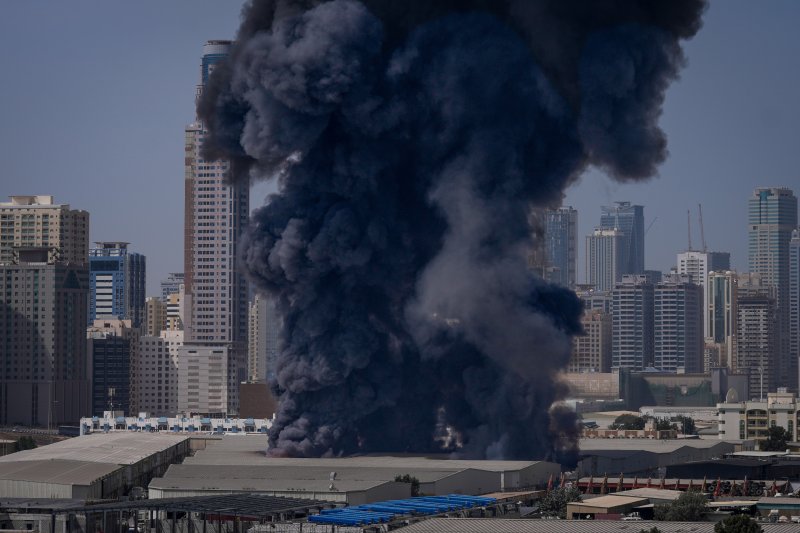
After the United States and Israel carried out airstrikes on Iran, Tehran raised the possibility of closing the Strait of Hormuz, through which about 20% of the world’s crude oil and liquefied natural gas (LNG) shipments pass. This has heightened concerns over disruptions to energy supplies.
From the start of this month through the 5th, the stock with the highest turnover ratio was Hung-gu Oil, a refining-related name, at 471%. Other top refinery-related stocks included ▲ Korea ANKOR Oilfield at 345% ▲ Korea Petroleum Industries at 206% ▲ Kukdong Oil & Chemicals at 171%. Gas-related stocks also saw active trading on expectations of higher natural gas prices, including ▲ GSE at 241% and ▲ Daesung Energy at 120%. In addition, shipping stocks such as ▲ Heung-A Shipping at 194% and ▲ STX Green Logis at 178%, as well as defense names like ▲ Victek at 289% and ▲ Hanil Forging at 116%, all recorded high turnover ratios.
Trading in leveraged and inverse ETFs surges
As index volatility expanded, trading in leveraged and inverse ETFs also jumped sharply.
From the beginning of this month through the 5th, the KODEX Leverage ETF recorded an average daily trading volume of 38,531,798 shares. That is about 66% higher than last month’s average of 23,224,664 shares.
The KODEX 200 Futures Inverse 2X ETF, which aims to deliver twice the inverse daily return of the KOSPI 200, posted an average daily trading volume of 8,495,320,000 shares over the same period. This is roughly 175% higher than last month’s average of 3,087,640,000 shares.
Experts warn that with geopolitical tensions elevated, stock market volatility is increasing, and investors should be cautious when using leverage. They also predict that developments in the Middle East and movements in global energy prices will be key variables shaping the future direction of the domestic stock market.
[email protected] Han Seung-gon Reporter