Editorial: Samsung Electronics Union Threatens to Make Non-Strikers ‘Top Priority’ for Dismissal
- Input
- 2026-03-08 19:11:13
- Updated
- 2026-03-08 19:11:13
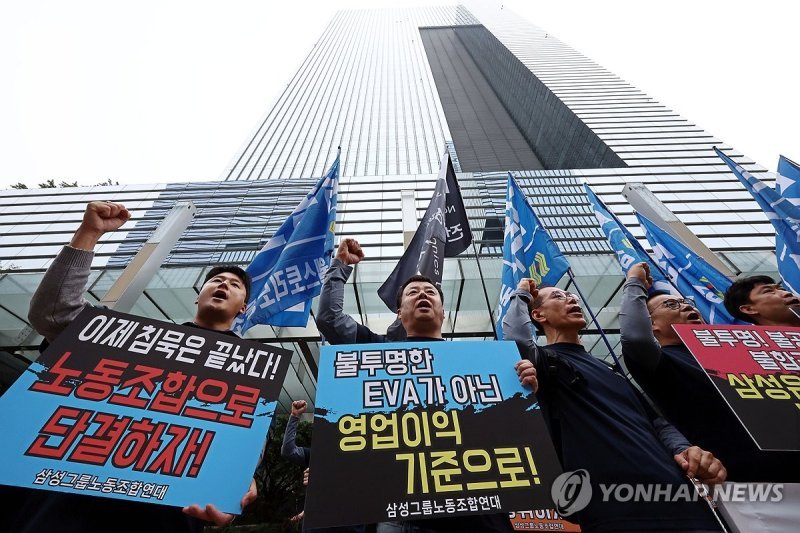
A union’s right to strike is a legitimate right guaranteed by the Constitution and by law. Workers may use collective action to demand better wages and working conditions, and strikes are one of the means to press such demands. However, whether to join a strike or not must also be decided by each worker according to their own free will. While a union may encourage participation, pressuring non-participants by stigmatizing them or hinting at disadvantages risks infringing on individual freedom. The purpose of labor rights is to protect workers’ interests through collective power while still respecting individual choice.
The Samsung Electronics labor union has warned of a general strike because labor-management conflict over wages and the performance bonus system remains unresolved. Since late last year, labor and management have held several rounds of negotiations, but they have failed to narrow their differences over whether to scrap the cap on the excess profit performance bonus, the company’s main performance-based incentive, known as the Overall Performance Incentive (OPI). Management argues that the existing cap should remain in place, with only some adjustments to the calculation method. The union counters that compensation is insufficient compared with the company’s performance and is demanding an overhaul of the system. With talks breaking down, the union has moved to secure the legal right to strike and to prepare for a general walkout. As global technological competition intensifies, labor disputes are adding to management uncertainty.
The current business environment for Samsung Electronics is far from easy. The company’s performance itself is on an improving trend, helped by a recovery in the semiconductor market and growing demand for artificial intelligence (AI). Revenue and operating profit have risen sharply, reaffirming its competitiveness as a global company. Yet this is no time to be complacent about recent results. In key areas such as High Bandwidth Memory (HBM) and foundry, rivals are mounting an aggressive challenge, and technological competition is becoming even fiercer. On top of that, the global supply chain remains unstable, and geopolitical risks have been heightened by the situation in the Middle East. In January, Lee Jae-yong, Chairman of Samsung Electronics, also told executives, "This is no time to be complacent just because the numbers have improved a bit. It is our last chance to restore competitiveness."
In a situation where technological competition and management uncertainty are both growing, the union also needs to act with greater prudence. Samsung Electronics is a core company that underpins the global semiconductor market and the Korean economy. If a strike triggered by labor-management conflict becomes a reality, it could place a significant burden not only on the company’s competitiveness but on the broader economy as well. In particular, at a time when competition in AI semiconductors is intensifying, production disruptions and deepening internal conflict are the last things the company needs. Protecting workers’ rights is important, but that should not translate into pressure on fellow workers. The union should refrain from targeting non-participants in the strike and instead focus its efforts on finding solutions that allow both labor and management to coexist and prosper.