Russian Crude Oil Fetches Premium as Sanctions Ease; US Allows Indian Imports [US–Iran War]
- Input
- 2026-03-08 18:15:39
- Updated
- 2026-03-08 18:15:39
The Wall Street Journal (WSJ) reported on the 7th (local time), "Since the war with Iran, the structure of the global oil market has been shaken, and Russian President Vladimir Putin is once again expanding his influence in the energy market."
Demand for Russian crude oil has been rising rapidly in India, a major global energy importer. Until recently, Russian crude oil traded at a steep discount to North Sea Brent crude because of sanctions imposed by the US and its Western allies. Recently, however, some deals have shown Russian crude oil moving to a premium over Brent crude.
Analysts say this reflects intensifying competition among importing countries to secure supplies after the Strait of Hormuz was effectively blocked, sharply reducing shipments of Middle Eastern crude oil. With about 20% of the world’s seaborne crude volumes normally passing through the Strait of Hormuz, the disruption has caused major turmoil in global oil supply and demand.
The United States is also moving to ease some sanctions in an effort to contain the spike in oil prices. The U.S. Department of the Treasury (Treasury Department) recently relaxed certain restrictions to allow India to purchase Russian crude oil. Treasury Secretary Scott Bessent has hinted that further easing of sanctions is possible to stabilize prices.
Market observers warn that the longer the war drags on, the more dependent the world could become on Russian energy. Naveen Das, senior crude analyst at Kpler, said, "The longer the conflict lasts, the more the world will increase its reliance on Russian crude oil and refined petroleum products."
Vladimir Putin said on the 4th, "Iran’s attacks and Western sanctions on Russian crude oil are fueling the rise in oil prices," adding, "A new market is now opening up."
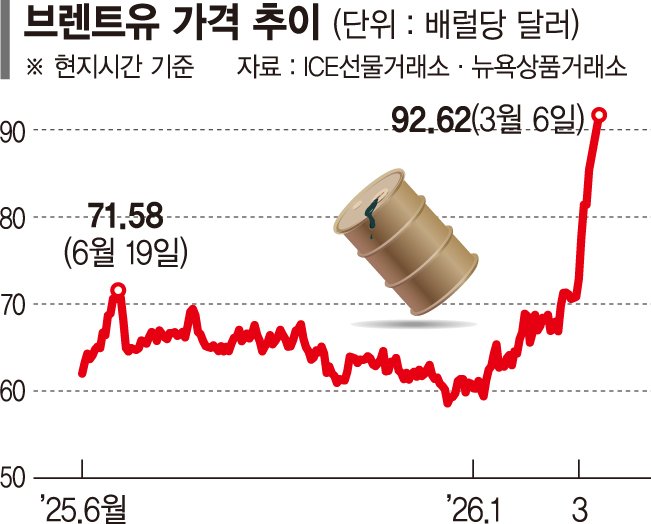
International oil prices have in fact soared since the war began. May futures for Brent crude, the global benchmark, jumped more than 8% in a single day on the 6th to close at $92.62 per barrel. The weekly gain reached about 28%. High prices usually benefit oil producers across the board, but some analysts say this crisis is different. With crude oil and natural gas shipments from the Persian Gulf region disrupted, Middle Eastern producers are facing constraints on both output and exports. If the war becomes protracted, Europe may be forced to reconsider its hard line on Russian energy. Since Russia’s invasion of Ukraine in 2022, Europe has worked to reduce its dependence on Russian energy, but a prolonged supply crunch could increase pressure to reverse course.