Toward KOSPI 8000: Mandatory Value-Up for Low PBR Stocks and a Floor on Inheritance and Gift Taxes
- Input
- 2026-03-08 14:13:35
- Updated
- 2026-03-08 14:13:35
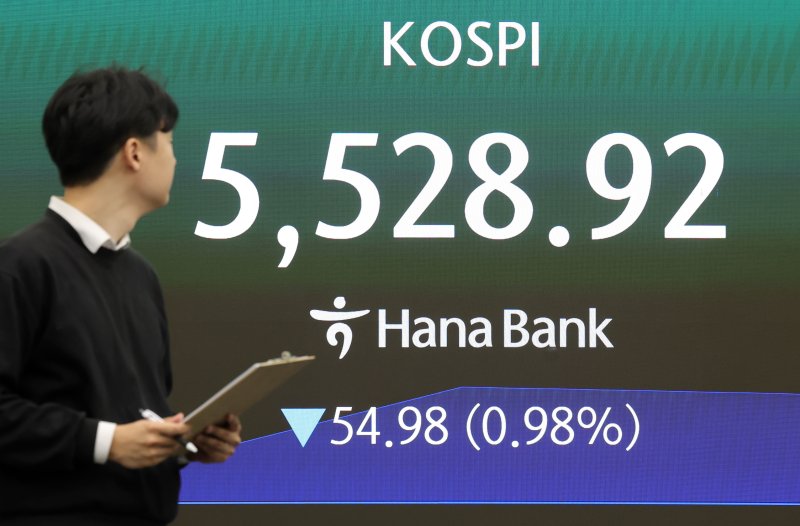
"We will usher in the era of KOSPI 6000, 7000, and 8000, and open a 'wealthy nation era' in which all citizens prosper."
This was a June local elections pledge announced by Jung Chung-rae, leader of the Democratic Party of Korea, at a press conference at the National Assembly of the Republic of Korea on the 8th. By securing power not only in the executive and legislative branches but also in local governments, he aims to accelerate reforms in the capital market. A concrete legislative direction has already been outlined: raising the corporate value of listed companies with low price-to-book ratios (PBR).According to political sources, the Democratic Party Special Committee on Korea Premium K-Capital Market is preparing additional legislation following three previous amendments to the Commercial Act of the Republic of Korea aimed at improving the capital market and corporate governance. The new package includes an amendment to the Inheritance Tax and Gift Tax Act to prevent deliberate share-price suppression, which President Lee Jae Myung has endorsed, and an amendment to the Financial Investment Services and Capital Markets Act that would mandate value-up disclosures modeled on Japan’s example.
First, the proposed amendment to the Inheritance Tax and Gift Tax Act would change the tax base for listed companies with a PBR below 0.8. Instead of applying up to a 20% premium on the current market price, the base would shift to a fair value assessment used for unlisted firms, with 80% of net asset value set as the floor. The intent is to prevent holding companies and others from repeatedly driving down share prices on purpose to reduce tax burdens when transferring management control.
President Lee had already called for swift passage of this amendment at an extraordinary Cabinet meeting on the 5th. He stated, "In the process of normalizing an undervalued market, fairness, rationality, and predictability are crucial," and urged, "To accelerate the normalization of corporate governance, please speed up necessary legislative efforts such as the law to prevent share-price suppression."
The amendment to the Financial Investment Services and Capital Markets Act would require listed companies whose PBR remains below 1 for more than two years to publicly disclose plans to enhance corporate value. These plans must spell out concrete measures, including how distributable profits will be used, dividend policies, plans for acquiring, retiring, or disposing of treasury shares, and business restructuring strategies. The goal is to ensure that the market value of listed companies generally exceeds their net asset value.
This amendment draws on legislation inspired by the Japan case. In 2023, the Tokyo Stock Exchange (TSE) requested companies with a PBR below 1 to submit improvement plans. As a result, investment inflows into the Japanese stock market increased, and Japanese companies’ return on equity (ROE) rose significantly. Representative Kim Hyun-jung, who sponsored the bill, told The Financial News in a phone interview, "By following Japan’s example, we aim to encourage listed companies with a PBR below 1 to work actively to enhance their corporate value."
If these two amendments succeed in lifting PBRs across the market, they could provide a turning point for stock prices, which have recently slumped amid the fallout from the war involving the Islamic Republic of Iran.
[email protected] Kim Yun-ho Reporter