As jeonse loans dry up, 60% of leases in new Seoul apartments are monthly rent
- Input
- 2026-03-08 14:16:59
- Updated
- 2026-03-08 14:16:59
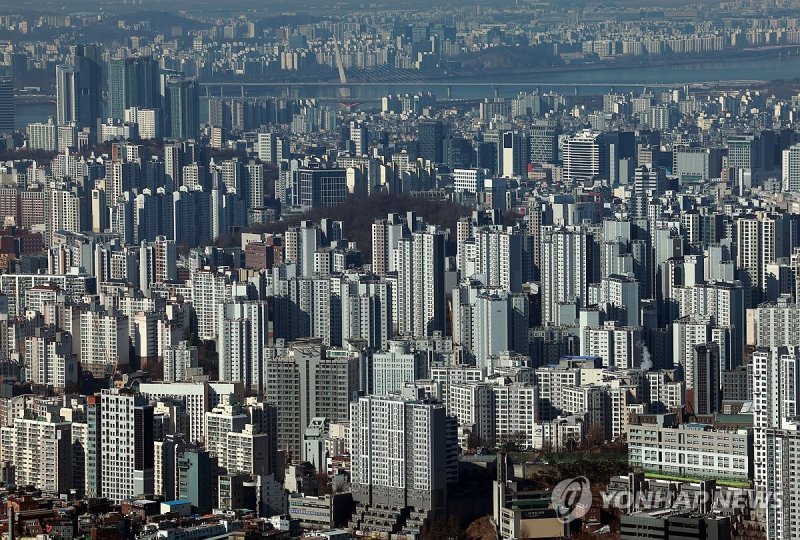
The Financial News reported that as jeonse (lump-sum deposit lease) contracts are increasingly being converted into monthly rent, the share of monthly rent contracts in newly occupied apartments in Seoul has surged. In some new apartment complexes, monthly rent now accounts for as much as 70% of all jeonse and monthly rent contracts.
According to Zigbang, which analyzed data from the Ministry of Land, Infrastructure and Transport's Actual Transaction Price Disclosure System, the share of monthly rent contracts (including deposit-based monthly rent) in four newly occupied apartment complexes in Seoul averaged 60% after the June 27 mortgage loan regulation took effect last year.
This is more than 14 percentage points higher than the 45.8% share of monthly rent in all apartment lease contracts in Seoul over the same period. Even compared with new contracts only, where monthly rent accounted for 50%, the figure for new complexes is 10 percentage points higher.
The high share of monthly rent in newly occupied complexes is largely due to tighter screening for jeonse loans under the government’s household debt management measures. The June 27 mortgage loan regulation also banned jeonse loans that are conditional on the transfer of ownership, which has had a significant impact.
In the past, for newly occupied apartments, it was common for the original buyer, who owned the pre-sale rights, to lease out the unit before receiving ownership from the developer and then use the tenant’s jeonse deposit to pay the remaining balance on the purchase price. Because of this practice, new complexes typically had a relatively high share of jeonse contracts. However, after the June 27 mortgage loan regulation blocked these jeonse loans tied to future transfer of ownership, many tenants who could not secure sufficient jeonse funds have been switching to monthly rent.
An analysis of lease contracts in four apartment complexes in Seoul that began occupancy in the second half of 2024, before the June 27 measures, shows a different picture. In the early occupancy period, jeonse accounted for 73% of jeonse and monthly rent contracts, while monthly rent made up only 27%. By comparison, across all apartment lease contracts in Seoul in the second half of 2024, monthly rent averaged 43% overall and 45% for new contracts, indicating that the share of monthly rent in newly occupied complexes was relatively low at that time.
By complex, Bukseoul Xi Polaris in Mia-dong, a neighborhood in Gangbuk District, Seoul (1,045 units), which began occupancy in August 2024, and The Sharp Dunchon Foret in Gangdong-gu, Seoul (572 units), which began occupancy in October of the same year, had monthly rent shares of only 27% and 28%, respectively, through December.
In contrast, the Imun I-Park Xi apartment complex (4,321 units) in Imun-dong, Dongdaemun District, Seoul, which started occupancy in November last year after the June 27 mortgage loan regulation took effect, recorded a monthly rent share of 69%. Lacerbo Prugio Summit (958 units) in Haengdang-dong, Seongdong District, Seoul, which began occupancy in July of the same year, saw monthly rent account for 58% of contracts.
Maple Xi (3,307 units) in Jamwon-dong, Seocho District, Seoul, where lease contracts and occupancy spanned both before and after the June 27 mortgage loan regulation, also showed a clear shift. Before the regulation, monthly rent made up 39% of jeonse and monthly rent contracts (with jeonse at 61%). After the loan rules took effect, the share of monthly rent rose to 43% by the end of August, the designated occupancy period, and then further increased to 60% from September through the end of last year.
[email protected] Choi Ah-young Reporter