‘2% inflation’ under threat: Oil prices surge on US–Iran war, could climb above 5%
- Input
- 2026-03-08 13:38:44
- Updated
- 2026-03-08 13:38:44
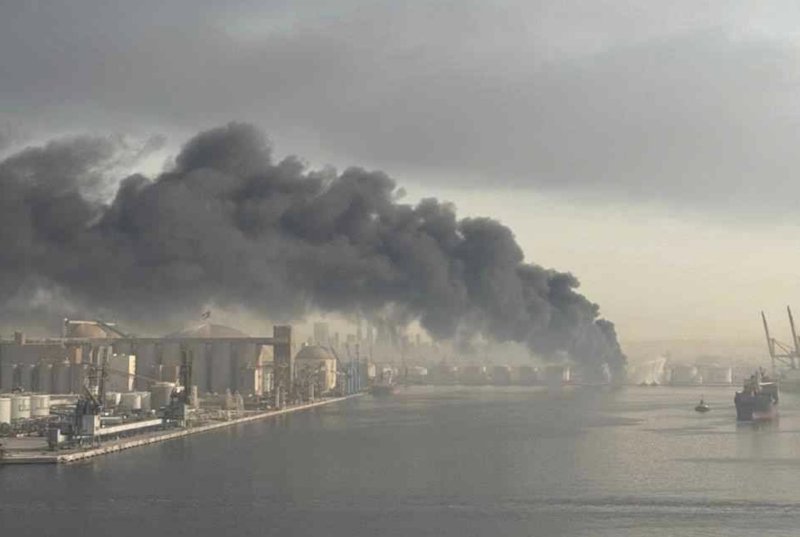
[The Financial News] As the war between the United States of America (US) and the Islamic Republic of Iran has widened into a regional conflict across the Middle East, consumer prices, which had been stable in the 2% range, are now under severe strain. Many analysts see a high risk that the 5%‐range inflation shock triggered by the Russia–Ukraine war four years ago will recur. The government set this year’s inflation target at 2.1% and had been on track through February. However, with oil prices soaring due to the Middle East crisis, projections now suggest that inflation could jump as high as the 4–5% range starting in March. In effect, inflation is expected to run well above 2% in the first half of this year. If the Middle East situation deteriorates further and instability in oil supply persists, the annual average inflation rate could even exceed 5%. This is why authorities are moving preemptively to mobilize the strongest administrative tools allowed by law to contain price spikes, not only in gasoline and diesel, which have already surged, but also in everyday essentials such as sugar, flour, and instant noodles.
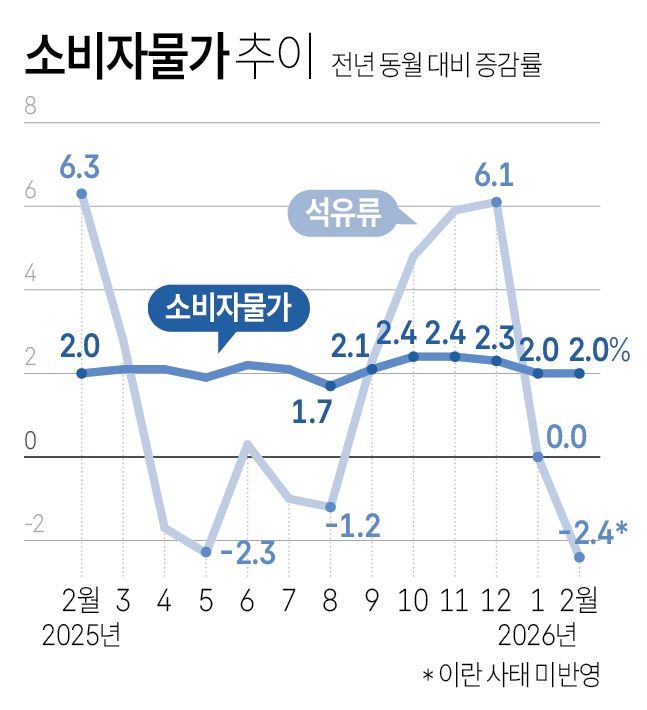
According to the Ministry of Finance and Economy and the Ministry of Data and Statistics (KOSTAT) on the 8th, annual consumer price inflation over the past two years has remained stable in the low‐2% range. It stood at 2.3% in 2024 and 2.1% in 2025. In January and February of this year as well, falling international oil prices kept the monthly inflation rate below 2.0% for two straight months.
That picture changed abruptly with the outbreak of the Middle East crisis triggered by the US–Iran war. A similar episode occurred in 2022 when Russia invaded Ukraine. Annual inflation that year reached 5.1%, the highest since the 7.5% recorded during the 1998 foreign exchange crisis. Prices rose 3.8% year‐on‐year in January and February 2022, then accelerated to 4.2% and 4.8% in March and April, entering the 4% range. As the war escalated, inflation climbed further, to 5.3% in May, 6.0% in June, and 6.3% in July. Once prices moved up, they proved hard to bring down: in 2023, consumer prices still rose 3.6%, showing that the shock persisted.
The main factor driving inflation higher was the surge in global oil prices. In 2022, when the US and Europe imposed an embargo on Russian oil, prices of petroleum products jumped more than 30%, continuously pushing up consumer prices. From 31.6% in March that year, petroleum product inflation soared to 39.9% by June. Analysts estimate that this alone added between 1.32 and 1.74 percentage points to overall consumer price inflation, based on the weights used at the time.
Given this precedent, the current oil supply shock stemming from the US–Iran war is seen as even more serious. About 20% of the world’s crude oil shipments—some 20 million barrels per day—normally pass through the Strait of Hormuz, but that route has now been disrupted. At the same time, Middle Eastern oil‐producing countries embroiled in the conflict are cutting output. This has fueled concerns that the impact could be even greater than during the Russia–Ukraine war.
As of the 7th (local time), international oil prices have spiked. West Texas Intermediate crude oil (WTI) for April delivery jumped more than 12% to $90.90 per barrel. Brent Crude Oil, the global benchmark, surged 8.52% to $92.69 per barrel. This marks the largest single‐day increase since March 2022, when the Russia–Ukraine war broke out. On a weekly basis, WTI has soared 35.6%, while Brent Crude Oil is up 28%.
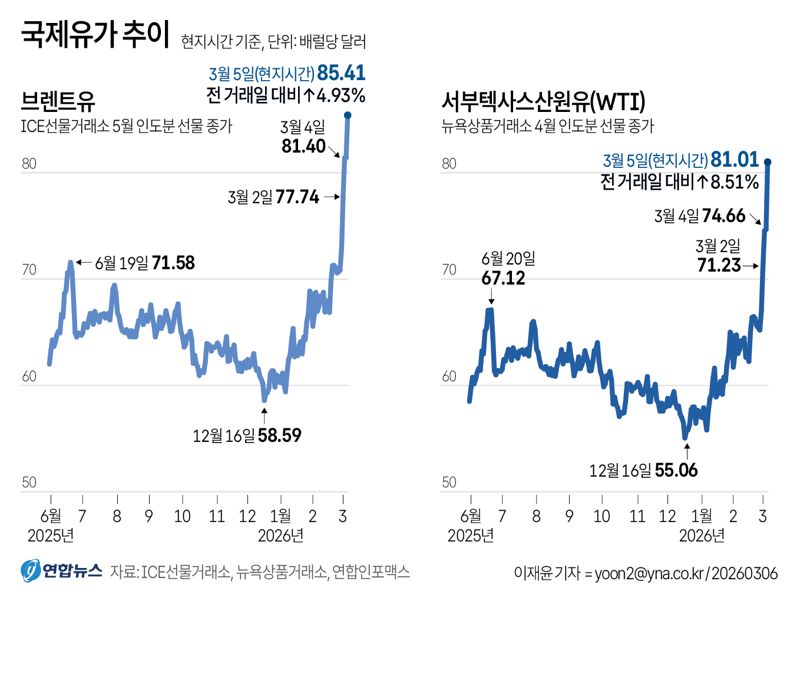
If the Middle East crisis worsens, some warn that oil prices could break above $100 a barrel and climb to $120 within a few weeks. In tandem, domestic gasoline and diesel prices have already exceeded 2,000 won per liter in some areas.
International oil prices are a barometer of inflation. When crude prices rise, domestic gasoline and diesel costs increase, and so do oil‐based transportation and production expenses. This, in turn, drives up prices across a wide range of goods and services. Public utility charges such as electricity and city gas are no exception.
Oil prices are typically reflected in real‐world prices with a lag of one to two months. However, in wartime or similar crises, speculative demand tends to surge, causing perceived inflation at the consumer level to rise much more quickly than the official data.
If the war drags on and conditions in and around the Strait of Hormuz deteriorate further, inflation in Korea could inevitably climb into the 5% range or higher. The risk is amplified by the fact that roughly 70% of the crude oil Korea imports comes from the Middle East.
Private economic research institutes project that if oil prices break out of their earlier forecast range, surpass $80 per barrel, and then spike to as high as $150, Korea’s economic growth rate could be dragged down by 0.45 to 0.8 percentage points. According to The Economist in the United Kingdom (UK), once international oil prices exceed $100 per barrel, global economic growth is expected to fall by 0.4 percentage points, while inflation rises by 1.2 percentage points. Such high inflation would also weigh on Korea’s own target of achieving 2% economic growth this year. If inflation tops 5%, nominal interest rates are likely to rise, and both foreign and domestic corporate investment could be dampened. Capital markets, including equities, would face heightened uncertainty, while exchange rates could become more volatile, adding to economic instability. If a slowdown in domestic demand triggered by surging prices becomes evident, calls for an extra budget this spring are likely to grow louder in the market.
Even so, strong government intervention could help moderate price increases to some extent. It is crucial to preemptively curb speculative demand and hoarding, as well as the opportunistic profiteering that exploits such conditions. This is why the government is taking a hard line against price gouging on gasoline at filling stations and imposing tough sanctions on collusion involving key food ingredients such as sugar and flour. Authorities have even floated the possibility of invoking a ‘maximum fuel price’ scheme—the toughest price control measure permitted by law.
Song Yeong-kwan, a research fellow at the Korea Development Institute (KDI), said, "The government’s aim is likely to suppress speculative demand driven by soaring oil prices amid the Middle East crisis in advance, in order to minimize the rise in inflation." He added, "This is in the same vein as deploying firm and intensive enforcement measures to cool speculative sentiment in the real estate market and thereby restrain housing price increases."
[email protected] Jeong Sang-geun Reporter