Biotech Stocks Hold Up as KOSPI Slides: "No Direct War Link, Second-Half Outlook Still Bright"
- Input
- 2026-03-10 06:00:00
- Updated
- 2026-03-10 06:00:00
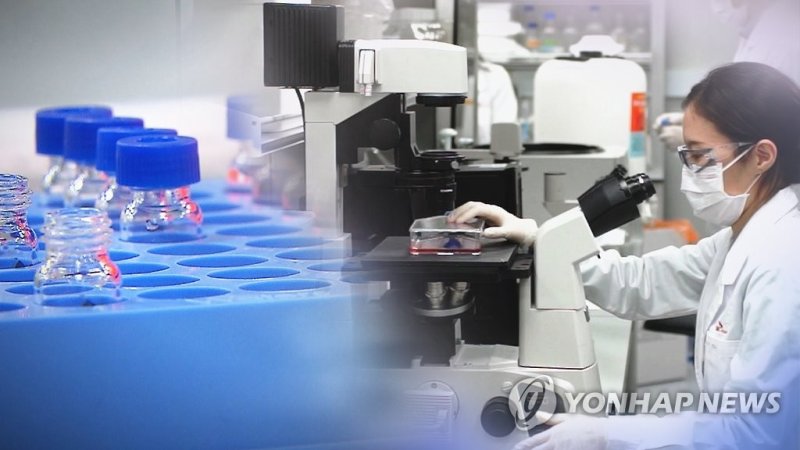
According to The Financial News, the Korea Composite Stock Price Index (KOSPI) has been on a downward trend recently amid rising geopolitical uncertainty originating in the Middle East. Even so, volatility in biotech and pharmaceutical stocks has been relatively subdued compared with other sectors. Analysts say the biotech sector has little direct connection to the war, and they expect the stocks to rebound once the situation is resolved.
Data from the Korea Exchange (KRX) on the 10th show that from March 27 through the previous trading day, the KRX 300 Healthcare Index and the KRX Health Care Index fell 9.07% and 9.41%, respectively. Among KRX Theme Index components, these declines ranked as the smallest, at first and third place. Over the same period, the KOSPI dropped 16.73%. While the KOSDAQ Index fell 7.23%, the KOSDAQ 150 Healthcare Index declined only 3.34%.
Net buying by foreign investors played a key role in cushioning the index decline. From March 27 through the previous session, foreigners were net sellers of 15.5858 trillion won in the domestic equity market overall, yet they were net buyers in the biotech sector. Specifically, they bought a net 264.3 billion won of Celltrion, 110.0 billion won of Alteogen, 95.0 billion won of Hanmi Pharmaceutical, 76.8 billion won of Aimed Bio, and 60.8 billion won of ABL Bio, among others.
Institutional investors also recorded net sales of 3.3070 trillion won in the broader market over the same period, but they accumulated certain biotech names. They were net buyers of 78.1 billion won of Alteogen, 55.2 billion won of LigaChem Biosciences, 36.5 billion won of Samchundang Pharm., and 33.8 billion won of ABL Bio, among others.
Brokerage houses explain that buying interest has formed because the heightened military tensions between the United States of America (U.S.) and the Islamic Republic of Iran have not had a direct impact on the sector.
Wi Haejoo, a researcher at Korea Investment & Securities, said, "Geopolitical risk stemming from the Middle East has driven down both the KOSPI and the KOSDAQ Index, and pharmaceutical and biotech companies have been no exception." Wi added, "However, Middle East risk does not affect the clinical progress or commercialization discussions of biotechnology (biotech) firms, so once the situation settles down, their share prices could rebound relatively quickly."
There is also a view that a series of major biotech-related milestones scheduled between April and June could provide a tailwind for the industry. Beginning with the American Society of Clinical Oncology (ASCO) in April, key academic meetings are lined up, including ASCO and the European Association for the Study of the Liver (EASL) in May and the American Diabetes Association (ADA) conference in June.
Kim Sun-ah, analyst at Hana Securities, noted, "From April onward, interest in pharmaceutical and biotech names is likely to gradually increase, and it will be important for investors to withstand volatility until the major events in May and June play out." Kim added, "Companies that can deliver stable profit margins as providers of essential consumer healthcare products look particularly attractive."
The same period is also seen as a time when domestic policy support could materialize. On January 9, the government designated the bio industry as part of the country’s national strategic industries and announced plans to draw up a Roadmap for Fostering the Bio Industry within the first quarter of this year.
Heo Hye-min, a researcher at Kiwoom Securities, emphasized, "Korea is also in a situation where new bio-related policy announcements are anticipated." Heo continued, "The recent rise in valuations for biotech technologies in China is both an opportunity to enhance the value of Korean technology exports and a sign of intensifying competition. Strong policy support at the pan-government level, such as shortening approval and review timelines, is urgently needed at this point."
[email protected] Reporter Im Sang-hyuk Reporter