Yellow Envelope Act to Take Effect on the 10th; Business Groups Say, "Subcontractor Unions Are Already Taking Aggressive Action... Unlawful Acts Must Be Curbed"
- Input
- 2026-03-08 13:06:46
- Updated
- 2026-03-08 13:06:46
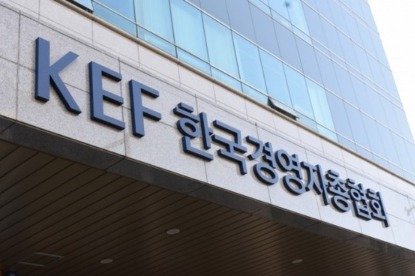
With the so-called Yellow Envelope Act (Articles 2 and 3 of the Trade Union and Labor Relations Adjustment Act) set to take effect on the 10th, business groups have called on labor unions to refrain from unlawful acts and appealed to the government for objective and fair decisions.
On the 8th, the Korea Employers Federation (KEF) made this point in a statement titled "Business Community’s Position on the Enforcement of the Revised Trade Union Act."
The Yellow Envelope Act expands the scope of liability for principal employers and restricts damage claims arising from strikes. Although the Ministry of Employment and Labor (MOEL) recently issued the "Guidelines for Interpreting the Revised Trade Union and Labor Relations Adjustment Act" after prolonged controversy over the law’s enforcement, disputes continue.
To clarify the ambiguous scope of "employer" and the concept of labor disputes under the revised law, and to establish reasonable bargaining procedures, the business community formed the "Business Task Force on Labor Union Act Amendment Response". The task force includes major companies by industry as well as small and mid-sized firms, and has presented alternatives to the government.
KEF stated, "Despite the government’s issuance of guidelines, some labor groups are declaring that they will demand bargaining with principal employers regardless of whether employer status can be recognized, and that they will also seek negotiations on issues where employer status is not acknowledged." It added, "We are concerned that disputes between labor and management over the scope of employers and bargaining agendas will continue."
KEF went on to say, "Even before the law has taken effect, subcontractor unions are staging illegal shows of force, such as occupying workplaces and demanding that principal employers come to the bargaining table," stressing that "companies are being subjected to mounting pressure."
Accordingly, KEF urged, "For at least a basic level of stability in labor-management relations, labor unions must refrain from making excessive demands beyond the scope in which employer status is recognized in collective bargaining with principal firms, and must not resort to unlawful acts to push those demands through. They should also comply with established bargaining procedures."
Addressing the government and the Labor Relations Commission, KEF said, "In line with the recently announced Guidelines for Interpreting the Revised Trade Union and Labor Relations Adjustment Act, the question of whether a principal firm qualifies as an employer must be judged objectively and fairly." It continued, "The government and the Labor Relations Commission should concentrate their administrative capacity and establish a strict decision-making framework so that labor’s bargaining demands and industrial actions do not deviate from the Collective Bargaining Procedure Manual they have issued."
KEF added, "The business community will also prepare and distribute to member companies a 'Checklist for Collective Bargaining Procedures to Promote Win-Win Cooperation Between Principal and Subcontracting Firms' and build a support system for collective bargaining," noting, "We will work to ensure that a sound culture of collective bargaining takes root in workplaces after the revised Trade Union Act comes into force."
[email protected] Reporter Kim Hak-jae Reporter