Supreme Court Quashes Ruling After Wrong Date on Summons Leads to Sentencing Without Defendant
- Input
- 2026-03-08 12:46:48
- Updated
- 2026-03-08 12:46:48
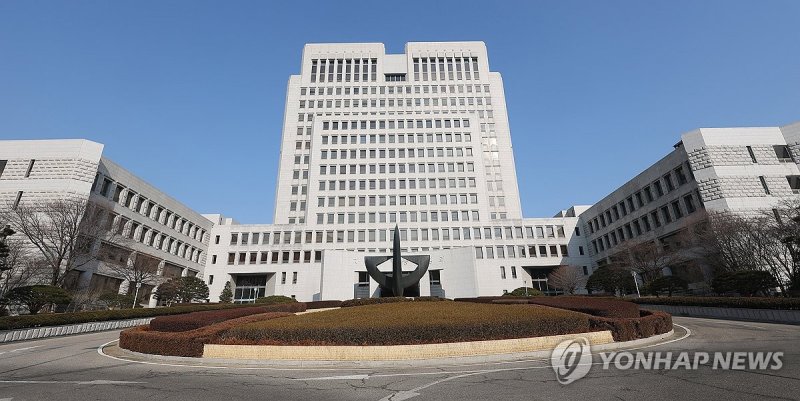
The Financial News reported that the Supreme Court of Korea has quashed a ruling in a case where the court sent a summons to the defendant with the wrong hearing date and then handed down the judgment in the defendant’s absence.
According to the legal community on the 8th, the Second Division of the Supreme Court of Korea, with Justice Kwon Young-jun presiding, overturned a three-year prison sentence imposed on a defendant, identified as A, for fraud in the appellate court and recently remanded the case to the Gwangju District Court.
A, without any intent or ability to repay, defrauded the victim of about 395 million won over a total of 80 occasions from September 2021 to August of the following year. The trial court sentenced A to three years in prison.
In the second instance, the appellate court held its first trial hearing on August 20 last year, concluded the arguments, and set September 24 as the sentencing date. When A did not appear for the sentencing hearing, the court postponed sentencing to October 29 and sent A a summons as the defendant.
A again failed to appear, and the court, citing Article 365(2) of the Criminal Procedure Act of the Republic of Korea, sentenced A in absentia to three years in prison, the same as the first-instance ruling. Under this provision, if a defendant does not appear at a trial hearing, the court must set a new date, and if the defendant, without just cause, again fails to appear on that new date, the court may render a judgment without hearing the defendant’s statement.
However, in the summons sent to A, the "date and time" field listed not the postponed sentencing date of October 29 but the original date of September 24. Because of this error by the court, A was effectively deprived of the opportunity to attend on the rescheduled date.
The Supreme Court of Korea stated, "The appellate court erred by violating procedural laws in a way that affected the judgment," and added, "The summons sent to the defendant by the lower court contained an incorrect appearance date and therefore cannot be regarded as having been prepared in the manner prescribed by law." On that basis, it remanded the case for a new hearing.
[email protected] Lee Hwan-joo Reporter