'A Democratic Party candidate is as good as elected'... Gyeonggi governor primary fiercer than the general election
- Input
- 2026-03-08 12:10:02
- Updated
- 2026-03-08 12:10:02
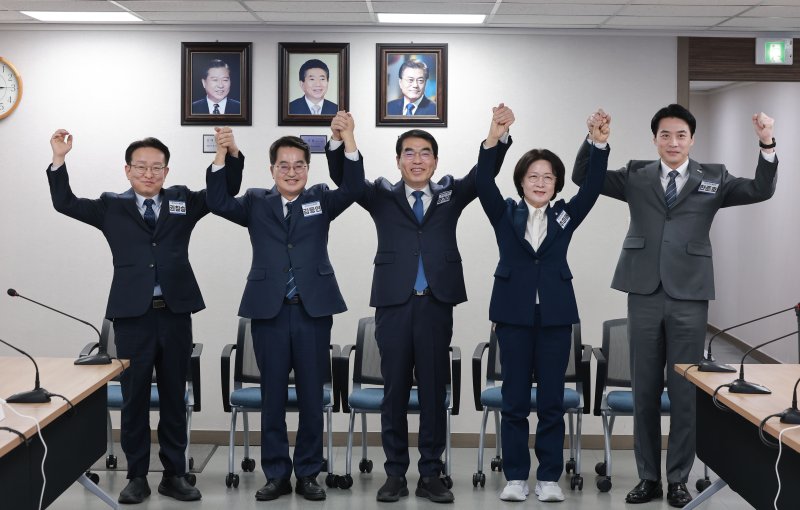
Within the Democratic Party of Korea, some are even saying that "winning the party primary is as good as winning the election." Reflecting that view, an internal primary race as fierce as the general election itself is now taking shape, and the party has finalized its schedule for the Gyeonggi gubernatorial primary ahead of the People Power Party.
According to reporting by The Financial News on the 8th, the Democratic Party Election Management Committee held a plenary meeting on the 6th and finalized the regional primary schedules for the June 3 local elections in Seoul, Gyeonggi Province, Ulsan Metropolitan City, Jeonnam-Gwangju and other areas.
The preliminary primary for the Gyeonggi gubernatorial race will be held on the 21st and 22nd, where three out of five candidates will advance to the main primary. The main primary is scheduled for April 5–7, and if a runoff is needed, it will take place from April 15 to 17.
The contenders in the primary are five in total: incumbent Governor of Gyeonggi Province Kim Dong-yeon; lawmakers Choo Mi-ae, Han Joon-ho, and Kwon Chil-seung; and former lawmaker Yang Ki-dae.
Three-stage process of preliminary primary, main primary, and runoff... Final candidate to be decided in mid-April
This Democratic Party primary for Governor of Gyeonggi Province will proceed by thoroughly vetting the contenders and narrowing the field for the main primary through a preliminary round.The Candidate Nomination Committee has set a basic rule of selecting the top three candidates through the preliminary primary. However, if no woman or young candidate makes it into the top tier,
one additional person will be added, allowing up to four candidates to compete in the main primary under a "3+α" rule.
The preliminary primary will be decided entirely by votes from full party members with voting rights. In the main primary, results will be calculated by combining votes from these members and public opinion polls on a 50–50 basis.
If no candidate wins a majority in the main primary, a runoff will be held between the first- and second-place finishers from April 15 to 17 to determine the final winner.
Preliminary primary based 100% on full party members’ votes... Democratic Party aims to test candidates’ "clarity"
The decision to adopt a "100% full-party-member preliminary primary (cutoff)" system in the Democratic Party’s Gyeonggi gubernatorial race carries political implications that go beyond simply narrowing the field.Strategically, it reflects a choice to test party identity and organizational strength—the party base—before measuring general-election competitiveness and broader public sentiment.
Because the preliminary primary is decided solely by votes from full party members with voting rights, candidates have little choice but to respond more sensitively to the sentiments of the party’s core supporters than to those of ordinary residents of Gyeonggi Province.
As a result, the preliminary primary is expected to intensify into a contest of "clarity"—how clearly candidates align with the party line. Non-pro-Lee Jae-myung contenders are likely to stress either their sense of unity with the Lee Jae-myung administration or their commitment to party identity in order to rally the base.
Here, "clarity" refers to how clearly and firmly a candidate expresses their stance on the party’s core values and the demands of its supporters. Put simply, the party aims to test whether a candidate "fits the Democratic Party’s colors and goals."
However, this notion of "clarity" is closely tied to President Lee’s overall line. That is why leading candidates are sending messages that keep in step with the president’s policy direction.
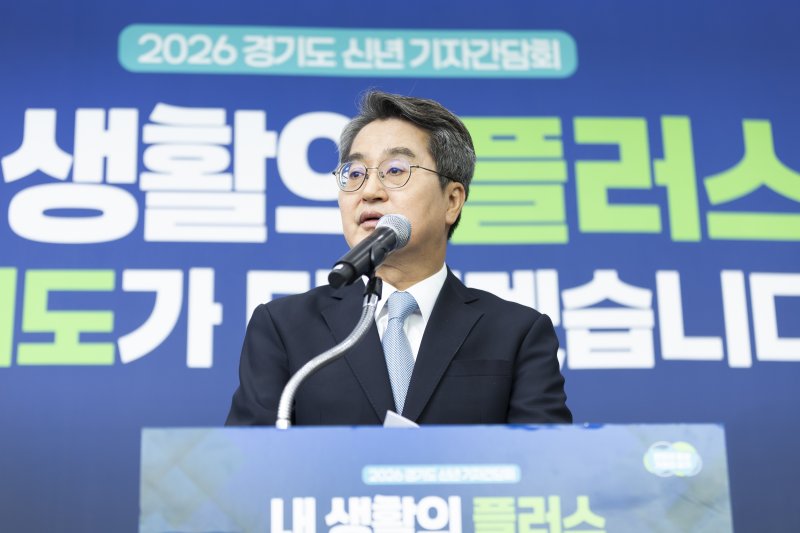
Three-way race expected among Kim Dong-yeon, Choo Mi-ae, and Han Joon-ho... Myeongsim vote and a runoff seen as key variables
The biggest point to watch in the Democratic Party’s Gyeonggi gubernatorial primary is whether Governor Kim Dong-yeon, who enjoys the advantages of incumbency and leads in various opinion polls, can secure a second term.Recent surveys show Governor Kim consolidating a commanding lead, drawing broad support from centrist voters and across age groups. His administrative experience as a former deputy prime minister for economic affairs and his stable management of provincial affairs are cited as key strengths.
Challenging him within the party, a three-way contest is expected to form with lawmaker Choo Mi-ae, who highlights her heavyweight credentials as former party leader and justice minister, and lawmaker Han Joon-ho, who underscores his ties to President Lee.
Accordingly, the contest over "clarity" is expected to intensify among candidates who stress strengthening party identity and creating synergy with the Lee Jae-myung administration. A key question will be how factional tensions between non-Lee Jae-myung (anti-Lee) and pro-Lee camps inside the party will shape the course of the primary.
Above all, the biggest variables are the direction of the Myeongsim vote—the core Lee Jae-myung loyalist base—and the possibility of a runoff. With many pro-Lee candidates in the field, whether party members’ votes converge on a single contender or are split among several will determine whether Governor Kim can be held below a majority.
A local political insider commented, "Gyeonggi Province is like the heartland of the Democratic Party of Korea," adding, "Just as important as general-election competitiveness will be which candidate can forge the strongest chemistry with the party’s mainstream factions—that will decide victory or defeat."
[email protected] Jang Chung-sik Reporter