The Taste of Simplicity: A Café Devoted to Coffee Itself – Adolf Loos’s Café Museum [Coffee and Space: ‘Kkik’]
- Input
- 2026-03-14 10:00:00
- Updated
- 2026-03-14 10:00:00
In the days of the Ottoman Turks, cafés were called “schools of the wise.” In 17th-century England, they were known as “Penny Universities,” where you paid a penny to join heated debates. Austrian neurologist Sigmund Freud and French philosopher Jean-Paul Sartre wrote there; Pablo Picasso talked about art; Enlightenment thinkers used them as meeting places. These are spaces where people gather around one central premise—coffee. We call them cafés.In these places where we drink coffee and inhabit a space, we also savor the stories that fill it.On a weekend, how about a cup of “architecture” in such a space? [Editor’s note]
[Financial News] The name feels almost too straightforward. It can even come across as careless. We are talking about the café’s name. It was supposedly chosen for the rather dubious reason that there are many museums nearby. This is the story of Café Museum (CAFÉ MUSEUM) in Vienna.
Unlike in Korea, where many modern buildings by prominent architects have later been turned into museums or galleries with cafés inside, this place was called a “museum” from the very beginning.
There is another reason the name can feel half-hearted: the building itself is plain compared with its ornate neighbors. If it looks understated now, imagine how it must have seemed when it first opened. It was mocked and criticized as “Café Nihilism,” a café of emptiness.
As always, you should not judge by appearances alone. The moment you step inside, you realize that the thought and care poured into shaping the space and crafting the menu are anything but simplistic or careless.
For that reason, the Austrian National Tourist Office’s confident suggestion that “to understand it, you must experience it” might well have been written with Café Museum in mind.
A “museum” filled with the clink of cups
I came to appreciate the value of Café Museum by chance. It was through Seung H-Sang, head of IROJE Architects & Planners, who is known for his philosophy of the “aesthetics of poverty,” has served as Chairperson of the National Architecture Policy Committee, and received the First Class Cross of Honour for Science and Art in Austria, where Café Museum is located.
As I was exploring the parallels between architecture and coffee, he told me, “You really must go.”
He explained, “A café is a place where, whether you are alone or with others, the very scene of drinking coffee becomes culture. Architecture’s role is to create that scene.” He then described Café Museum: “In a simple interior, the curved tables and ceiling allow people to focus on their conversations, even though the space is quite narrow.”
Café Museum itself describes its space in similar terms.
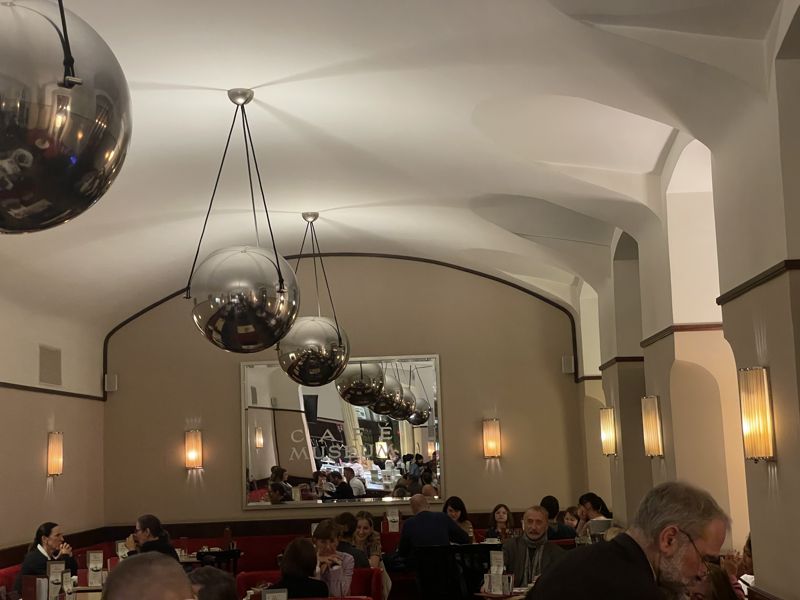
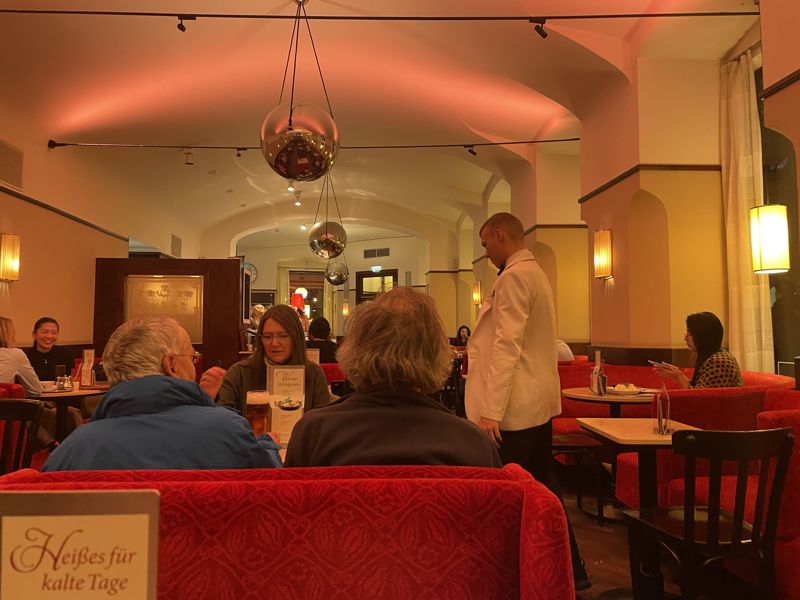
“It is a masterpiece that delights all the senses... A tempting display of pastries, and right beside it the coffee machine, which adds to the persuasive atmosphere. The aroma of coffee fills the air, teaspoons clink, and elegant waiters will serve you delicious coffee.”
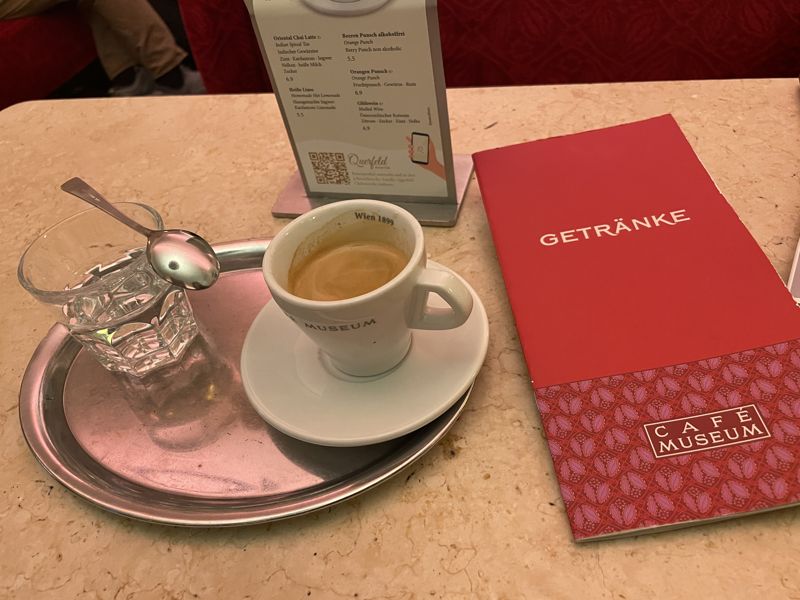
Alongside this confidence in the space, there is also pride in the coffee. On the red-covered menu, under the question “What do you desire?”, it states, “Coffee in a Viennese coffee house is more than just coffee. At Café Museum, we offer a wide variety of coffees, prepared with special care through an excellent roasting cycle,” before introducing the menu.
At the top of the list is the Wiener Melange, a drink that has become a Viennese tradition. Commonly enjoyed in Vienna, a Wiener Melange is an espresso shot topped with steamed milk and milk foam.
They also highlight a specialty coffee called Uberstürzter Neumann, literally “Neumann in a hurry.” It is named after an impatient regular at Café Herrenhof, Neumann, who wanted a way to drink his coffee faster. The preparation reverses the usual order of an Einspänner coffee, which is black coffee topped with whipped cream. Because of this, it is sometimes called “the quirky sibling of the Einspänner.”
A “museum” that looks out onto museums
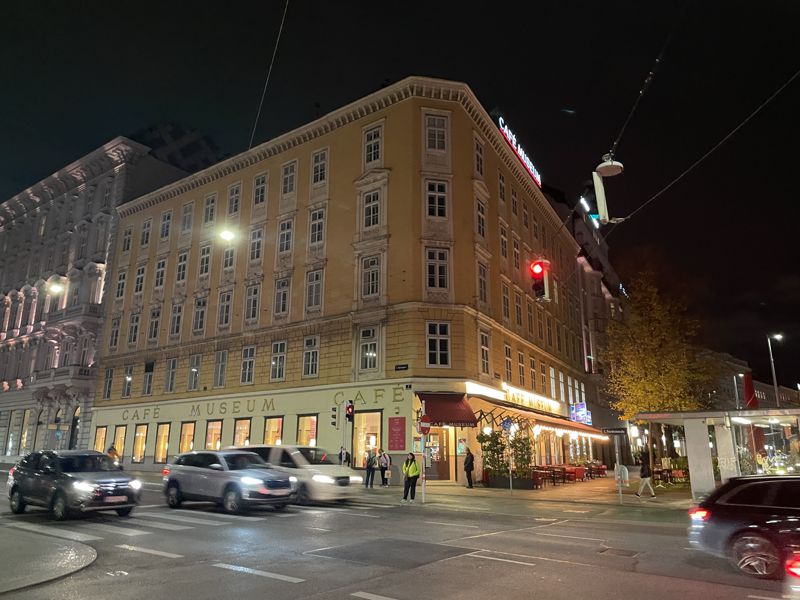
Café Museum opened in 1899 in a corner building where the streets Operngasse and Friedrichstraße meet.
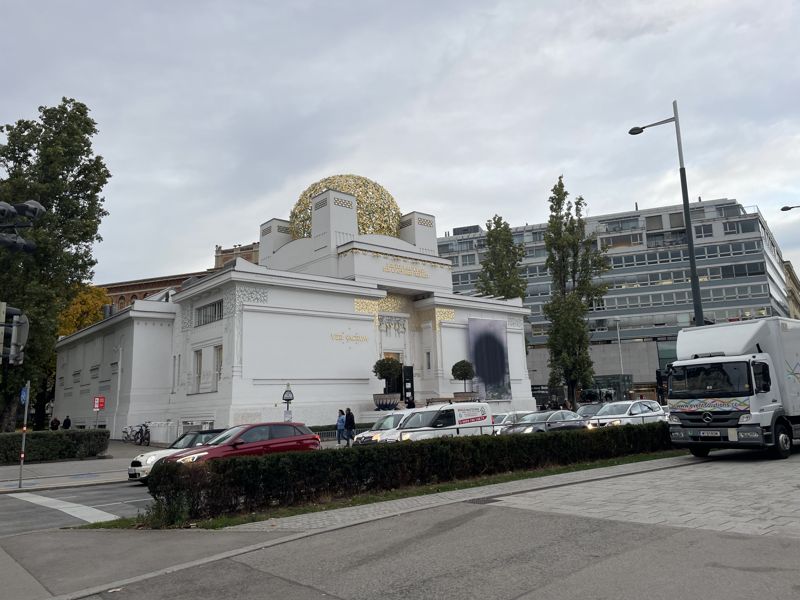
Nearby are the Secession Building, nicknamed the “Golden Cabbage” and emblematic of the Vienna Secession; the Vienna State Opera, considered one of the world’s three great opera houses; and the Albertina Museum, where you can see works by artists from movements such as Fauvism, Impressionism, and the Vienna Secession, including Marc Chagall, Pablo Picasso, Paul Cézanne, Edvard Munch, and Wassily Kandinsky.
On its website, Café Museum describes its location in a slightly unusual way, by introducing the surrounding museums and theaters. It refers to the Vienna State Opera as the Vienna Court Opera and the Albertina Museum as the Künstlerhaus—names they bore when the café first opened.
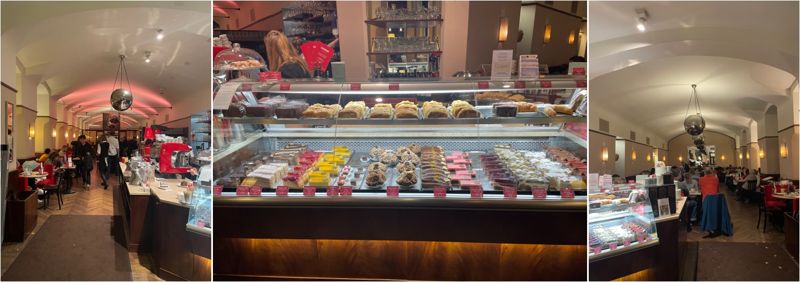
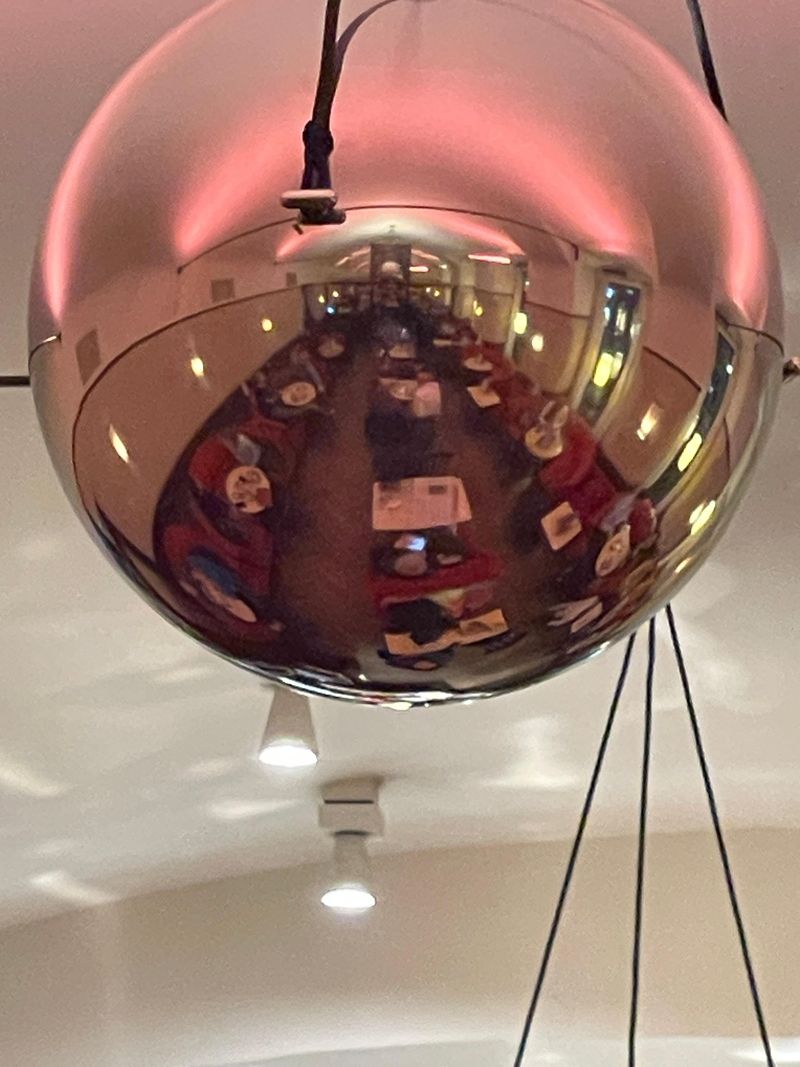
The entrance to the café sits at the sharp corner where the two streets meet. As a result, the interior layout is L-shaped. A showcase filled with desserts occupies the corner, and tables spread out into the spaces on either side. Curved wooden chairs, rounded faux-leather seats, and silver, globe-shaped lights fill the room.
A “museum” inside a museum
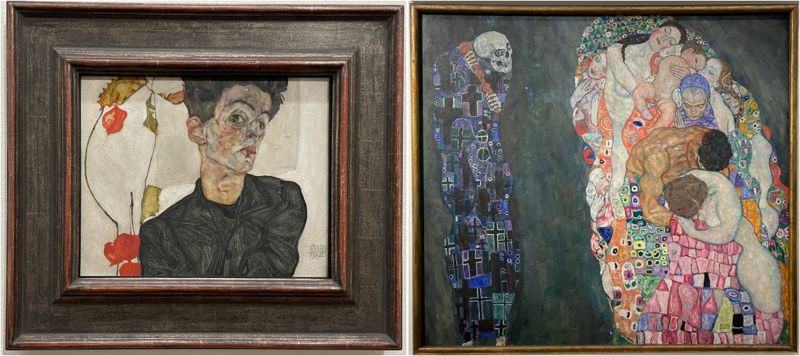
Café Museum is not only located in this district dense with museums. It also appears inside the Leopold Museum in Vienna.
The museum exhibits more than 5,000 works collected over some 50 years by ophthalmologist Rudolf Leopold. It is a place where you can experience Viennese art from the late 19th to the early 20th century, and its Egon Schiele collection is considered among the best in the world.
Café Museum is there as well. Strictly speaking, it is not a functioning café inside the museum but an exhibit presented as a work of art. This offers yet another reason to visit Café Museum: the story is not just about coffee, but about space itself.
After passing the third floor, which features major works by Schiele and other Vienna Secession artists, you reach the fourth floor, where architectural models are displayed in the central hall. There, the exhibition introduces the space of Café Museum and the man who created it, Adolf Loos.
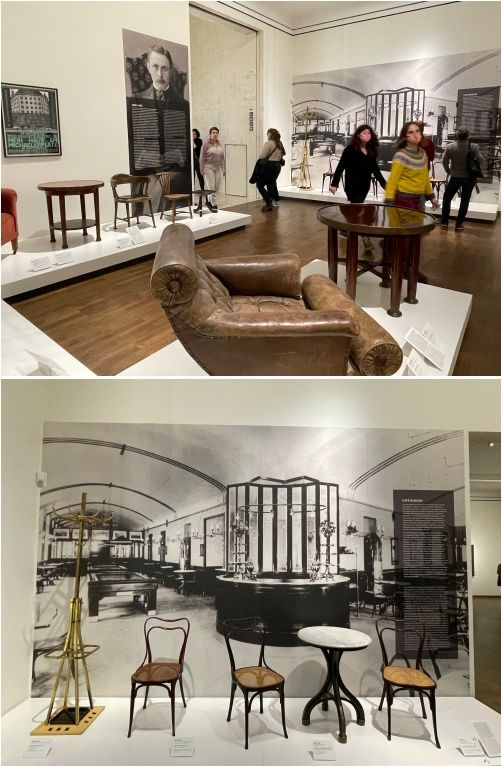
At the time, Loos was designing buildings based on the principles of modern rationalism. Entrusting him with a commission like this was something of a gamble.
In the Austrian art world, Vienna was then the center of the Vienna Secession movement, led by Klimt and others. The movement sought to fuse art and technology, transforming the forms of everyday objects into works of art. Architecture was no exception; buildings were conceived as extensions of art.
Loos was uncomfortable with the Vienna Secession movement and proposed a completely different approach to design and architecture.
In a newspaper article, he rejected the Secession movement by arguing, “The forms of architecture and furniture should be determined not by art, but by what is comfortable for human beings,” using the example of a chair.
When artists design chairs, he argued, the forms may be original and beautiful, but they are often uncomfortable to sit on and thus fail in their basic purpose as chairs.
He believed that in architecture as well, it should not be the architect but the residents who express their identity through the forms and arrangement of furniture and other objects.
This stance came into sharp focus in his 1908 essay “Ornament and Crime” (Ornament und Verbrechen). Café Museum became a representative work that encapsulated his conviction that ornament was a kind of crime.
The very chair Loos mentioned in that article was realized in Café Museum. At his request, German-born Austrian wood craftsman Michael Thonet created simple, bentwood chairs with rounded forms. They were in stark contrast to the heavy, luxurious furniture that was customary at the time. This became the catalyst for a true revolution in coffeehouse design.
At the Leopold Museum, you can see those very Thonet chairs that were installed in Café Museum.
Loos’s architecture and interior design for Café Museum, which bordered on a bold experiment, led to unexpected consequences. It drew such crowds of artists that the word “scandal” was used. Surprisingly, the very Secession artists whose work Loos had criticized came to love Café Museum. Gustav Klimt, Peter Altenberg, Robert Musil, and Egon Schiele all frequented the place.
Seung H-Sang explained why people loved Café Museum: “Until then, architecture had focused on form and ornament, but he made space the center of architecture. At Café Museum, you can see Loos’s architectural style, which aimed to create a space for coffee.” He added, “In the simple interior, the curved tables and ceiling allow people to concentrate on their conversations, even though the space is cramped.”
Over time, Loos’s interior for Café Museum underwent a series of changes. In 1911, Jugendstil architect Josef Zotti created a Schanigarten—an outdoor seating area on the street in front of the café. Many artists, including Klimt, drank coffee there.
In 1931, he also redesigned the interior. Alongside Thonet’s chairs, he introduced the rounded faux-leather seats and silver, globe-shaped lights that we see today. This interior, beloved for more than 70 years, faced a crisis in 2003 when efforts were made to restore Loos’s original design.
Regulars, accustomed to the interior that had evolved over decades, drifted away, and the café was pushed to the brink of closure amid an economic downturn. Fortunately, a new operator revived the spherical silver lights and chairs, and when the café reopened in October 2010, its regulars returned.
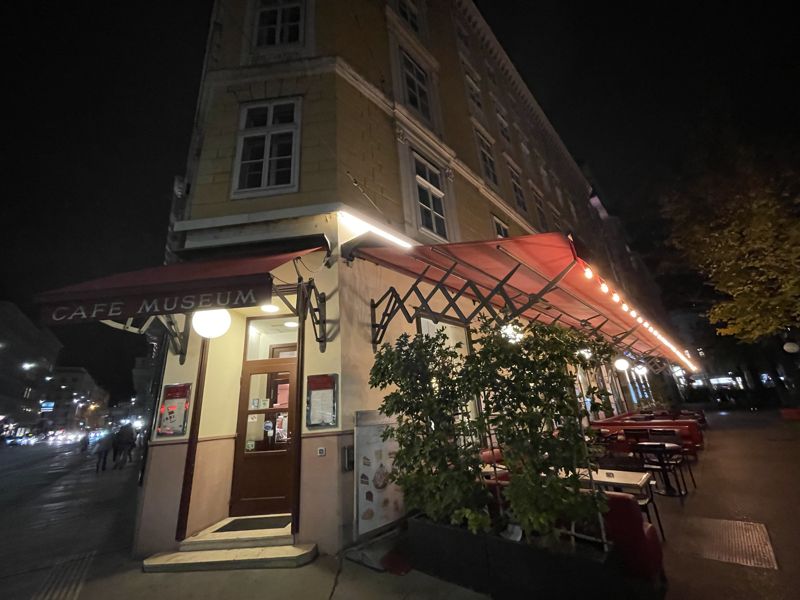
On its website, Café Museum suggests ways to enjoy experiences beyond coffee and dessert in a coffeehouse.
A prime example is the regular reading group, where authors are invited to read and discuss books together. Admission is free, and the selection ranges from classics to new releases. When the weather turns warm, they recommend taking a seat in the Schanigarten and drinking coffee there—just as Klimt and Schiele once did.
And they offer this message.
“Sit wherever you like and stay as long as you wish. Spend your time in solitude or in comfort. Welcome to the Viennese coffee house!”
The next café on this journey is special in a different way. It is located inside the Grand Egyptian Museum, where massive statues of kings and queens from the Ptolemaic dynasty stand guard.
[email protected] Seo Yoon-kyung Reporter