"Buying yen in a crisis is a thing of the past"...Japanese currency weakens even after Iran strike
- Input
- 2026-03-07 11:12:55
- Updated
- 2026-03-07 11:12:55
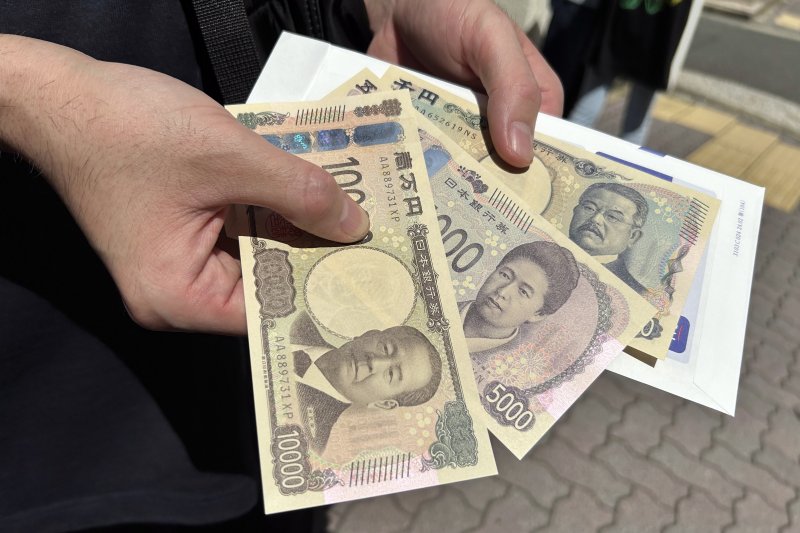
[Financial News] In times of global turmoil, the Japanese yen (JPY) has typically been treated as a safe-haven asset that attracted investors. After the recent strike on Iran by the United States of America (US) and Israel, however, the currency has instead weakened and failed to gain strength.
According to The Asahi Shimbun and Yomiuri Shimbun on the 7th, the yen–dollar exchange rate briefly surged to around 158 yen per U.S. dollar in overseas trading on the 6th.
This was the highest level in about a month and a half, since mid-January.
In mid-February, the yen–dollar exchange rate had fallen to around 152–153 yen per dollar, reflecting a stronger yen. After the US and Israel carried out airstrikes on Iran on the 28th of last month, however, the rate turned upward, signaling a weaker yen.
Analysts say the war involving Iran has pushed up oil prices, driving investors toward the reserve currency, the U.S. dollar. Because Japan relies on the Middle East for about 95% of its crude oil imports, expectations of higher dollar demand to pay for future oil purchases have also fueled selling of the yen.
On this point, Yomiuri Shimbun reported, "The move to buy yen when a global crisis erupts has now become a thing of the past," adding, "Even when Russia invaded Ukraine in 2022, there was no notable strengthening of the yen."
At that time, the U.S. Federal Reserve and the European Central Bank (ECB) raised their policy rates, widening the interest-rate gap with Japan. When Russia launched its invasion, the yen–dollar exchange rate was in the 114-yen range per dollar, but within about eight months it had risen by roughly 37 yen.
The Asahi Shimbun noted, "This time, the currencies of countries that are highly dependent on energy imports are becoming targets for selling," and added, "The South Korean won (KRW) recently fell at one point to around 1,500 won per dollar, its weakest level since 2009."
[email protected] Kim Hyeong-gu Reporter