Soaring Oil Prices and Jobs Shock Add Insult to Injury as Fears of U.S. Stagflation Grow
- Input
- 2026-03-07 09:39:09
- Updated
- 2026-03-07 09:39:09
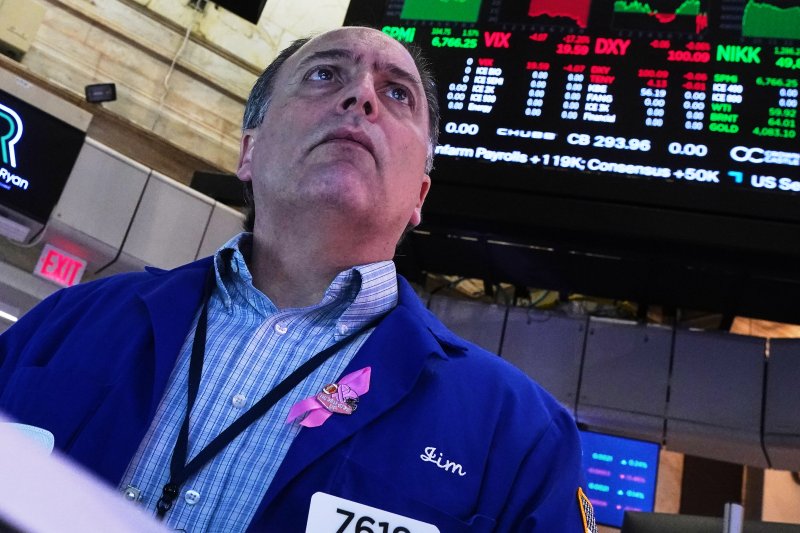
According to The Financial News, global oil prices have surged into the 90‐dollar‐per‐barrel range, while U.S. job growth in February dropped sharply and unexpectedly. As a result, voices on and off Wall Street are increasingly warning that the United States may be heading into a 1970s‐style period of stagflation—high inflation combined with economic stagnation.
Some analysts are now warning that if the Islamic Republic of Iran’s blockade of the Strait of Hormuz drags on, international oil prices could not only break above 100 dollars a barrel but even climb into the 200‐dollar range. They caution that such elevated prices could shock the global economy as well as fuel inflation.
On the 6th local time, major Wall Street banks and U.S. experts said the blockade of the Strait of Hormuz has pushed international oil prices to the brink of 100 dollars a barrel. If the disruption continues, some fear prices could jump to 150 dollars a barrel and, in a worst‐case scenario, even reach 200 dollars.
Goldman Sachs raised its forecast on the 4th for Brent crude oil to 76 dollars a barrel and for West Texas Intermediate crude oil (WTI) to 71 dollars a barrel. The bank stressed that these projections assume a relatively optimistic scenario, adding, "If the volume passing through the Strait of Hormuz remains at effectively blocked current levels for another five weeks, there is a high probability that Brent crude oil will reach 100 dollars a barrel."
Those forecasts were quickly overtaken by events. Brent crude oil futures for May delivery jumped 8.52% from the previous session to close at 92.69 dollars a barrel, putting the 100‐dollar mark within sight. It was the largest one‐day gain since March 2022.
Jeremy Siegel, a professor at the University of Pennsylvania (UPenn) Wharton School, told Consumer News and Business Channel (CNBC) that, "If no breakthrough is reached by this weekend, we are likely to see oil at 100 dollars a barrel next week."
Saad Sherida al-Kaabi, the State of Qatar’s energy minister, told the Financial Times (FT) that if the blockade of the Strait of Hormuz continues, oil prices could soar to 150 dollars a barrel within two to three weeks, with the global economy feeling the impact.
FT editor Roula Khalaf reinforced that view. In a newsletter titled "200‐dollar‐a‐barrel oil is no longer a fantasy," she noted that the peak oil price in the late 2000s was 147 dollars a barrel, which would be equivalent to about 222 dollars in today’s money.
She added, "A lot of things would have to go wrong for prices to reach that level, but judged against this benchmark, even the most pessimistic scenarios currently discussed in the market actually look relatively optimistic."
As the possibility of a sharp spike in oil prices grows, news that U.S. job numbers plunged in February has further fueled concerns about stagflation on and around Wall Street.
The United States Department of Labor (U.S. Department of Labor) Bureau of Labor Statistics (BLS) reported that nonfarm payrolls in February fell by 92,000 from the previous month. Analysts surveyed by Dow Jones had expected an increase of 50,000, so the figure badly missed expectations. The unemployment rate rose from 4.3% in January to 4.4% in February.
In Europe, warnings about stagflation were already emerging even before the U.S. employment data were released.
Philip Lane, Chief Economist of the European Central Bank (ECB), said in a Financial Times (FT) interview on the 3rd that, "A sharp rise in energy prices puts upward pressure on inflation in the short term," and warned, "Such conflicts will also have a negative impact on economic activity."
His comments have been widely interpreted as a stagflation warning. In Europe, expectations for further interest rate cuts by the ECB have faded, and some are even raising the possibility of rate hikes.
Even before the outbreak of war involving the Islamic Republic of Iran, some on Wall Street had already been warning that the United States needed to take the risk of stagflation seriously.
According to the "2026 Annual Economic Outlook" released last year by Torsten Slok, Chief Economist at Apollo Global Management, the short‐term outlook for the U.S. economy is troubling. He argued that "slowing growth driven by trade conflicts, tighter immigration policies, and the risks of an increasingly K‐shaped polarized economy, combined with inflation stuck around 3%, are pushing the U.S. economy into a clear phase of stagflation."
Brian Jacobson, Chief Economist at Enex Asset Management, told The Associated Press (AP), "There is no way to put a positive spin on the February jobs report," adding, "With surging oil prices now accompanied by falling employment, traders are going to worry more about the risk of stagflation."
[email protected] Kim Hyeong-gu Reporter