Iran war... Why it could trigger a global food crisis this year [Yoon Jae-joon’s Worldview]
- Input
- 2026-03-07 05:00:00
- Updated
- 2026-03-07 05:00:00
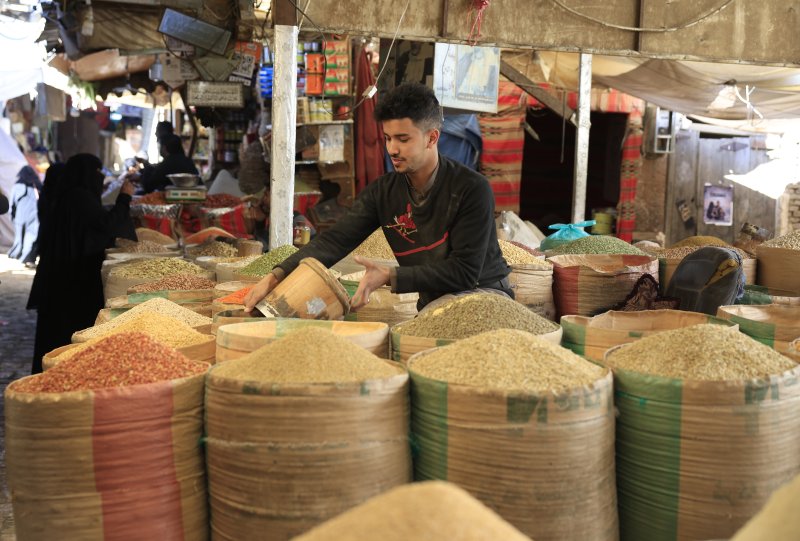
According to The Financial News, the war involving the Islamic Republic of Iran has drawn intense attention to volatility in international oil prices.
The Islamic Republic of Iran has begun drone attacks on ships passing through the Strait of Hormuz and has declared that it now fully controls the waterway.
The Strait of Hormuz is the route for about 25% of the world’s crude oil and 20% of its Liquefied Natural Gas (LNG). Any disruption to shipping there could deal a serious blow to the global economy.
Amid these concerns, there is growing fear that shipping disruptions in the Strait of Hormuz could also trigger a global food crisis.
This is because a significant share of the synthetic nitrogen fertilizer used to produce roughly half of the world’s food also passes through the Strait of Hormuz.
Cargoes of grain and food products destined for Middle Eastern countries that rely heavily on imports for their food supply also transit this route.
Not immediately, but if the war involving the Islamic Republic of Iran drags on, experts warn it could lead to cuts in nitrogen fertilizer production, lower grain yields and inventories, and ultimately higher food prices.
■More than half of nitrogen fertilizer is produced in the Middle EastNitrogen fertilizer is produced from natural gas, and countries in the Gulf region supply about 45–50% of global traded volumes.
The State of Qatar exports 5.5–6 million tons of urea and ammonia a year, while the Islamic Republic of Iran has been exporting about 5 million tons of urea annually, roughly 10% of the global total.
Oil can be stockpiled strategically in the hundreds of millions of barrels, but nitrogen fertilizer cannot be built up in the same way if supply disruptions persist over the long term.
If countries in the Northern Hemisphere fail to secure fertilizer in time for the spring planting season, they will have to switch crops or bear sharply higher costs.
Even a modest reduction in nitrogen fertilizer use can cut yields of key staple crops such as rice, wheat, and corn.
If nitrogen fertilizer production and exports in the Gulf region are disrupted, there are few viable alternatives elsewhere to fill the gap.
It usually takes several years to obtain approval for and build an ammonia plant.
India, which has been importing LNG from the State of Qatar to boost urea output, would inevitably see fertilizer production fall if gas imports are interrupted, making it difficult to match output to the crop-planting calendar.
Brazil, a major agricultural exporter, also depends on urea from the Middle East. If it cannot import when needed, production of corn and soybeans will be disrupted, which could deepen global imbalances in grain supply.
The United States also imports urea shipped through the Strait of Hormuz.■ Food consumed in the Middle East also comes through the Strait of HormuzThe Strait of Hormuz is the gateway for food supplies needed by countries in the Middle East.
According to data provider Kpler, countries in the Gulf region imported about 30 million tons of grain last year.
Of that total, the Islamic Republic of Iran imported 14 million tons.
The Kingdom of Saudi Arabia (KSA) unloads about 40% of its grain and oilseeds used for cooking oil and animal feed in ports along the Gulf region, while the United Arab Emirates (UAE) relies on the same ports for about 90% of such imports.
At least four countries—Saudi Arabia, the UAE, the Kingdom of Bahrain, and the State of Qatar—also bring in short-shelf-life food products for 45–50 million consumers through ports in the Gulf region.
War-related disruptions to maritime transport could worsen the food situation in the Islamic Republic of Iran, which is already suffering from high inflation.
The Islamic Republic of Iran also imports large quantities of oilseeds and grain.
Corn, soybeans, and wheat imported by the Islamic Republic of Iran must also pass through the Strait of Hormuz.
Christian Henderson, an associate professor and Middle East expert at Leiden University in the Netherlands, warned that there is a high risk of food security instability emerging soon in the Gulf region, which relies heavily on imported food.
Henderson also noted that Somalia, the Republic of the Sudan, and the Republic of Yemen, which depend on food transshipped through the UAE, could face food shortages and rising prices.
The Food and Agriculture Organization of the United Nations (FAO) predicts that if the war involving the Islamic Republic of Iran continues for a prolonged period, shortages of sugar and tea could also emerge.
On the 3rd of this month, the Islamic Republic of Iran halted all exports of food and agricultural products and urged its citizens not to hoard supplies.
Last month, the speaker of the Iranian parliament stated that about one-third of the country’s population is living in poverty.
The sharp depreciation of the Iranian rial has made it difficult to settle payments, leaving ships carrying corn and other grains unable to unload. As a result, food imports have been far from smooth over the past two months.
These disruptions to grain imports are inflicting additional hardship on Iranian households.
The Islamic Republic of Iran has begun importing wheat overland from Russia and rice from Pakistan, and it can also bring in supplies via the Caspian Sea or the Red Sea. However, in terms of volume, these routes cannot replace the Gulf region.
Saudi Arabia is geographically positioned to import goods via the Red Sea as well.
By contrast, the State of Qatar, the Kingdom of Bahrain, and Kuwait, whose ports are relatively shallow, have little choice but to rely on overland routes if imports through Saudi Arabia or the UAE are disrupted.
If the Strait of Hormuz remains blocked, many fear that a food crisis this year will be unavoidable.
[email protected] Yoon Jae-joon Reporter