An Unending Controversy: Fifteen Years On, How Should We Judge the Four Major Rivers Restoration Project? [Lee Yu-beom’s Eco & Energy]
- Input
- 2026-03-07 06:00:00
- Updated
- 2026-03-07 06:00:00
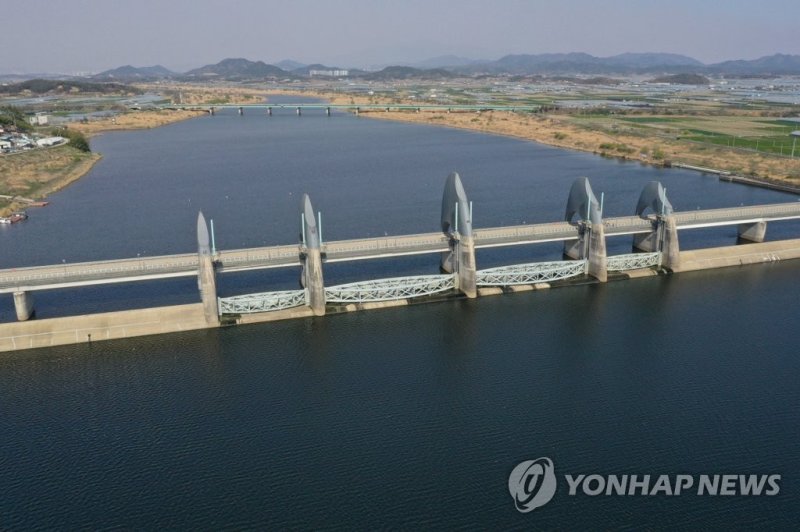
[The Financial News] Launched in 2009, the Four Major Rivers Restoration Project is regarded as one of the most hotly debated national projects in modern Korean history. Even 15 years after its completion, assessments of its benefits and side effects remain sharply divided. Some argue that it helped prevent floods and secure water resources, while critics contend that it damaged ecosystems and worsened algal bloom problems. On top of this, the controversy over the “Grand Korean Waterway,” which many saw as the project’s underlying motive, continues to resurface, keeping the Four Major Rivers Restoration Project a prime example of policy conflict in Korean society.
The shadow of the ‘Grand Korean Waterway’ debate
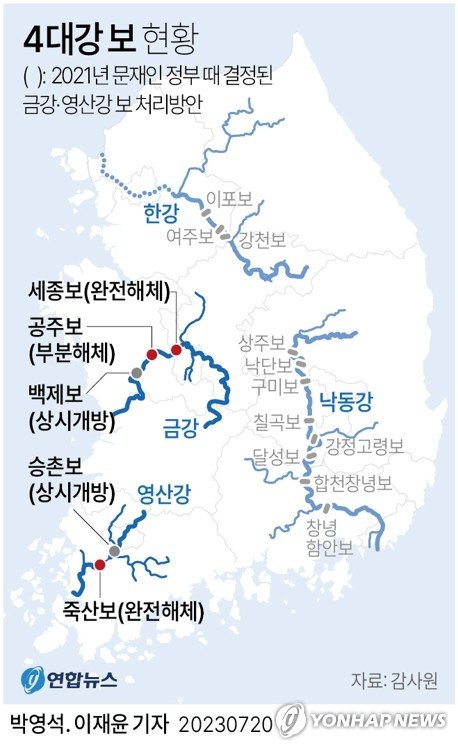
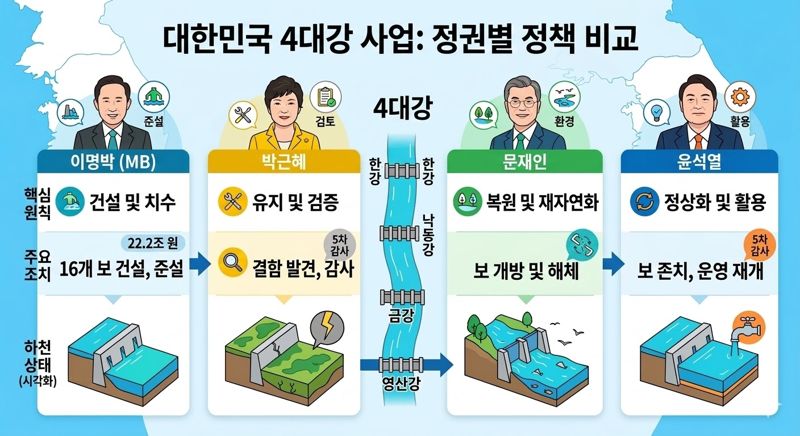
The Four Major Rivers Restoration Project was a large-scale river maintenance initiative pursued by the Lee Myung-bak administration. It targeted Korea’s main rivers, including the Han River, Nakdong River, Geum River, and Yeongsan River. The government invested about 22 trillion won to build 16 weirs, dredge riverbeds, reinforce embankments, and construct bicycle paths. At the time, officials described the project’s goals as flood prevention, drought response, securing water resources, and revitalizing regional economies.A key argument was that, as extreme rainfall events increased due to climate change, river maintenance would reduce flood damage and establish a more stable water supply system. Most of the work was completed by 2012, but the project faced strong resistance from environmental groups and some academics throughout its implementation. They warned that large-scale dredging and weir construction could devastate river ecosystems.
At the heart of the controversy lies the debate over the Grand Korean Waterway. During his presidential campaign, President Lee Myung-bak had proposed the waterway as a flagship pledge. It was envisioned as a massive canal project connecting the Han River and Nakdong River so that ships could travel from Busan to Seoul.
However, as concerns mounted over environmental destruction and economic feasibility, the government effectively shelved the waterway plan and instead pushed ahead with the Four Major Rivers Restoration Project.
Critics argued that, in reality, the Four Major Rivers Restoration Project was a preliminary step toward the Grand Korean Waterway. They claimed that deep dredging and the installation of weirs were carried out with a future canal in mind. The government, for its part, drew a clear line, insisting it was “a river maintenance project entirely unrelated to any waterway plan.” This dispute was never fully resolved, even after the project was finished, and it still forms an important backdrop to today’s debates over how to evaluate the Four Major Rivers Restoration Project.
Flood prevention effects vs. ecosystem damage
Assessments of the Four Major Rivers Restoration Project largely split into two camps: those who say it helped prevent floods, and those who argue it harmed ecosystems. Environmental groups and some experts claim that the installation of weirs slowed river flow and increased the occurrence of algal blooms. In the Nakdong River Basin in particular, massive blooms have appeared in summer, giving rise to the nickname “green algae latte.”
They argue that the weirs turned flowing rivers into something closer to stagnant reservoirs, creating ideal conditions for algae to thrive. Analysts have also pointed out that large-scale dredging removed sediments from the riverbed, altering habitats for aquatic organisms.
Other experts, however, explain that the main drivers of algal blooms are nutrients flowing in from agriculture, livestock operations, and domestic wastewater. While the weirs may have had some impact, they argue, the root problem lies in managing pollution sources.
Economic feasibility has also been a major point of contention. The government initially justified the project by citing a wide range of benefits, including reduced flood damage, secured water resources, and boosted tourism. But subsequent public audits raised concerns that the cost–benefit analysis had been overstated, further fueling the debate.
In particular, critics highlight the long-term fiscal burden of maintaining the weirs and managing the rivers. Assessments of the project’s flood prevention effects are also mixed. The government maintains that dredging and embankment reinforcement have strengthened flood response capabilities. Detractors counter that much of the flood damage occurs along tributaries, so improving only the main channels has limited impact.
Policies on the Four Major Rivers that shift with each administration
Since its launch, the Four Major Rivers Restoration Project has seen its policy direction shift significantly with every change of administration. The Park Geun-hye government, which followed the Lee Myung-bak administration that initiated the project, focused less on changing the project’s overall direction and more on operation, maintenance, and post-project evaluation. It ran the facilities while reviewing the project’s effects, but public debate over its economic value and environmental impact continued.The Moon Jae-in administration shifted Four Major Rivers policy toward ecological restoration. It pursued a “re-naturalization” approach, including experiments with keeping weir gates open year-round and reviewing options to remove some weirs. The aim was to restore the rivers’ natural flow and ease algal bloom problems. However, opposition from local residents and concerns over irrigation water meant that actual weir removal never progressed to full implementation.
The Yoon Suk Yeol administration effectively halted the previous government’s re-naturalization policy and instead moved to make active use of the weirs. Its plan has been to use the weirs as water storage facilities to strengthen drought response and as infrastructure for water resource management.
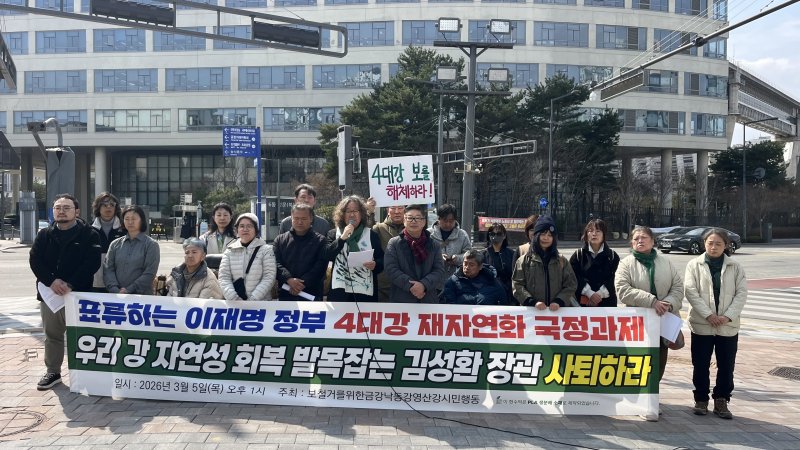
During his presidential campaign, President Lee Jae-myung pledged to “re-naturalize the Four Major Rivers,” and MCEE is currently drawing up plans for how to handle the 16 weirs, with the goal of finalizing them within the year. Since taking office, however, the administration has been exploring ways to balance ecological restoration with water management functions. The emphasis is on a “balanced approach” that promotes weir opening and river ecosystem recovery while still maintaining flood control and water resource management capabilities.
Environmental groups calling for the dismantling of the weirs strongly oppose this flexible operation approach. They argue it is merely an “alibi” for keeping the weirs in place and that fluctuating water levels will further damage ecosystems.
Climate, environment, and energy are like two sides of the same coin. Depending on how energy is produced, it can accelerate global warming; conversely, changes in climate and the environment can reshape energy demand and supply.[Lee Yu-beom’s Eco & Energy]is a weekly Saturday column that explores climate, environmental, and energy issues that are inseparably linked. Subscribe to the reporter’s page to receive it conveniently.
[email protected] Lee Yu-beom Reporter