Asia Detour Airfares Soar 900% as US–Iran Clash Brings Middle East Skies to a Halt
- Input
- 2026-03-06 06:35:22
- Updated
- 2026-03-06 06:35:22
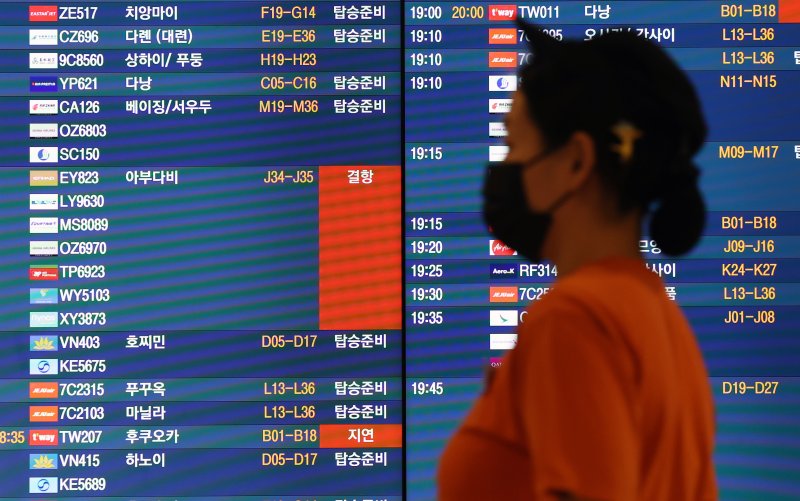
According to Financial News, the military confrontation between the United States of America and the Islamic Republic of Iran has led to a complete shutdown of air routes over the Middle East, triggering an unprecedented spike in airfares on some routes of up to about 900%.
Major foreign media reported on the 5th (local time) that no-fly measures in the Middle East have grounded flagship regional carriers such as Qatar Airways and Emirates. As a result, Asian airlines including Singapore Airlines and Cathay Pacific Airways are seen enjoying unexpected windfall gains.
Immediately after US forces struck targets in the Islamic Republic of Iran, passengers trying to flee the affected region flocked to Asian carriers, driving a surge in ticket prices. With airports in the Middle East—normally key hubs linking Asia and Europe—no longer functioning properly, passengers have converged on alternative airlines that can connect the two continents without transfers in the region.
In particular, travelers departing from Europe are now paying astronomical sums to reach Asia without transiting through the Middle East. Data compiled by foreign media show that on this day, a one-way economy-class ticket on Singapore Airlines from London Heathrow Airport to Singapore cost 66,767 Hong Kong dollars (about 12.5 million won). That represents a roughly 900% jump compared with fares later this month. A ticket to Hong Kong on the same date was priced at 26,737 Hong Kong dollars, more than 370% higher than the normal fare of 5,670 Hong Kong dollars a few weeks out.
However, major outlets noted that it remains unclear how long this abnormal price spike will last. If the dispute between the two countries drags on, the high-fare environment could persist. Yet given the enormous role the Middle East plays in global trade and tourism, once the situation eases, the region’s air network is highly likely to return to normal relatively quickly.
Commenting on the situation, Linus Benjamin Bauer, founder of aviation consulting firm BAA & Partners, said, "Asian airlines may benefit in the short term from higher ticket prices, stronger cargo rates, and a modest increase in market share," but added, "Fundamentally, this is just a redistribution of air travel demand, and it is difficult to view it as a structural reshaping of the global aviation network."
According to statistics from aviation data provider Cirium, more than 23,000 flights have been canceled as of this date. Aside from a small number of evacuation flights allowed to depart the United Arab Emirates (UAE), civilian air traffic across the Gulf region—including the Republic of Iraq, the Islamic Republic of Iran, and Qatar—remains completely suspended.
[email protected] Han Seung-gon Reporter