SMEs Struggle with Soaring Exchange Rates amid Sluggish Domestic Demand and Rising Costs, Raising Fears of Falling Operating Profits [U.S.–Iran War]
- Input
- 2026-03-05 18:13:57
- Updated
- 2026-03-05 18:13:57
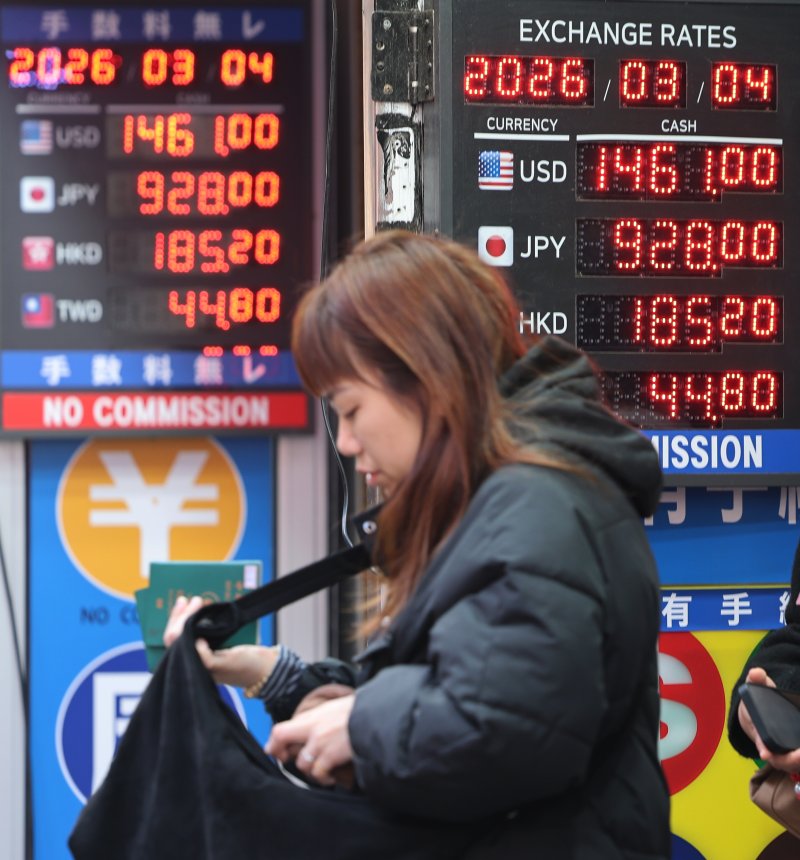
They worry that, on top of the ongoing slump in domestic demand, the sharp rise in the exchange rate will push up prices of raw materials and components. If this leads to higher manufacturing costs, their operating profits could fall sharply.
According to the Seoul foreign exchange market on the 5th, the won–dollar exchange rate closed weekly trading at 1,468.1 won that day. The rate had fallen to around 1,420 won last month, but after the Middle East crisis it briefly climbed above 1,500 won the previous day, as "exchange rate risks" surged. The rate exceeding 1,500 won is the first time in 17 years, since March 2009 during the Global Financial Crisis (GFC) triggered in the U.S.
A high exchange rate is devastating for SMEs. A survey titled "Status of SMEs Related to Exchange Rate Fluctuations" conducted late last year by the Korea Federation of SMEs (KBIZ) on 635 SMEs found that 40.7% of SMEs engaged in both exports and imports reported they had "suffered damage" from the sharp rise in the exchange rate. The average exchange rate they cited as necessary to achieve their target operating profit was 1,362.6 won.
In particular, a rising exchange rate directly hits SMEs that rely on imports for raw materials and parts.
Furniture makers have been trying to overcome falling sales caused by the recent economic downturn through cost-cutting and stockpiling. However, the added burden of exchange rate volatility has heightened their concerns.
An industry official explained, "There is a structural limitation in that we cannot avoid being affected by the exchange rate when importing subsidiary materials such as lumber," adding, "Once the materials we have stockpiled are used up, the impact could grow, so we are closely monitoring exchange rate movements."
On the other hand, the benefits SMEs can gain from higher exports due to a weak won are limited. With global economic growth slowing and overall demand plunging, there are clear limits to boosting export performance through the exchange rate alone.
Importing SMEs could, in theory, pass higher manufacturing costs on to consumer prices. But if consumer prices rise, sales may fall, making it difficult for them to raise prices easily. The head of a mask manufacturing company said, "Structurally, we cannot immediately reflect higher production costs from a weaker won in the prices at which we supply our products."
The government is struggling to craft measures in case the period of high exchange rates is prolonged. As a first step, the Ministry of SMEs and Startups (MSS) is reviewing an extension of maturities on policy loan repayments for SMEs and small business owners that import raw and subsidiary materials and could be harmed by a prolonged period of high exchange rates.
To ease cost pressures stemming from the higher exchange rate, the government will also expand "Consulting on the Supply Price Linkage Agreement," which helps reflect exchange rate fluctuations in supply prices. Companies that excel in applying such linkage agreements will receive expanded incentives, such as exemptions from ex officio investigations into subcontracting transactions. Some observers argue that, because it is difficult for the government to directly intervene in exchange rate issues, companies should make active use of tools such as exchange rate fluctuation insurance, which can partially compensate losses caused by currency swings.
The head of a company that imports raw and subsidiary materials from overseas to produce animal feed said with a sigh, "When the exchange rate rises, we inevitably suffer foreign exchange losses," adding, "Our buyers are the ones worrying about the high exchange rate, asking whether we might end up cutting off our business with them."
honestly82@fnnews.com Kim Hyun-chul Reporter