Cheong Wa Dae: "Three Judicial Laws Were Approved by the State Council of South Korea in Accordance With Constitutional Procedures"
- Input
- 2026-03-05 16:14:18
- Updated
- 2026-03-05 16:14:18
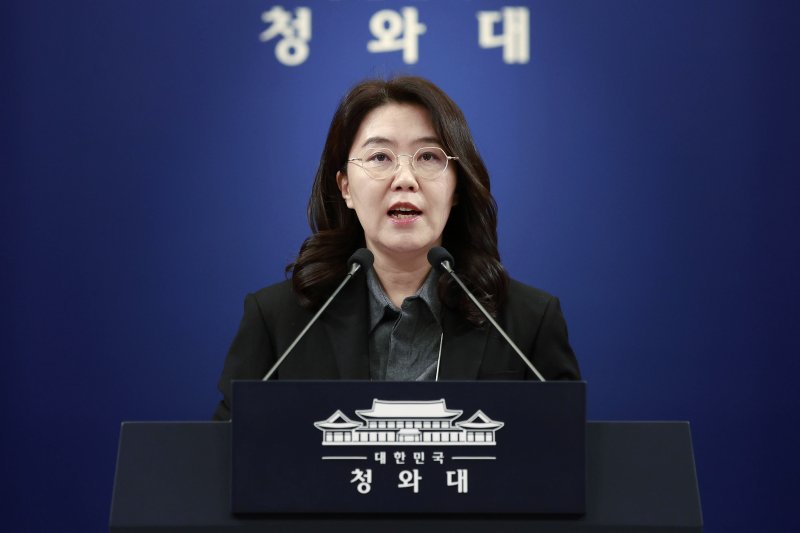
[Financial News] Cheong Wa Dae (the Blue House) stated, in connection with the approval of the so‐called "Three Judicial Laws" (the crime of legal distortion, the judicial review petition system, and the Supreme Court justice expansion law) by the State Council of South Korea, that "since these bills have gone through the prescribed procedures in the National Assembly, the government believes it is appropriate to approve and promulgate them in accordance with the procedures set out in the Constitution of the Republic of Korea."
Spokesperson Kang Yu-jeong made these remarks during a briefing at Chunchugwan. She was responding to questions such as, "The legal community is protesting these bills; has this been reported to the President?" and "Since the State Council of South Korea approved them, can this be seen as meaning that the President and Cheong Wa Dae also agree with the purpose of the laws?"
Kang said, "The government has conducted a comprehensive review of the contents of the bills and the course of deliberations in the National Assembly."
The crime of legal distortion, an amendment to the Criminal Act, mainly provides that judges and prosecutors involved in criminal cases who distort the law in relation to ongoing trials or investigations, with the intent to unlawfully or unjustly confer benefits on others or infringe on their rights and interests, may be punished by up to 10 years in prison and up to 10 years of disqualification.
The Judicial Review Petition Act, an amendment to the Constitutional Court Act, would include court judgments among the matters that can be challenged by constitutional complaint. This would allow parties to contest the constitutionality of a judgment once more before the Constitutional Court of Korea even after a final ruling by the Supreme Court of Korea.
The Supreme Court Justice Expansion Act, an amendment to the Court Organization Act, stipulates that the current number of Supreme Court justices, now 14, will be increased by four each year for three years, bringing the total to 26.
[email protected] Choi Jong-geun Reporter