"Seoul Still the Answer"... One in Four Home Buyers in Seoul Is from Outside the City
- Input
- 2026-03-05 15:50:11
- Updated
- 2026-03-05 15:50:11
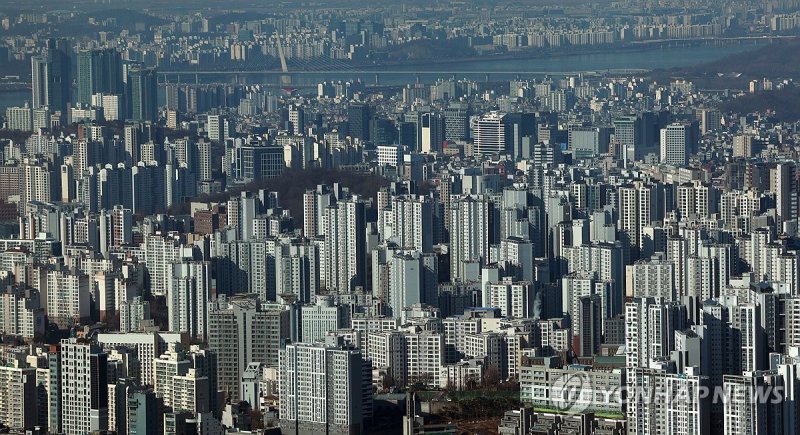
[The Financial News] The number of buyers of collective buildings in Seoul, such as apartments, townhouses and officetels, has declined, but the share of buyers from outside the city has stayed around 25%. These non-resident buyers have been concentrating on mid- to high-priced homes in Songpa District and Gangdong District.
According to the Court Registration Information Plaza on the 5th, as of the 4th of last month there were 15,270 buyers of collective buildings located in Seoul. This was a decrease of 3,541 people, or 18.82%, from the previous month’s 18,811 buyers. In contrast, 3,712 of last month’s buyers were from outside Seoul, accounting for 24.3% of the total. That is only a slight drop from 24.5% the previous month. Considering that it usually takes about two months from signing a sales contract to completing registration, it appears that non-resident buyers continued to step in for opportunities despite the year-end and New Year slowdown in transactions.
Last year, the number of buyers of collective buildings in Seoul fluctuated sharply in line with the timing of the government’s real estate policy announcements. In June, when the June 27 measures were unveiled, the figure surged to 20,871. However, in November, right after the October 15 measures, it fell sharply to 13,136.
The number of out-of-town buyers also moved up and down with these policy changes, but their share consistently stayed between 24% and 25%. Over the past six months, the share of non-resident buyers was 25.3% in September 2025, 25.6% in October, 24.7% in November, 24.4% in December, 24.5% in January 2026, and 24.3% in February.
By the buyers’ registered addresses, residents of Gyeonggi Province and Incheon Metropolitan City accounted for 71.5%, highlighting the push from the greater Seoul area into the capital. Buyers living in Gyeonggi Province numbered 2,356, making up 63.5% of all out-of-town purchasers, followed by 298 buyers from Incheon Metropolitan City (8.0%). Among regions outside the capital area, the largest numbers came from Gangwon Province (122), South Chungcheong Province (111), South Gyeongsang Province (108) and Busan Metropolitan City (106).
By district, purchases by non-resident buyers were particularly notable last year in the core areas of the Gangnam 3 Districts (Gangnam District, Seocho District and Songpa District) and along the Han River Belt, including Mapo District and Gangdong District. This month, however, Gangseo District has moved into the upper ranks, indicating that buying interest is spreading to areas with relatively lower entry prices.
Last month, Songpa District recorded the highest number of out-of-town purchases with 325 transactions. It was followed by Gangdong District with 266, Gangseo District with 228, Gangnam District with 202 and Yeongdeungpo District with 201. In particular, Gangseo District has climbed into the top tier as monthly purchases by non-resident buyers have risen to around 200 since the second half of last year. As home prices in Seoul have climbed and the threshold for entering Gangnam has risen, demand appears to be shifting toward mid- to high-priced apartments in other areas.
However, as all of Seoul has been designated a land transaction permit zone, buyers are now subject to a two-year mandatory occupancy requirement. On top of that, the government has signaled tougher tax rules on non-resident owners of a single home, so purchases by out-of-town buyers are expected to decline going forward. Financial institutions are also reviewing measures such as restricting jeonse loan guarantees for non-resident single-home owners.
Yang Ji-young, an Expert Member at Shinhan Premier Pathfinder, said, "Last year, there were cases where people living in other regions considered additional purchases in Seoul to gift homes to their children." She added, "Recently, however, mandatory occupancy rules and various regulations have changed the situation, so long-distance speculative buying is likely to decrease."
[email protected] Reporter Choi Ah-young Reporter