Iran fires three missiles into Iraqi Kurdish region, raising risk of wider war
- Input
- 2026-03-05 14:37:51
- Updated
- 2026-03-05 14:37:51
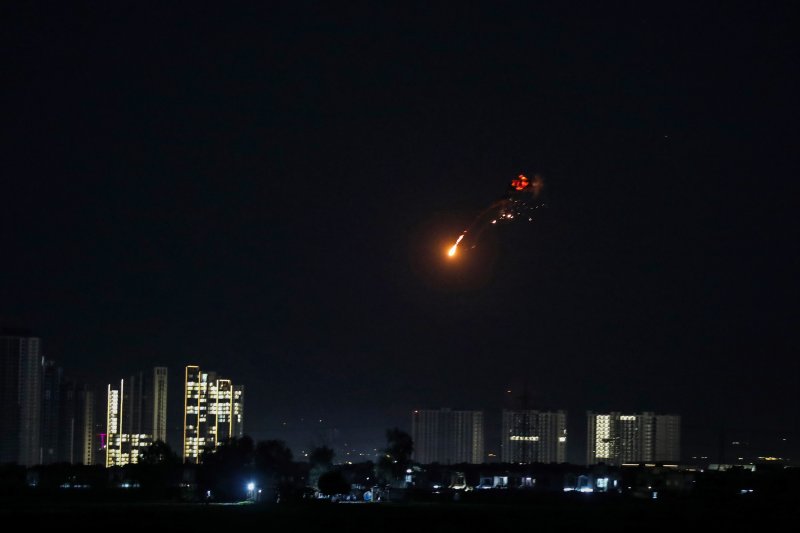
According to The Financial News, the Islamic Republic of Iran, which has been under airstrikes by the United States of America (U.S.) since last month, fired three missiles into the Kurdish autonomous region along the Iraqi border. The strike came shortly after foreign media reported that an armed Kurdish group was preparing to invade Iran with U.S. support.
Citing the Islamic Republic News Agency (IRNA), Agence France-Presse (AFP) reported on the 4th (local time) that the Iranian government announced, "We struck the headquarters of Kurdish groups opposed to the revolution in Iraqi Kurdistan with three missiles."
The Kurds, an Iranian ethnic group living in mountainous regions, are often described as the world’s largest "stateless nation." Since the 3rd century BC, they have been scattered across the mountains of southeastern Türkiye, the Republic of Iraq, northern Syria, and northwestern Islamic Republic of Iran. Their total population is estimated at 30 to 40 million, and about 8 million—roughly 10% of Iran’s population—are Kurds. They have repeatedly sought to establish an independent state in Türkiye, the Republic of Iraq, the Islamic Republic of Iran, and elsewhere, but have consistently failed. In Iran, the first Kurdish autonomous state, the Republic of Mahabad, was founded in 1945, only to be crushed by Iranian forces in about a year.
The Kurds cooperated with the United States of America (U.S.) in the Republic of Iraq and Syria when Islamic State (IS) was at its peak, joining operations to defeat the group. Today, a Kurdish regional government administers the Kurdistan area in northeastern Republic of Iraq, which borders the Islamic Republic of Iran. Inside Iran, Kurds played a leading role in anti-government activities, including the 2022 Iranian protests against compulsory hijab and demonstrations last year.
Fox News reported on the 4th, citing U.S. government officials, that thousands of Kurds had crossed the border from the Republic of Iraq into the Islamic Republic of Iran and begun a ground offensive. The U.S. and Israel have been carrying out airstrikes on Iran since the 28th of last month, and U.S. President Donald Trump mentioned on the 2nd that he was considering the possible deployment of ground troops.
The Kurds mentioned by Fox News are believed to be Iranian Kurdish militias opposed to the Iranian regime. According to officials, many of the fighters are Iranian Kurds who had lived in the Republic of Iraq for years and are now returning to northwestern Islamic Republic of Iran as part of the current offensive. Karoline Leavitt, spokesperson for The White House, said at a briefing on the 4th that Trump "actually spoke with Kurdish leaders regarding our bases in northern Iraq." Leavitt acknowledged the contacts but denied reports that the U.S. had agreed to arm Kurdish forces. "It is absolutely not true that the president has agreed to any such plan," she stressed.
On the 3rd, Cable News Network (CNN) reported, citing officials, that the Central Intelligence Agency (CIA) is pursuing a plan to supply weapons to Kurdish forces in the Islamic Republic of Iran in order to spark a popular uprising.
[email protected] Park Jong-won Reporter