US Submarine Torpedoes and Sinks Iranian Warship; Kurdish Ground Offensive Raises Risk of Wider War
- Input
- 2026-03-05 11:36:37
- Updated
- 2026-03-05 11:36:37
The Financial News New York – Lee Byung-chul, correspondentThe war in the Middle East between the United States and the Islamic Republic of Iran is intensifying. On the sixth day of fighting, the United States sank an Iranian warship in the Indian Ocean and, together with Israel, declared it would completely control Iranian airspace within days.
Donald Trump warned that Iran’s new leadership, which is maintaining an anti-US line and clinging to its nuclear program, could face death. Iran, for its part, fired missiles toward the Republic of Türkiye, a member of the North Atlantic Treaty Organization (NATO). At the same time, reports emerged that the Kurdish people, an anti-government force in Iran, have launched a ground offensive. Trump is also reported to have held phone calls with Kurdish leaders.
"US submarine sinks Iranian warship with torpedo; airspace control imminent"
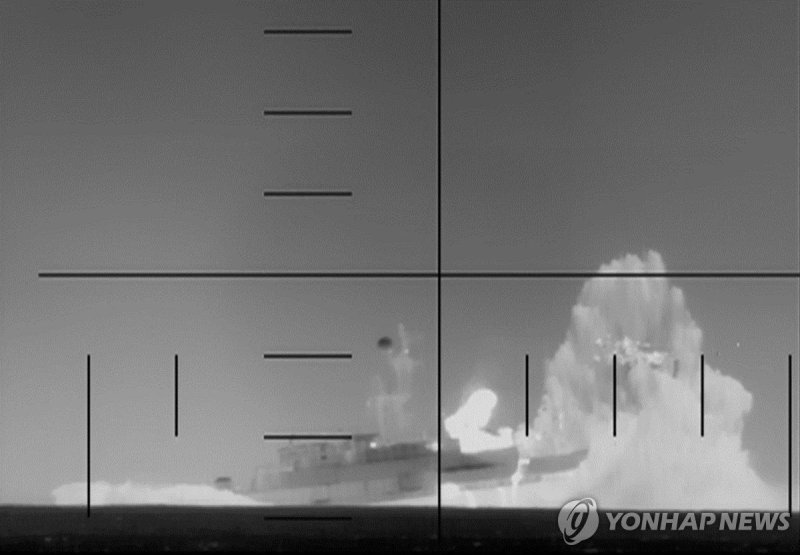
The United States has sunk a warship with a submarine-launched torpedo for the first time since World War II.
US Secretary of Defense Pete Hegseth and Gen. Dan Caine, chairman of the US Joint Chiefs of Staff, said at a joint press conference on the 4th (local time), "An Iranian warship that believed it was safe in international waters was sunk by a torpedo attack from a US submarine."
Gen. Dan Caine explained that this was the first time since 1945 that a US submarine had sunk an enemy warship with a torpedo. "The submarine fired a single Mark 48 torpedo and sent the warship to the bottom of the sea," he said.
According to authorities in Sri Lanka, about 180 people were on board the warship at the time. At least 87 bodies have been recovered. Thirty-two people were rescued and are being treated in hospital, while around 60 remain missing.
The sunken warship had taken part in a multinational naval event held last month in the Bay of Bengal off India. It was reportedly attacked while sailing through international waters after its visit to India.
Hegseth stated, "The United States is winning decisively, destructively and without mercy," adding, "Within a few days we will completely control Iranian airspace."
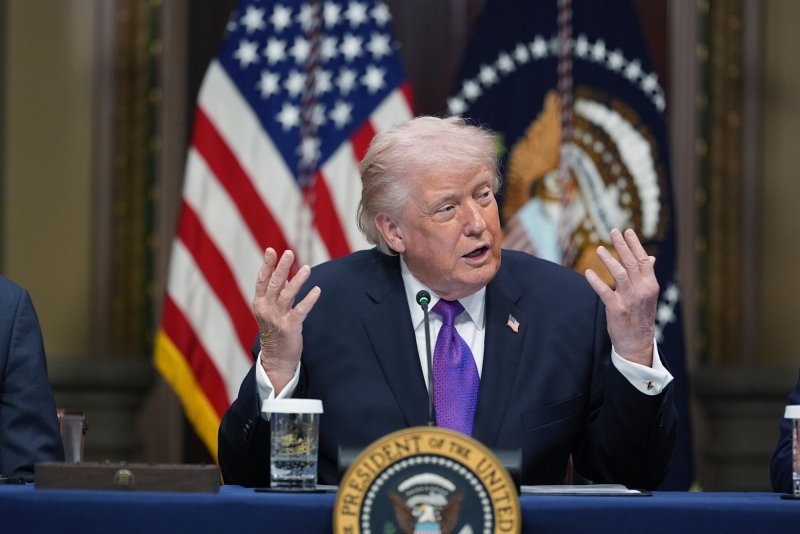
Donald Trump also delivered a strong message regarding Iran’s next leadership. Iran is in the process of choosing a successor to its supreme leader, Ayatollah Seyyed Ali Hosseini Khamenei, who was killed in the recent attack.
It is widely believed that Khamenei’s second son, Mojtaba Khamenei, has already been chosen, but no official announcement has been made. Trump said that day, "Everyone who appears to want to become the leader ultimately meets death." He was underscoring that any new leader must not defy the United States.
He went on to say of the current operation, "We are doing very well and will continue to do very well," adding, "When someone asked me what score I would give it out of 10, I said about 15." He also stressed, "We are now in a very strong position, and their leadership is collapsing at a rapid pace."
Iranian missile retaliation targets infrastructure
Iran has also continued its counterattacks.
Tasnim News Agency reported that the Islamic Revolutionary Guard Corps of Iran (IRGC) struck and destroyed three radar units of the US Terminal High Altitude Area Defense (THAAD) missile defense system deployed in three Middle Eastern countries.
Iran is carrying out missile and drone attacks on Israel as well as Saudi Arabia, the State of Kuwait and the Republic of Türkiye. In particular, NATO’s air defense network intercepted Iranian ballistic missiles fired at Türkiye, bringing Türkiye, which has the second-largest military in NATO, into the conflict for the first time.
Iran has threatened the United States and others, vowing to indiscriminately strike all economic infrastructure in the region.
In a statement broadcast on state television the previous day, the IRGC declared, "We are prepared to completely destroy military and economic infrastructure in the region," warning, "The price for the continued games, tricks and deceit by the United States in this region will be the total destruction of all military and economic infrastructure."
Possibility of Kurdish ground war raises prospect of new phase in Middle East conflict
Reports are also emerging about the possibility of a ground offensive.
Fox News reported that the Kurdish people have joined hands with the US government and launched ground attacks. According to the report, many of the fighters are Iranian Kurds who have lived for years in the Republic of Iraq and are now moving into northwestern Iran as part of the operation.
US media had already reported that Kurdish armed groups were in contact with the Trump administration to discuss whether they could take part in US and Israeli military operations against Iran.
The White House said it has not agreed to any plan to arm Iranian Kurdish militants. However, it acknowledged that Trump has been in contact with Kurdish leaders.
White House Press Secretary Karoline Leavitt said at a regular briefing that day, "President Trump spoke with Kurdish leaders regarding US military bases in northern Iraq." She drew a clear line, however, saying that Washington has not agreed to provide weapons or military support to Iranian Kurdish fighters.
However, according to multiple officials, Iranian Kurdish groups have asked the United States for intelligence sharing, weapons and military training support, and have also requested the establishment of a no-fly zone. It remains unclear whether Washington has agreed to any of these demands.
The Kurdish people, who make up about 10% of Iran’s population, are regarded as a group with a strong sense of national identity and organization. Some factions are already armed, and have long been seen as a potential threat to the Iranian regime.
Kamal Karimi, a member of the central committee of the Democratic Party of Iranian Kurdistan (KDPI), the most influential among Iranian Kurdish armed groups, told The Wall Street Journal (WSJ), "The war currently under way is not directly related to our existing struggle, but the situation could provide an opportunity for Kurdish forces to act."
Experts say that if Kurdish forces actually join the fighting, a conflict that has so far been dominated by airstrikes could expand into a full-scale ground war.
[email protected] Reporter Lee Byung-chul Reporter