An Exhibition of Tino Sehgal Where You Can Neither Take Photos Nor Leave Records: What Will We Feel?
- Input
- 2026-03-05 15:31:08
- Updated
- 2026-03-05 15:31:08
[The Financial News] "This is so contemporary."As soon as you enter the exhibition space, people who look like information desk staff start shaking their bodies and chanting to visitors. They come closer, and although it feels awkward at first, you soon find yourself waving back in response to their artistic expression.
In that moment, the work This Is So Contemporary (2004) by British-born contemporary artist Tino Sehgal unfolds according to the reactions of the audience. Visitors are no longer mere onlookers; they become participants as they step into the gallery.
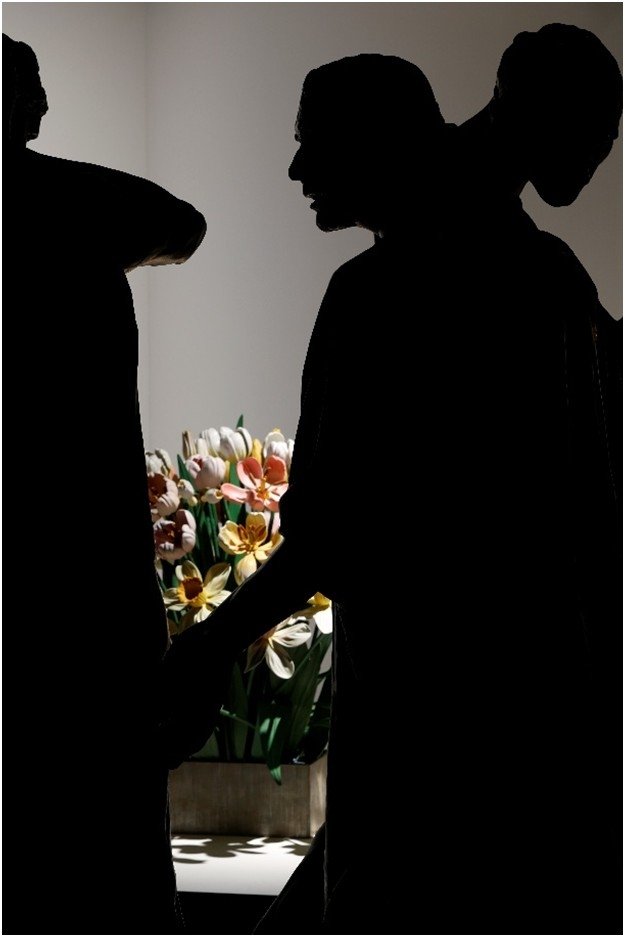
Deeper inside the exhibition, there is someone riding a bicycle backwards while keeping balance, someone singing, and another person balancing a ball on their head and performing tricks. The most striking work is especially Kiss (2002). A man and a woman lie on the floor, locked in an endless embrace and kiss, moving together all day long in a continuous performance.
A performance art exhibition that uses only the human body, gestures, and language as its material has opened in spectacular fashion. The Leeum Museum of Art announced on the 5th that it will present Tino Sehgal’s first solo exhibition in Korea, titled "Tino Sehgal," through June 28.
Sehgal’s first solo show in Korea begins with the question, "What is an exhibition?" Instead of material objects such as paintings or sculptures, works composed solely of human bodies, speech, and relationships occupy the entire museum.
Sehgal calls these works "constructed situations." Realized by "interpreters," they invite visitors to encounter them directly and to take part in the situations.
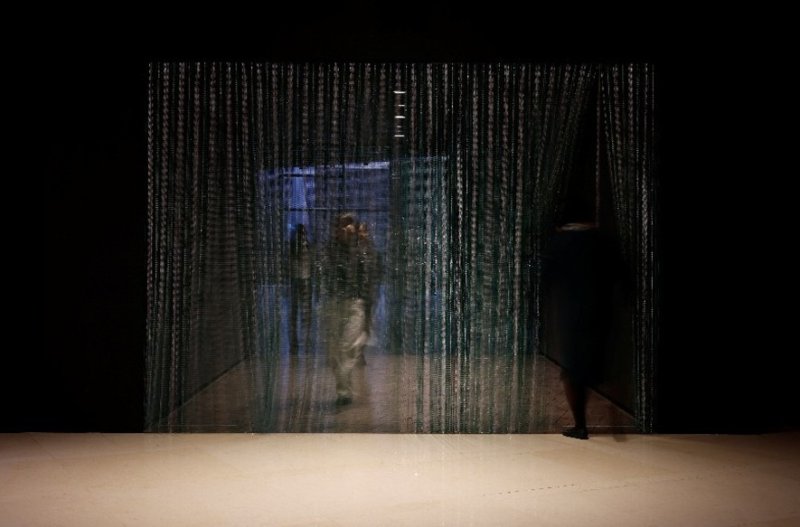
This exhibition offers a concentrated overview of 25 years of his practice. A total of eight situations unfold across the entrance, lobby, galleries, and outdoor garden, with some works rotating according to a schedule.
The centerpiece of the show, Kiss, immediately draws the eye. In a space surrounded by sculptures by Auguste Rodin, dancers referred to as "interpreters" hold each other and move slowly. For this work, the Leeum Museum of Art publicly recruited dancers who are couples in real life.
This performance, which recalls various scenes of "the kiss" from art history, sets past sculptures fixed in bronze against living bodies in the present. Frozen forms collide with flowing time, and two kinds of sculpture confront one another.
Unusual scenes also unfold in the lobby. Interpreters mingling among the visitors quietly approach and begin to share personal stories. The line between who is the artwork and who is the viewer starts to blur. One person confides their own experiences, while another poses a question and then disappears. The exhibition becomes not something merely to be "looked at," but a site where relationships arise.
In the central gallery, violin playing, singing, bicycle stunts, and soccer moves intermingle. Loosely connected movements and a cappella voices create an unfamiliar rhythm that fills the space like a strange kind of chorus.
Out in the garden, an interpreter sings directly to the audience. The impassioned performance of Morten Harket’s "Can’t Take My Eyes Off You" once again blurs the boundary between performance and everyday life.
No photographs of the works in this exhibition may be used. Having devoted his career to the question "How can art exist without material objects?" Sehgal refuses to leave any photographs, videos, or catalogues.
He wants visitors to carry away only the memories of what they saw and felt on site. It is reminiscent of how dance, stories, and songs were once passed down orally long ago.
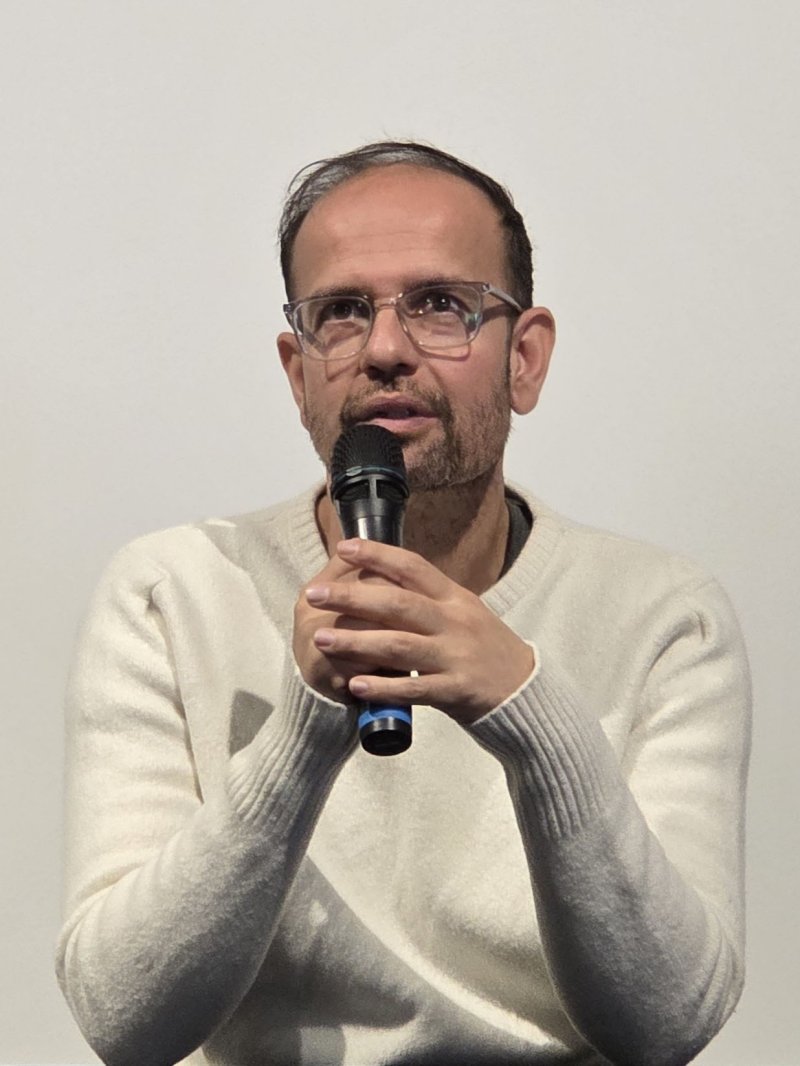
On this day, Sehgal remarked, "When you teach a young child to play baseball, you don’t hand them a book; you show them with your body. Transmitting knowledge through the body is still an effective method," adding, "Compared to a theater, an exhibition space makes it easier to interact with the audience. Art is a game that we all play together."
Regarding the exhibition, the Leeum Museum of Art commented, "Resisting the modern impulse to pursue constant digital documentation, Sehgal encourages visitors to put down their phones and cameras and remain in the present moment," and added, "His artistic practice aims for 'de-production,' which prioritizes directly experienced memories over reproducible records."
The museum continued, "Going beyond the traditional role of a place of preservation, the exhibition creates opportunities for change and interaction, building on diverse connections and live encounters to renew the relationships between audience, artwork, and museum."
Sehgal, who was born in London, United Kingdom and is based in Berlin, Germany, has an unusual background in both economics and dance. The decisive turning point that propelled him to global stardom came at the Venice Biennale in 2013. His work Untitled, presented in the main exhibition that year, sent a shockwave through the art world and earned him the Golden Lion, its highest honor. His approach, which rejects even documentation and exists only as fleeting "events" and "memories," is widely seen as having radically transformed the paradigm of contemporary art.
[email protected] Yoo Sun-jun Reporter