SK Chairman Chey Tae-won to Attend Nvidia’s GTC to Meet Jensen Huang, Expected to Discuss HBM Cooperation
- Input
- 2026-03-05 13:49:19
- Updated
- 2026-03-05 13:49:19
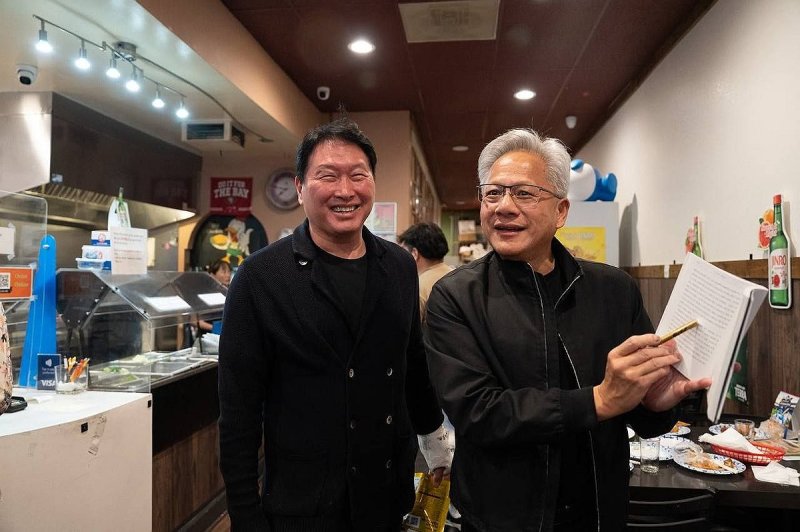
Chey Tae-won, chairman of SK Group, will attend Nvidia’s annual technology conference "NVIDIA GTC 2026 (NVIDIA GPU Technology Conference 2026)" in the United States next week. He is also expected to meet Nvidia CEO Jensen Huang during the event. This will be their first reunion in about a month, following a "chimaek" (chicken and beer) meeting in the U.S. last month, and they are expected to focus on cooperation in AI semiconductors, including the supply of high-bandwidth memory (HBM).
According to business circles on the 5th, Chey plans to attend NVIDIA GTC 2026, which will be held on the 16th (local time) in San Jose, California. This will be the first time he has visited the GPU Technology Conference (GTC) in person.
GTC is Nvidia’s annual technology conference. It showcases the latest technologies and ecosystems across a wide range of industries, including robotics and autonomous driving, with a focus on AI semiconductors and computing.
This year’s event is drawing particular attention because Nvidia is expected to unveil its next-generation AI accelerator, "NVIDIA Vera Rubin."
The product is expected to use HBM4 high-bandwidth memory (HBM4), the next generation of HBM, making Nvidia’s partnership structure with memory chipmakers such as SK Hynix a key point to watch. Nvidia is reported to have allocated about two-thirds of the HBM4 volume for Vera Rubin and related products this year to SK Hynix, although Samsung Electronics has already entered the HBM4 market ahead of its rivals.
SK Hynix is currently mass-producing HBM4 in line with customer demand while working on performance optimization. The NVIDIA Vera Rubin system to be unveiled at GTC is expected to use Samsung Electronics’ HBM4.
Against this backdrop, Chey and CEO Jensen Huang are expected to meet during the conference to discuss expanding HBM supply and exploring cooperation on next-generation AI semiconductors.
As the expansion of AI data centers drives a surge in demand for high-performance memory, the two sides may also discuss strategic cooperation beyond HBM4. Potential topics include joint development of next-generation HBM technologies and broader collaboration across AI infrastructure.
[email protected] Im Su-bin Reporter