"Don't use wet wipes to clean your dining table"... Expert issues chilling warning [Health Issue]
- Input
- 2026-03-05 05:58:03
- Updated
- 2026-03-05 05:58:03
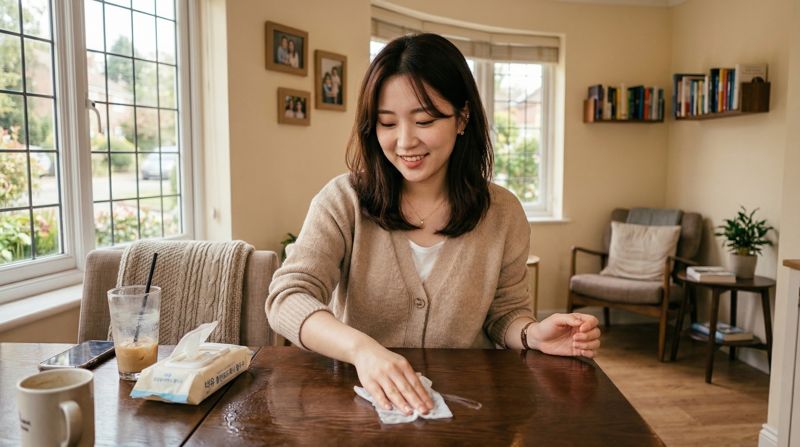
According to The Financial News, many people wipe their dining tables with wet wipes instead of dishcloths for convenience. However, experts are now urging the public to change this habit for safety reasons. Wet wipes are often used to clean tables because they can be taken out and used at any time without special care, but critics warn that residual chemicals may enter the human body.
Recently, on the YouTube channel "Educator Doctor Lee Dong-hwan TV," Choi Eun-jung, a professor of Science Education at Ewha Womans University (Ewha), appeared and highlighted the dangers of using wet wipes to clean dining tables.
"If this is repeated every day for years, it may combine with other harmful substances"
Professor Choi warned, "Many households use wet wipes because washing, drying, and boiling dishcloths to keep them clean feels bothersome." She continued, "However, the chemicals in wet wipes can remain on the table surface, and when you place spoons and chopsticks there, even in trace amounts, those substances can be mixed into your food while you eat." She explained that even if no immediate health problems appear, daily repetition of this practice over several years could allow these substances to combine with other harmful materials and negatively affect health.
Wet wipes are not just simple damp tissues; they are made from synthetic fibers such as polyester. Because they must be stored in a moist state for long periods, preservatives that inhibit the growth of bacteria and mold are added. Sodium benzoate, which is also used as a food preservative, is a typical example. Domestic safety standards are stricter than those in many other countries, so products that meet the permitted limits are considered safe. However, that does not mean they are completely harmless to the human body.
"You need to be careful about how often and how you use them"
In particular, products that contain other chemical ingredients such as alcohols like ethanol or artificial fragrances may leave residues of these substances on surfaces after use. Professor Choi noted, "If you are exposed to multiple chemical substances at the same time, they can act as endocrine-disrupting chemicals." She added, "Even if toxic substances are present only below the regulatory limits and are relatively safe, it is still better to be careful about how often and in what way you use them."
As an alternative, kitchen paper towels are recommended. In places such as homes or offices where water is readily available, you can wet kitchen paper towels with water and use them to wipe the dining table instead of wet wipes.
Professor Choi explained, "Instead of dishcloths or wet wipes, you can use kitchen paper towels," adding, "Kitchen paper towels are stored in a dry state, so they do not require preservatives, and most products currently sold in Korea do not use fluorescent whitening agents." Kitchen paper towels are absorbent paper products used in the kitchen, commonly used to remove moisture from ingredients or as a substitute for dishcloths. However, she cautioned that some kitchen paper towels may still contain harmful substances such as fluorescent whitening agents, so consumers should check the ingredients and whether the product is certified by the Ministry of Food and Drug Safety (MFDS) before purchasing.
hsg@fnnews.com Reporter Han Seung-gon Reporter