Concerns Over Naphtha Supply if Middle East Crisis Drags On...Government Plans Support Such as Diverting Export Volumes to Domestic Use
- Input
- 2026-03-04 15:00:00
- Updated
- 2026-03-04 15:00:00
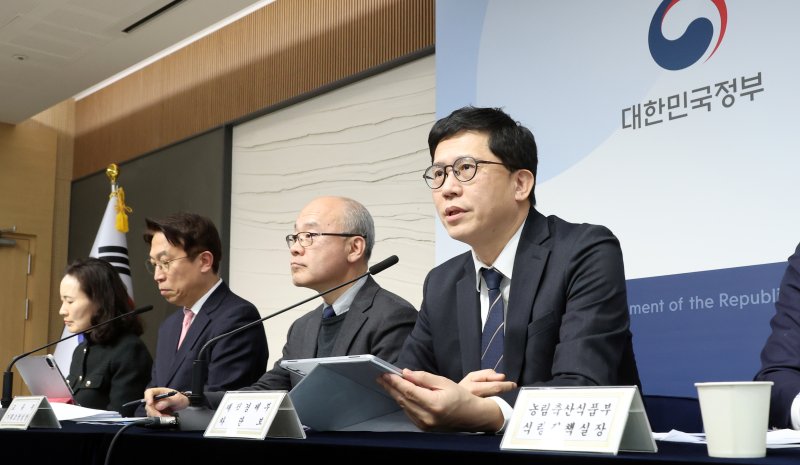
[The Financial News] On the 4th, Kang Giryong, Deputy Vice Minister at the Ministry of Economy and Finance (MOEF), convened a joint review meeting with relevant agencies to assess how the Middle East crisis is affecting domestic and global supply chains.
The meeting conducted a comprehensive review of import trends, substitution options, and domestic production conditions for key economic security items that are highly dependent on the Middle East, such as energy, chemical products, and materials and equipment. Participants also discussed the government’s future response strategy.
The review found that, although tensions around the Strait of Hormuz are rising, there have been no unusual developments so far regarding domestic energy supply and demand. Korea currently holds strategic oil reserves equivalent to 208 days of consumption under IEA standards, and its capacity to respond to a supply crisis was assessed as sufficient.
For most materials, parts, and equipment items, it is possible either to secure alternative import sources or to shift to domestic production. As a result, the impact of the Middle East situation on domestic supply and demand has so far been assessed as limited.
In contrast, naphtha is more vulnerable, as 54% of imported naphtha passes through the Strait of Hormuz. If the situation is prolonged, there could be supply concerns, so the government plans to prepare support measures such as diverting export volumes to the domestic market. Given the high uncertainty over how the Middle East situation will unfold, authorities agreed to make every effort to manage domestic and international supply chains stably, with a joint emergency response team of relevant agencies playing a central role.
To quickly identify difficulties faced by companies related to the Middle East crisis, the government will strengthen communication with industry. It also plans to provide tailored support, including helping firms find alternative import sources through the Corporate Support Help Desk within the Korea Trade-Investment Promotion Agency (KOTRA).
In addition, to cope with greater volatility in international oil prices, the government will thoroughly prepare emergency-manual measures such as securing additional volumes from outside the Middle East, bringing in overseas production, and exercising priority purchase rights for jointly stored oil. It also plans to respond swiftly, including by releasing strategic oil reserves if necessary.
In particular, support for crude oil purchase funds and emergency operating funds will be expanded through the Supply Chain Stabilization Fund. The government will activate the Supply Chain Fund Emergency Response Team within the Export-Import Bank of Korea (KEXIM Bank) and seek to raise the support limit for crude oil purchase financing from 90% to 100% for supplies from regions outside the Middle East, such as North America and Latin America. If companies suffer losses due to increased oil price volatility, authorities plan to identify their funding needs and provide the necessary financing without delay.
Kang emphasized, "As uncertainty in the Middle East continues, we will work closely with relevant ministries to continuously monitor supply and demand conditions for key items." He added, "We will spare no effort in providing the necessary support so that Korean companies can smoothly secure alternative supplies, and we will respond preemptively to ensure that domestic supply chains remain stable."
[email protected] Seo Young-jun Reporter