Drug Crime Joint Government Investigation Headquarters Dismantles Major Supply Networks Through Integrated Nationwide Probe
- Input
- 2026-03-04 16:13:49
- Updated
- 2026-03-04 16:13:49
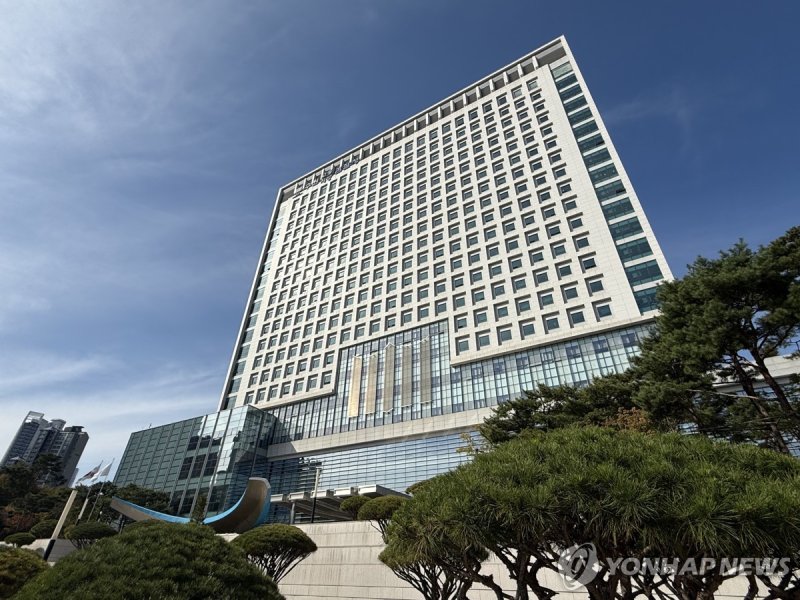
According to the prosecution service, the Joint Government Investigation Headquarters for Drug Crimes detected 124 drug offenders between November 21 last year and February 28 this year, a 100-day period, and arrested 56 of them.
Unlike past investigative practices, the task force focused on probing drug production and distribution networks. In fact, among the drug offenders caught over the 100 days, only 42 were charged solely with drug use and 14 of them were arrested. The rest were major suppliers involved in smuggling, cultivation, sales, and distribution. Specifically, 21 people were booked for smuggling, with 15 arrested; 23 for sales, with 12 arrested; 27 for distribution, with 10 arrested; 8 for cultivation, with 5 arrested; and 3 for other offenses.
In other words, users accounted for only about one-third of the offenders identified by the task force. This contrasts with the overall pattern of drug crime, in which roughly half of all offenders are users. Cracking down on producers and distributors is far more effective in eliminating drug abuse than focusing on users alone.
The task force cited interagency cooperation across the government as the key to these results. It cross-analyzed drug crime information collected nationwide by each investigative body, including the prosecution service, police, and Korea Customs Service (KCS). Previously, agencies responsible for monitoring and cracking down on smuggling and distribution routes—such as the police, Korea Coast Guard (KCG), and KCS—conducted investigations separately without fully sharing information. In contrast, the task force has conducted joint investigations from the initial search and seizure stage through to arrests, with the prosecution service, police, and KCG working together. It also received investigative leads on suspects from the National Intelligence Service (NIS), immigration records from the Korea Immigration Service, financial tracking support from the Financial Intelligence Unit (FIU), and information on businesses suspected of drug distribution from the Seoul Metropolitan Government. This allowed an efficient and comprehensive response to the organized crimes committed by major suppliers.
Through these efforts, the task force uncovered three smuggling rings, including one based in the Socialist Republic of Vietnam, and arrested 15 members of these organizations. It seized approximately 4.5 kilograms of methamphetamine, about 4.6 kilograms of ketamine, and 2,378 tablets of 3,4-methylenedioxymethamphetamine (MDMA, commonly known as Ecstasy)—a total amount equivalent to roughly 160,000 doses with an estimated street value of 3.2 billion won—thereby blocking their distribution in the domestic market in advance.
The task force also exposed two Korean nationals who disguised themselves as farmers to receive benefits such as the government's smart farm start-up grant program and discounted electricity rates. They built an underground bunker beneath a greenhouse, installed smart farming equipment, and cultivated and distributed 134 cannabis plants; one of the two has been arrested. In a separate case, two Korean nationals were arrested for cultivating 16 cannabis plants in commercial properties using tents and LED lighting and for storing about 3.7 kilograms of cannabis. In another case, two suspects of Central Asian nationality were arrested for cultivating 12 cannabis plants in an apartment using a greenhouse and LED lighting and for selling a total of 38 grams of cannabis in 13 separate transactions.
In addition, the task force uncovered two distribution rings that trafficked drugs in collusion with a level-7 local government official. It booked 24 people in connection with these rings and arrested 17 of them. This was achieved by sharing investigative information between the prosecution service and police and by analyzing closed-circuit television (CCTV) footage.
The task force plans to continue this kind of whole-of-government investigation to eradicate drug crimes, with a particular focus on dismantling production and distribution networks.
An official from the task force stated, "One of our strengths is that we share each agency's specialized investigative techniques, such as the prosecution service's top-down approach and the police and Korea Coast Guard's bottom-up approach." The official added, "We will strive to help Korea reclaim its status as a drug-free nation through systematic and comprehensive investigations, rather than fragmented and uncoordinated ones."
[email protected] Kim Dong-gyu Reporter