Walking the Seomtia-go 12 Apostles Pilgrimage Trail in Sinan
- Input
- 2026-03-05 14:51:32
- Updated
- 2026-03-05 14:51:32
[Sinan County, South Jeolla Province = Reporter Jeong Sun-min] "Anyone who keeps walking eventually learns about life." Brazilian writer Paulo Coelho wrote these words in his book "The Pilgrimage," which he published after personally walking the Camino de Santiago (the Way of St. James) in Spain. Long-distance walker Kim Nam-hee, who once described herself as "a timid, fearful and finicky woman," called the Santiago route "a path that empties me out and fills me up again."
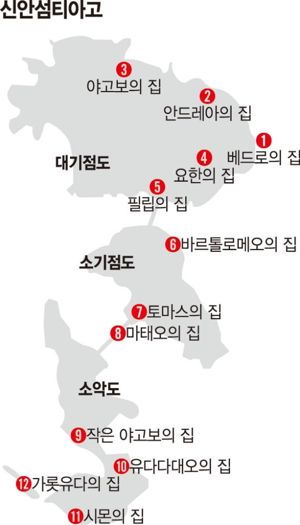
If Spain has the Camino de Santiago, Korea has the Seomtia-go 12 Apostles Pilgrimage Trail. Seomtia-go is a walking route created by Sinan County in 2020. It links five small islands—Daegijeomdo Island, Sogijeomdo Island, Soakdo Island, Jinseom Island and Ddanseom Island—set like jewels in the sea off Sinan. The name "12 Apostles" comes from the 12 chapels here, each named after one of the apostles of Jesus.
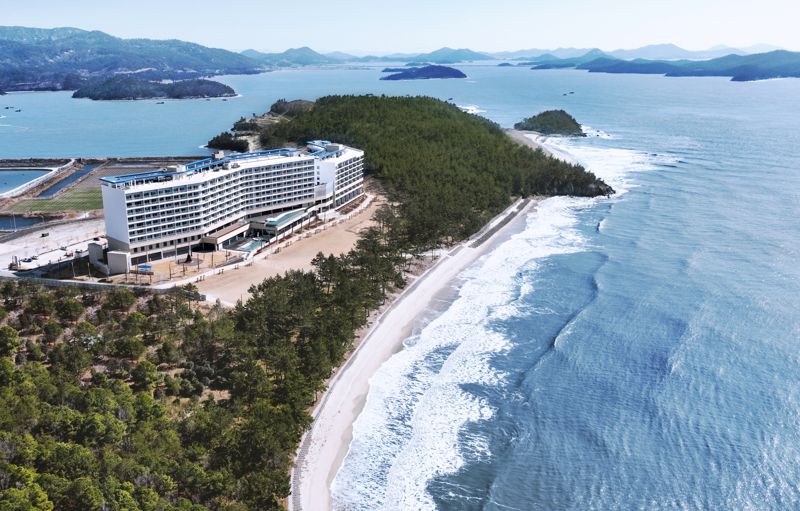
Ramada Plaza Hotel & C-One Resort on Jaeun-do Island in Sinan has launched a new "Seomtia-go 12 Apostles Pilgrimage Trail 2 nights 3 days" package for the spring season. The standout feature of this package is its unusually generous length of stay. A typical two-night, three-day trip leaves little actual travel time once check-in and check-out are deducted, but this offer allows early check-in at 6:00 a.m. on the first day and late check-out at 10:00 p.m. on the third day, making a full 64-hour stay possible.
In addition to two nights in a room, the package includes two breakfasts for two people, a 50,000-won dinner voucher, two winery tours for two people featuring 15 wines from around the world, and lunch boxes for two to enjoy while walking the pilgrimage trail. With these inclusions, visitors can explore the 12 Apostles Pilgrimage Trail at a relaxed pace.
For those using this package, the best plan is to start walking the Seomtia-go Pilgrimage Trail early on the second morning. From Jaeun-do Island, where the resort is located, you need to take a boat to Daegijeomdo Island, the starting point of the 12 Apostles Pilgrimage Trail. It is advisable to catch the ferry leaving Songgong Passenger Ferry Terminal at either 6:50 a.m. or 9:40 a.m.
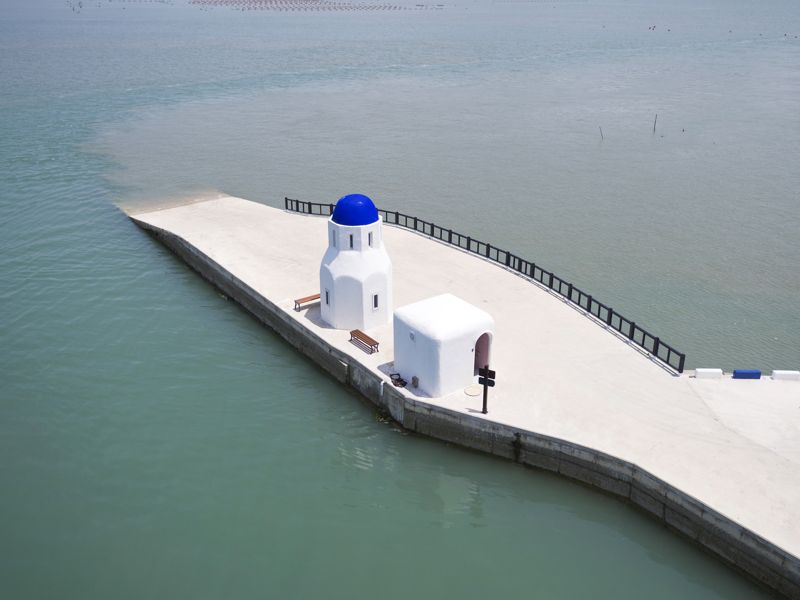
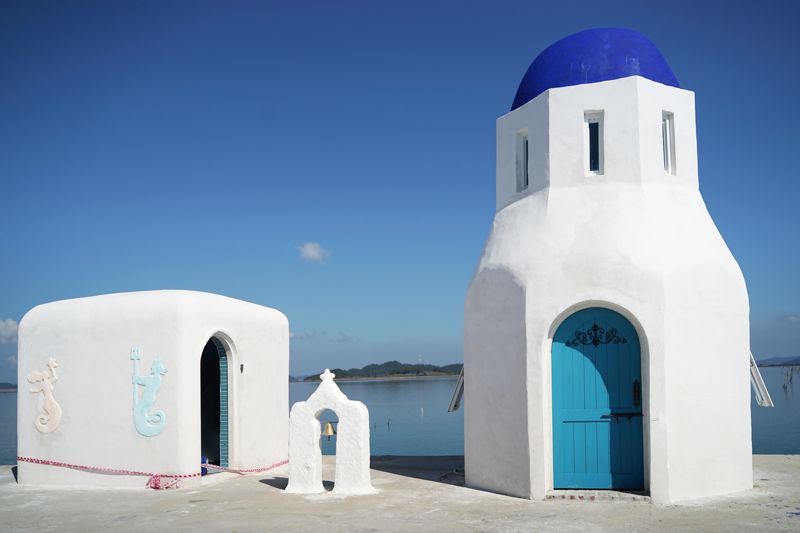
When you disembark at the Daegijeomdo Island pier, the first chapel to welcome you is the House of Peter (1), also called the "House of Health." Designed by artist Kim Yun-hwan, this building has a blue domed roof reminiscent of Santorini in Greece, giving it an exotic feel. In front of the white-plastered chapel hangs a small bell that marks the start of the pilgrimage, making it a perfect spot for a commemorative photo.
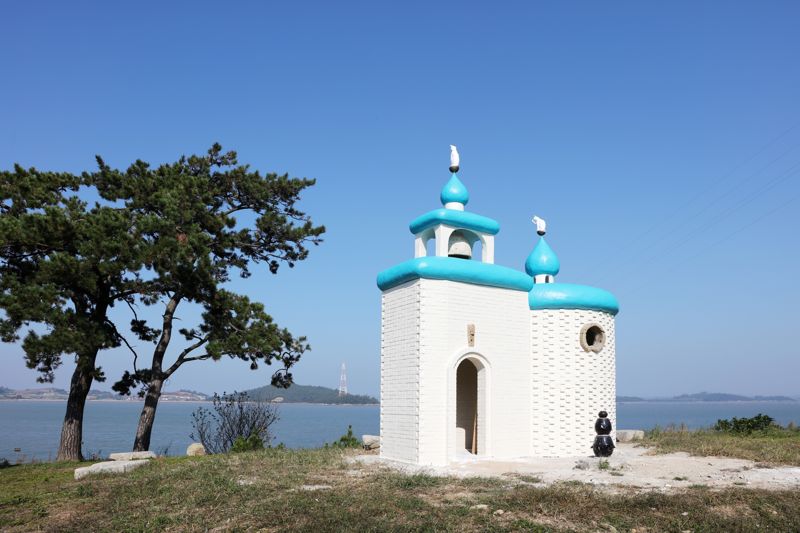
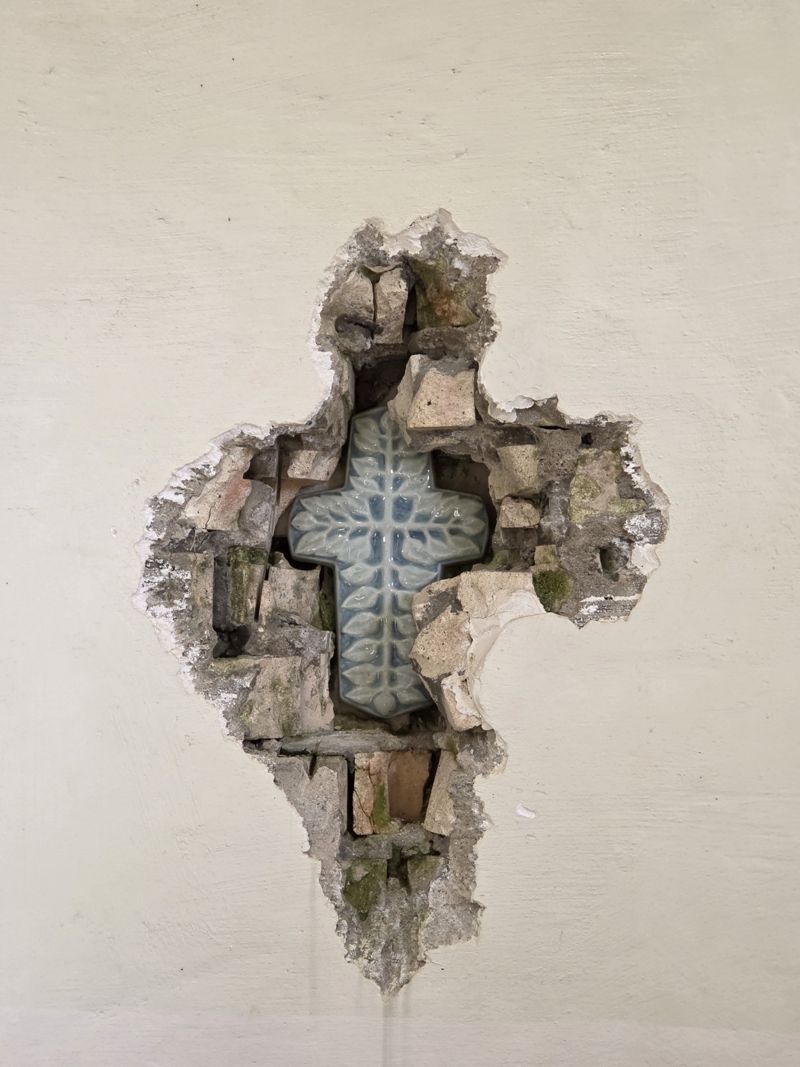
Following the breakwater that also serves as a pier, you reach the second chapel, the House of Andrea (2), about 600 meters along. Created by artist Lee Won-seok, this chapel has two cats perched on the spire above its roof, and Sinan County has given it the name "House of Thought." Inside, a ceramic cross is set into the wall, adding a sacred atmosphere.
Beyond the House of Andrea and a small pond stands James Chapel (3), known as the "House of Longing." Five openings in the wall let in soft, filtered light that leaves a strong impression. As you walk back out, you pass pretty stone-walled houses and a closed school, and then you come to the House of John (4), called the "House of Life and Peace." This white circular structure is topped with a roof and windows made of stained glass, and a beautiful goat sculpture in front of the building immediately catches the eye.
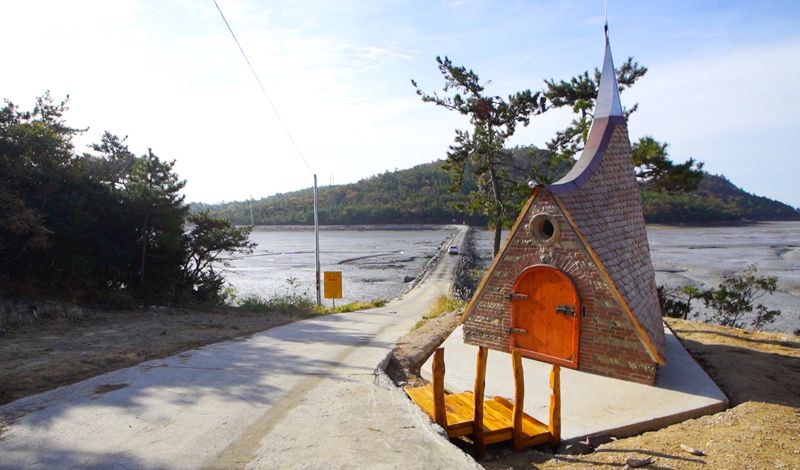
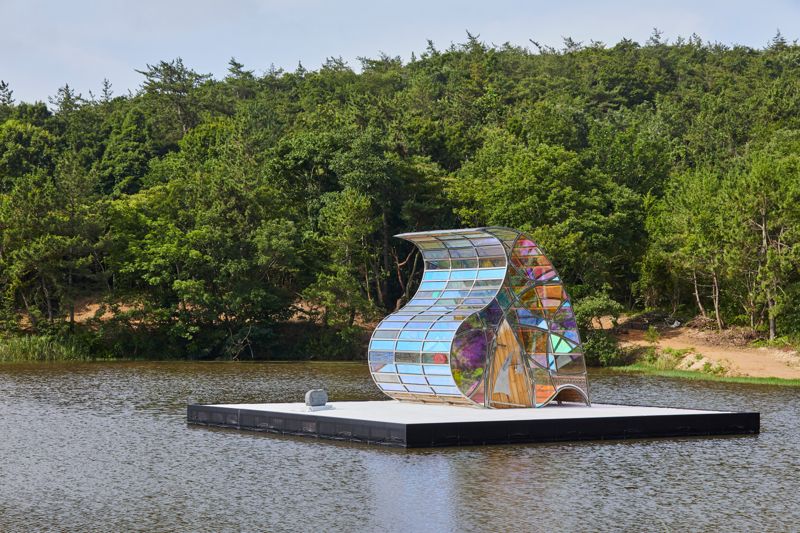
Next is Philip's House (5), the "House of Happiness," designed by artist Jean Michel. Standing at the entrance to a tidal stone path that links two islands, this chapel features a fish-shaped sculpture at the tip of a pointed metal tower, symbolizing that this is an island where people live in harmony with the sea. The tidal stone path is a kind of stepping-stone causeway built by stacking stones across the mudflats between islands; it is submerged twice a day, adding to the sense of mystery.
The sixth chapel, the House of Bartholomew (6), is a sanctuary that appears to float on the water. Also known as the "House of Gratitude," this small chapel is followed, at the end of the path connecting Sogijeomdo Island and Soakdo Island, by Thomas House (7), the "House of Connection." This neatly squared chapel stands on a green meadow, and on its left wall is a relief depicting the miracle of the five loaves and two fish, which inspires a sense of reverence.
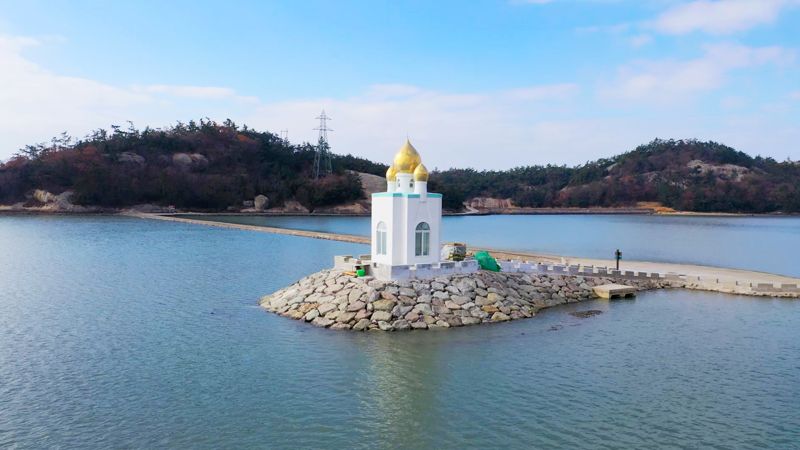
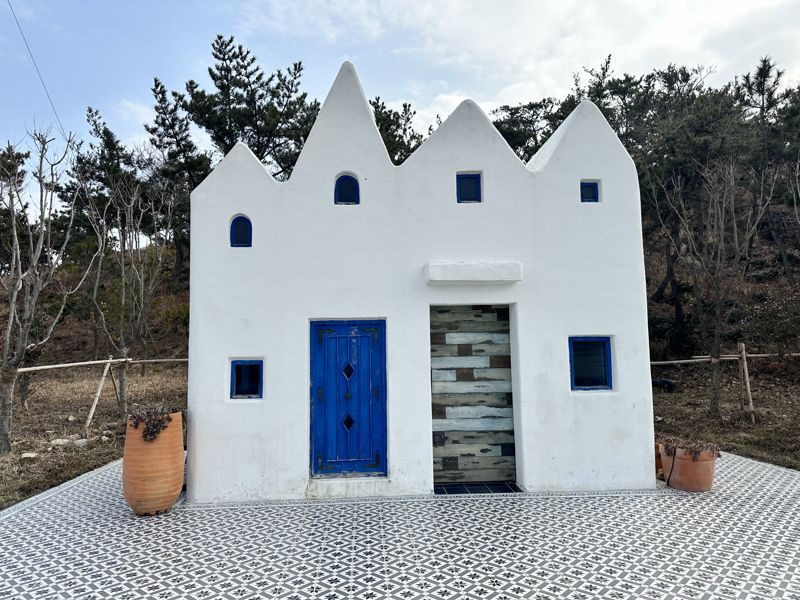
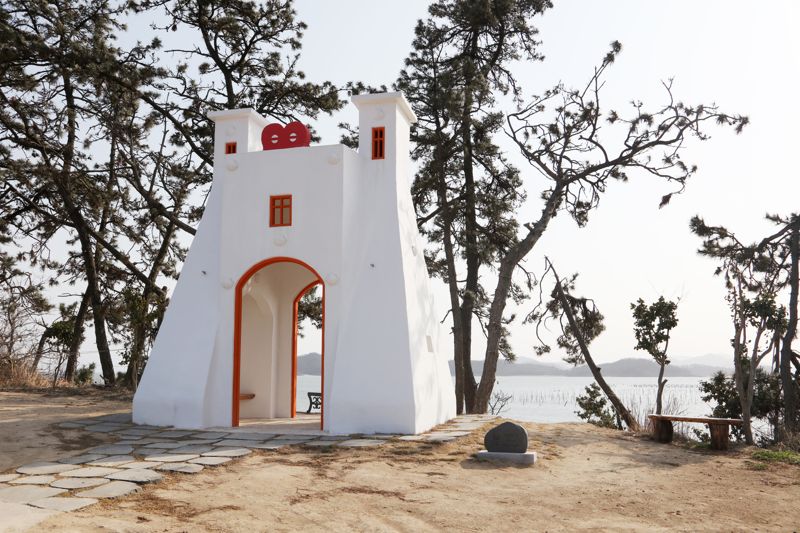
House of Matthew (8), called the "House of Joy," rises above the mudflats that symbolize the region. Its golden onion-shaped dome evokes Russian Orthodox architecture. Crossing from Soakdo Island to Jinseom Island, pilgrims then encounter the Chapel of James the Less (9), the House of Jude Thaddeus (10), and the House of Simon (11). These are also known respectively as the "House of Wishes," the "House of Praise," and the "House of Love."
The final stop on the pilgrimage is the House of Judas Iscariot (12), the "House of Wisdom." Named after the disciple who betrayed Jesus, this chapel stands alone on Ddanseom Island, a small uninhabited islet that can only be reached by crossing a sandy beach. Of all 12 chapels, it has the strongest religious character in its appearance, naturally inviting a solemn mood.
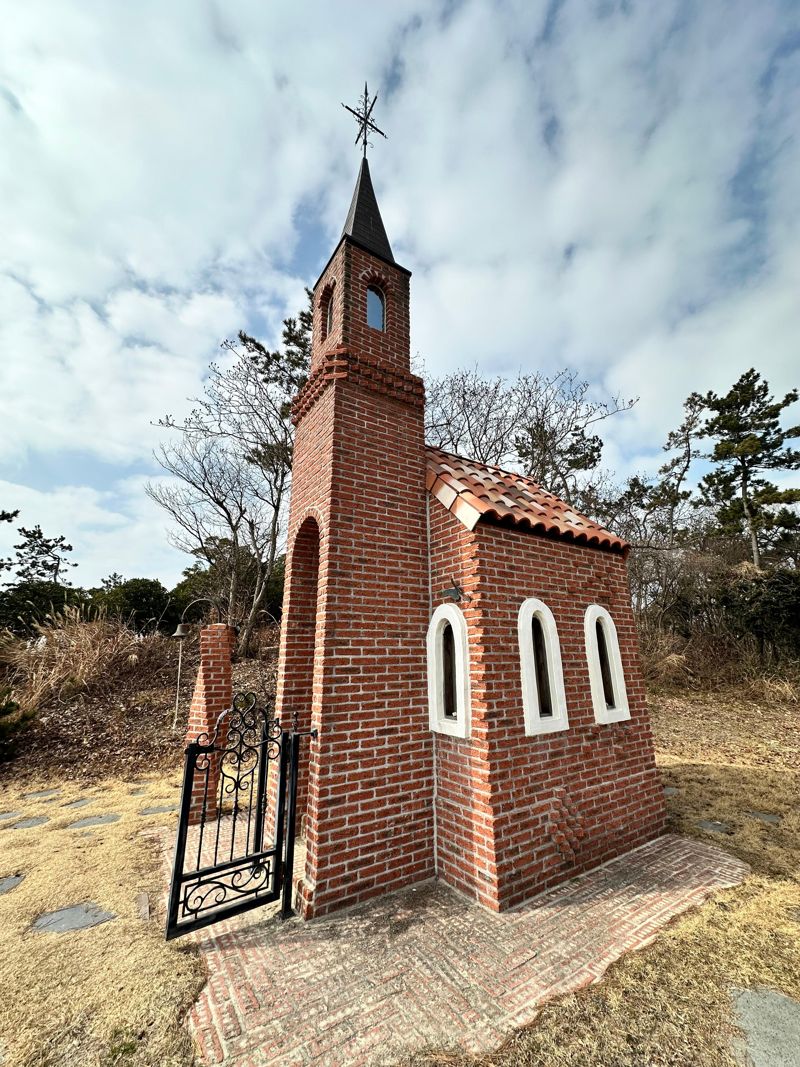
For the return journey, you do not go back to Daegijeomdo Island, where you first landed, but instead board the ferry at the Soakdo Island pier. Ferries from Soakdo Island to Songgong Passenger Ferry Terminal run twice a day, at 1:56 p.m. and 4:39 p.m. To purchase tickets smoothly, you must bring a valid ID, and boarding passes are only issued on-site.
jsm64@fnnews.com Reporter Jeong Sun-min Reporter