Management’s ‘bold offer’ vs. union’s call to scrap bonus cap: fears of inter-union conflict and business disruption
- Input
- 2026-03-04 16:08:12
- Updated
- 2026-03-04 16:08:12
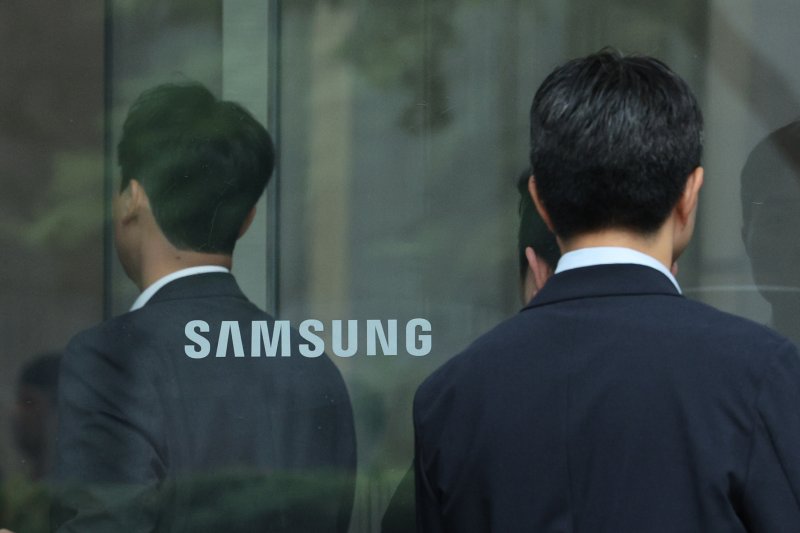
Differences between Samsung Electronics’ management and labor over the performance bonus system and related issues ultimately remained unresolved, leading to the breakdown of this year’s wage negotiations. The union has entered a dispute process, demanding the abolition of the performance bonus cap and a wage increase, while management maintains that it has "already proposed sufficient compensation." In particular, the company warns that the union’s demand to "abolish the performance bonus cap" could widen compensation gaps between business units and weaken organizational cohesion, while also reducing funds available for investment in semiconductors and undermining the company’s competitiveness.
According to industry sources on the 4th, Samsung Electronics notified employees that "despite holding a total of eight main bargaining sessions since last December, followed by six days of intensive negotiations and mediation procedures, we regret that we were unable to reach a final agreement," adding, "The company feels a heavy sense of responsibility for failing to conclude the wage negotiations."
Management and the union’s joint bargaining committee have been holding main wage and collective bargaining talks since December last year but have still not narrowed their differences. They entered labor dispute mediation at the National Labor Relations Commission on the 20th of this month, but the talks collapsed on the night before the 4th.
According to the internal notice, the union has demanded, for the 2026 wage negotiations, greater transparency in the criteria for calculating performance bonuses, the abolition of the performance bonus cap, and a 7% wage increase.
In response to the demand for transparency in calculation standards, management proposed that the criteria for the excess profit performance bonus, known as the Overall Performance Incentive (OPI), be changed so that employees can choose whichever is more favorable to them between "20% of economic value added (EVA)" and "10% of operating profit."
On the wage increase, the company offered a 6.2% raise, higher than last year’s 5.1%, along with several additional benefits: 20 shares of company stock for all employees, higher salary caps by job grade, a new program to support employees’ housing stability, a reduction in the number of fixed overtime hours, 1 million points (equivalent to 1 million won) for use in the in-house mall, expanded long-service leave, and higher congratulatory payments for childbirth. For employees in the Device Solutions Division, where performance has improved significantly, the package also included an additional OPI payout of 100% if operating profit reaches 100 trillion won.
Despite these unusually generous terms from management, negotiations are seen to have broken down because the union repeatedly insisted on abolishing the performance bonus cap.
Samsung Electronics stated, "If the OPI cap disappears, some business units with strong performance will receive enormous rewards for a time, but employees in the many business units that struggle to meet targets due to market conditions will inevitably feel a severe sense of relative deprivation," voicing concern about conflict between unions. Within Samsung Electronics, views among employees on how performance bonuses should be paid are already diverging, raising concerns that the issue could escalate into inter-union conflict that undermines organizational cohesion.
For example, within the Device Solutions Division, the Memory Business is recovering, but the foundry (contract chip manufacturing) and System LSI Business are still in the red. The smartphone and home appliance segments are also facing a "compound crisis," with profitability deteriorating under intense competition from Chinese manufacturers. In a situation where fortunes differ sharply between business units, critics warn that a system favoring only certain units could trigger fairness concerns.
In business circles, some also argue that a performance bonus scheme without an upper limit could shake the "technological competitiveness" that underpins Samsung Electronics. Semiconductors require massive R&D and facility investments to be made at the right time. Companies must secure ample cash during boom periods to survive downturns, but if funds are steadily drained away as bonuses, the momentum for reinvestment in the future could be lost. A business community official said, "The semiconductor war is a race against time," and warned, "If the union keeps holding the company back by talking about annual strikes and astronomical losses, Samsung Electronics will inevitably fall behind in the global market. What is needed now is labor–management cooperation to overcome the crisis, not selfish demands."
Industry insiders also worry that the union’s excessive demands could hinder the normalization of Samsung Electronics’ core businesses. The company recently became the first in the world to supply sixth-generation High Bandwidth Memory (HBM4) to Nvidia, accelerating efforts to strengthen its competitiveness in the Artificial Intelligence (AI) memory market. In this context, the union has maintained a hard-line stance in the negotiations, prompting forecasts that the conflict could drag on. In an email to members, the union reportedly said, "If we go on strike, the company will suffer 10 trillion won in losses, but employees’ losses will be around 400 billion won."
Meanwhile, the joint bargaining committee announced on the 4th that it would "immediately transition to a Joint Struggle Headquarters system and begin procedures to secure the right to industrial action." After finalizing its dispute response plan that day, the committee plans to hold a live broadcast on the 5th to explain why mediation was halted and to outline its strategy, including a vote among union members on whether to approve industrial action.
Once a strike ballot is held among union members, the union will be legally able to carry out industrial action, including a full or partial strike, if a majority of all registered members participate and a majority of those voting approve. Whether talks resume and how far any industrial action goes will depend on the outcome of further labor–management negotiations and the strike ballot.
[email protected] Im Su-bin Reporter