Cheongung-II proves interception performance in Middle East by stopping Iranian missile strike
- Input
- 2026-03-05 16:05:46
- Updated
- 2026-03-05 16:05:46
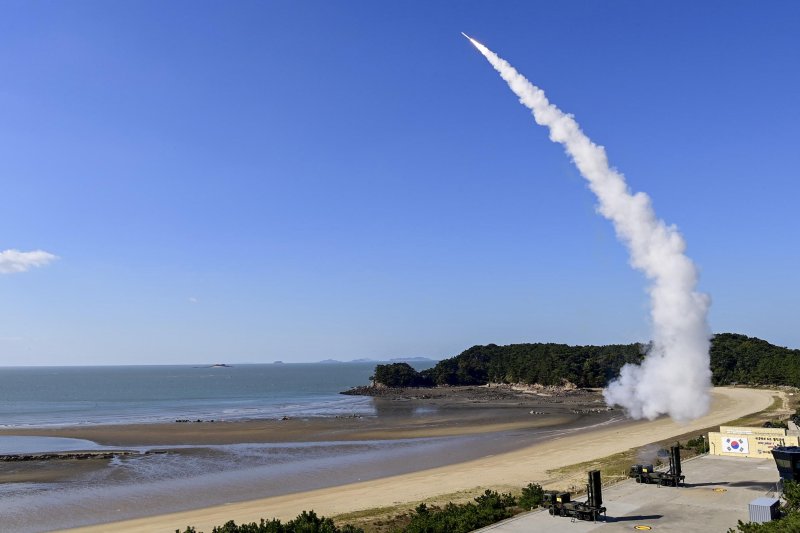
Military experts argue that this outcome is not a matter of luck but the result of technological superiority. They note that it is extremely rare worldwide to achieve a real-world interception rate of over 90% in modern warfare, where swarms of unmanned aerial vehicles and maneuvering ballistic missiles are mixed together in complex, combined attacks.
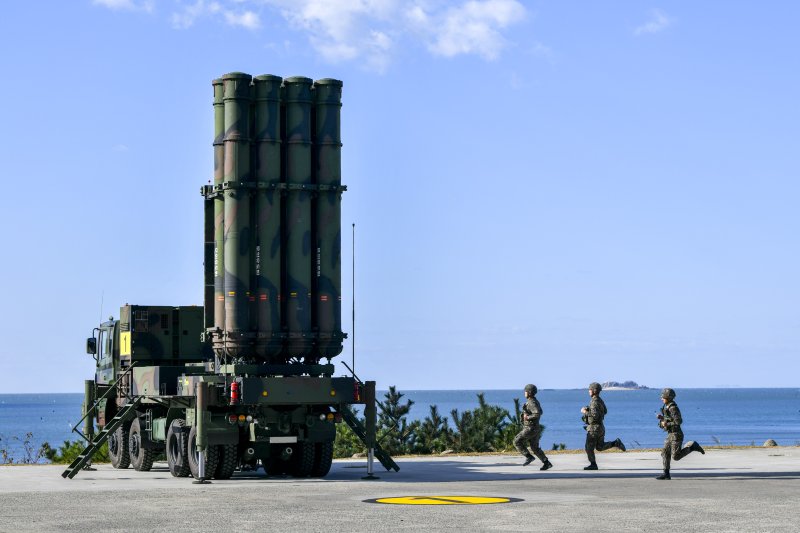
Yoo stated, "By completely neutralizing Iranian missiles, Cheongung-II has engraved the technological prowess of the K-Defense Industry in the minds of the world," adding that he would do his utmost to provide legislative and policy support so that the Cheongung weapons system can continue its success story.■ Agile initial ejection and detection capabilitiesCheongung-II’s overwhelming performance is based on its cold launch and multifunction radar (MFR) technologies. In a cold launch, the missile is ejected vertically and its engine ignites in midair, enabling 360-degree, all-azimuth engagement. Compared with the U.S. Patriot Advanced Capability-3 (PAC-3) missile system, whose launcher must be oriented toward the target, Cheongung-II can respond much faster. It is also known to excel at filtering out Sea Clutter and detecting and intercepting missiles that fly at extremely low altitude in a sea-skimming profile, hugging the sea surface to evade air defenses.
The system’s simplicity has also been a key advantage. A single radar performs target detection, tracking, and guidance simultaneously in an integrated configuration, maximizing hit probability in complex engagements. This is seen as giving Cheongung-II an operational efficiency edge over legacy systems that require multiple separate pieces of equipment to work together organically.
The latest results are significant in that Cheongung-II has been operated in a complementary manner with existing U.S.-made air defense systems such as the MIM-104 Patriot, enhancing the completeness of the layered defense network. While the Patriot has long been trusted for upper- and mid-tier defense, Cheongung-II is assessed to have greatly improved the effectiveness of mid- to lower-tier defense thanks to its high mobility and all-direction engagement capability.■ Rising trust in Korean weapons, export expansion expectedThe UAE’s combat performance data are highly meaningful in that they provide real-world validation of the reliability of the Korean Air and Missile Defense (KAMD) system. Because the Cheongung-II currently operated by the South Korean military is the same variant, the results suggest that it can provide sufficient deterrence against North Korea’s missile threats as well.
In particular, the integrated multifunction radar (MFR), in which a single radar simultaneously performs detection and guidance, is believed to have demonstrated high engagement efficiency even under complex missile attack scenarios. Analysts say this gives the KAMD program powerful backing in the form of combat-proven data. Domestic defense industry experts forecast that this proven reliability in actual combat, combined with strong maintenance and follow-on support capabilities, will lead to large-scale additional exports in major Middle Eastern countries and the global defense market.
[email protected] Lee Jong-yoon Reporter