Exchange rate breaks key psychological level: Is a prolonged strong dollar ahead?
- Input
- 2026-03-04 10:02:17
- Updated
- 2026-03-04 10:02:17
On the 4th, in the Seoul Foreign Exchange Market, the US Dollar–South Korean Won exchange rate opened at 1,479.0 won, up 12.9 won from the previous trading day. After the New York Stock Exchange (NYSE) opened, the rate climbed above the 1,500-won mark during overnight trading (3:30 p.m. to 2:00 a.m. Korean time), reaching as high as 1,505.8 won. It closed at 1,485.7 won, 19.6 won higher than the previous weekday’s closing level.
The last time the US Dollar–South Korean Won exchange rate traded in the 1,500-won range was during the Global Financial Crisis (GFC) on March 10, 2009, when it closed at 1,511.50 won. At that time, it even approached the 1,600-won level. Late last year, the rate briefly exceeded 1,480 won, but the Bank of Korea (BOK) and the Ministry of Finance and Economy stepped in with verbal intervention and actual dollar-selling operations to curb further gains.
The latest spike is widely attributed to a flight to safety into the dollar after the US and Israel launched a surprise strike on the Islamic Republic of Iran. In fact, on the Intercontinental Exchange Futures Exchange (ICE Futures), the U.S. Dollar Index (DXY), which measures the dollar against six major currencies, stood at 99.33 at around 9:50 a.m. Eastern time on the 3rd, up 0.96% from the previous session.
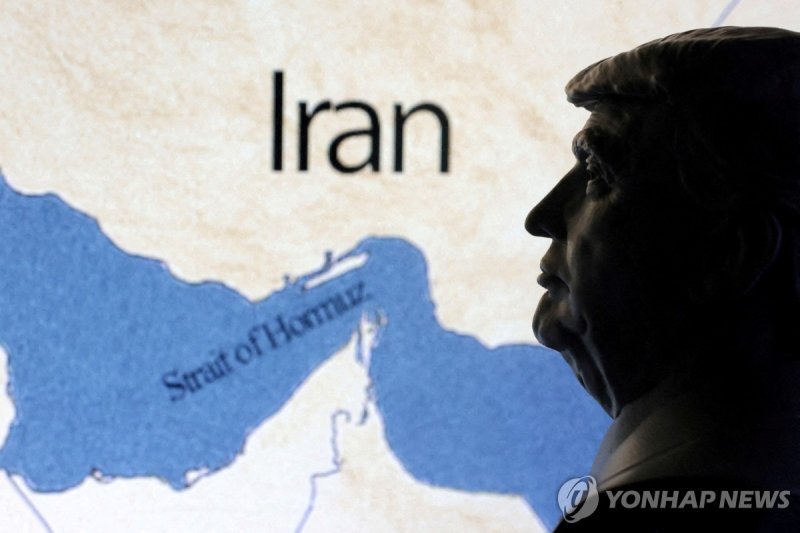
At the same time, concerns over a possible blockade of the Strait of Hormuz have driven up international oil prices, weighing on the currency of energy-dependent South Korea. West Texas Intermediate crude oil (WTI) jumped 6.0%, from 67 dollars per barrel on the 27th of last month, the day before the airstrikes, to 71 dollars on the 2nd. Some analysts warn that prices could climb to 100 dollars a barrel if the strait is completely shut.
The key concern is that these conditions could persist. Even if authorities manage to defend the value of the won domestically, a continued rise in the external value of the dollar would inevitably lock Korea into a prolonged strong-dollar environment.
Hyun-guk Ahn, a researcher at Hanwha Investment & Securities, noted, "The Strait of Hormuz, a strategic chokepoint in the Middle East, does not appear to be under an official blockade, but some of its functions seem to be paralyzed." He added, "Despite OPEC Plus (OPEC+) bringing up the option of increasing production, oil prices are still surging, which is the most worrying factor if the situation becomes protracted."
The Bank of Korea New York Representative Office, citing assessments from local market participants, stated, "President Donald Trump has said he will take all necessary measures to achieve his objectives, and Iran is continuing its retaliatory actions, increasing the likelihood that the conflict will be prolonged." It added, "Short-term inflation concerns are rising, and expectations for additional interest rate cuts by the Federal Reserve System (the Fed) have diminished."
When expectations for rate cuts fade, the dollar typically becomes more attractive and faces upward pressure. Under such conditions, the US Dollar–South Korean Won exchange rate is also likely to be adjusted higher.
Rising oil prices could also stoke inflation. Kwon Hee-jin, a researcher at KB Securities, pointed out, "If international oil prices rise by 10%, we estimate that the South Korea Consumer Price Index (CPI) inflation rate will increase by 0.22 percentage points. If this is combined with the impact of a weaker won, the upward pressure on prices could become even stronger."
[email protected] Tae-il Kim Reporter