"Looks like they really bought at the top"... Foreign investors dump 22 trillion won of Samsung Electronics and SK Hynix. What did they buy instead?
- Input
- 2026-03-04 08:06:51
- Updated
- 2026-03-04 08:06:51
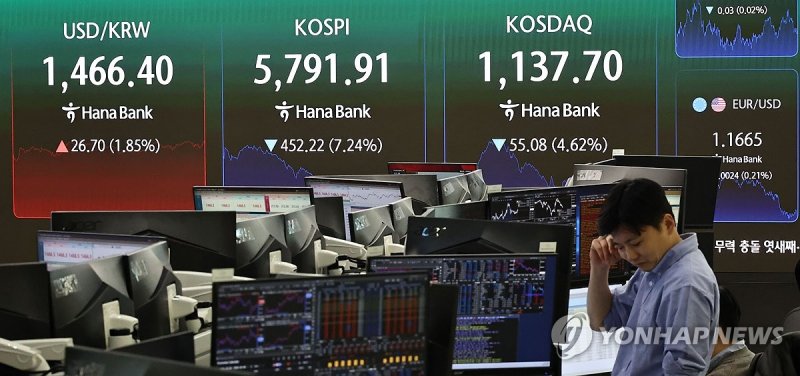
[Financial News] Data show that foreign investors unloaded stocks on the Korean market last month at the largest scale on record.
Foreign investors post 19.9 trillion won in net stock selling in February, the largest monthly outflow
According to the Korea Center for International Finance (KCIF) on the 3rd, foreign investors recorded net selling of 19.9 trillion won in the domestic stock market in February alone. This was the biggest monthly net outflow ever.
Daily selling pressure was also intense. Three of the five largest net-selling days on record all occurred in February. Net selling of 7.1 trillion won on February 27 ranked first all time, while February 5 (5.3 trillion won) was second and February 6 (3.3 trillion won) was fourth.
By sector, 21.9 trillion won flowed out of the electrical and electronics segment alone, driving the overall sell-off. By individual stock, Samsung Electronics saw net selling of 14.6 trillion won and SK Hynix 7.6 trillion won, for a combined outflow of 22.2 trillion won from just these two names.
Foreign investors log 8 trillion won in net bond purchases, extending a four-month streak
In contrast to the stock market, foreign funds continued to flow into the Korean bond market.
Foreign investors posted net purchases of 8 trillion won in bonds in February, maintaining a buying stance for the fourth consecutive month. As a result, their bond holdings rose by 7.2 trillion won from the previous month to 349.4 trillion won.
KCIF analyzed the reasons behind the massive stock sell-off, stating that "since the start of this year, Samsung Electronics has climbed 80.6% and SK Hynix 63.0%, which likely strengthened incentives to lock in profits and may have triggered portfolio rebalancing to keep target weightings intact."
It added, "After Nvidia Corporation released its earnings, concerns about a slowdown in the artificial intelligence (AI) cycle resurfaced, while expectations for monetary easing by the Federal Reserve System (Fed) also receded."
[email protected] Han Seung-gon Reporter