Oil Prices, Exchange Rate, and Tariffs Surge on Iran Shock, Threatening South Korea’s Export Boom [United States–Iran War]
- Input
- 2026-03-03 18:27:52
- Updated
- 2026-03-03 18:27:52
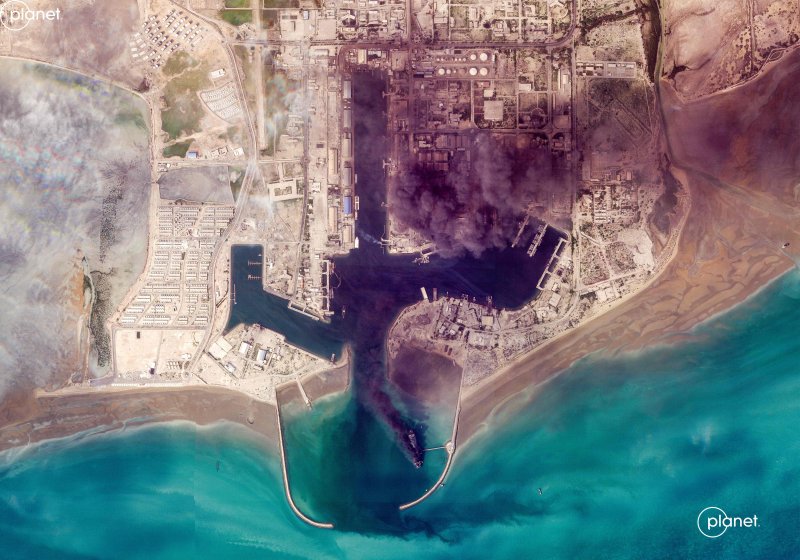
High oil prices hit growth by 0.45 percentage points and push inflation up 0.6 percentage points
On the 3rd, Citi released a report titled "Assessing the Impact of Rising Oil Prices on the South Korean Economy and Strong Semiconductor Exports in February." The report projected that if military conflict linked to the Islamic Republic of Iran drives the average annual price of Brent crude oil up about 20% to 82 dollars per barrel, the Republic of Korea (South Korea)’s economic growth rate this year would fall by 0.45 percentage points. In contrast, consumer prices would come under upward pressure of about 0.6 percentage points.
Jin-Wook Kim, an economist at Citi, noted, "Because the South Korean economy is highly dependent on crude oil imports and external trade, the cumulative negative impact of rising oil prices on Gross Domestic Product (GDP) growth and the current account balance is among the most severe of the major economies."
South Korea imports 70.7% of its crude oil and 20.4% of its LNG from the Middle East. Dependence on the region for petroleum products such as naphtha reaches 66%. If tensions around the Strait of Hormuz escalate, the problem is unlikely to be simple supply and demand; sharp price spikes and higher freight and insurance costs are also highly likely.
Higher oil prices in particular drive up production costs across manufacturing and erode export competitiveness.
According to the Korea International Trade Association (KITA), a 10% rise in oil prices pushes export unit prices up by 2.09%, but export volumes fall by 2.48% due to weaker price competitiveness. As a result, total export value declines by 0.39%.
US Dollar–South Korean Won exchange rate nears 1,500 won, creating a "double cost shock"
On top of this, the US Dollar–South Korean Won exchange rate is threatening to break above the 1,500-won level, further increasing the burden on companies. A weaker won can offer short-term gains by improving export prices, but when combined with higher import costs for raw materials, the real cost burden actually grows.
Given that South Korea relies on imports for most key raw materials such as energy, minerals, and grains, a high exchange rate could translate into stronger inflationary pressure and delays in interest rate cuts. This, in turn, could trigger a second-round shock by dampening global demand.
Another key variable is the United States’ trade policy. If the Middle East–driven energy shock reignites inflationary pressure in the United States, Washington may tighten protectionist measures under the banner of safeguarding domestic industry and reshaping supply chains. Should it resort to additional tariffs or tougher non-tariff barriers, export conditions for South Korean companies—already weakened by higher production costs—could deteriorate further.
Some analysts say the scale of the shock will depend largely on how long the crisis lasts.
Professor Koo Ki-bo of the Department of Global Commerce at Soongsil University explained, "If the situation in the Middle East stabilizes in a short period, conditions for securing crude oil could improve, and the energy market might actually return to stability fairly quickly." He added, "However, if the situation drags on for more than four to five months, there is a high likelihood that we will have to revise down our export outlook and economic growth forecasts."
Meanwhile, on the same day, the Ministry of Trade, Industry and Energy convened the 3rd Real Economy Inspection Meeting, chaired by Kim Jeong-kwan, Minister of Trade, Industry and Energy of the Republic of Korea. The ministry reviewed the supply situation for oil and gas and ordered the preparation of emergency measures, including securing alternative sources of supply.
[email protected] Reporter Park Ji-young Reporter