Low-Altitude Air Defense ‘Killer’ K-SAM Pegasus... “Precision strike power doubled” with Korean-made components
- Input
- 2026-03-03 16:02:10
- Updated
- 2026-03-03 16:02:10
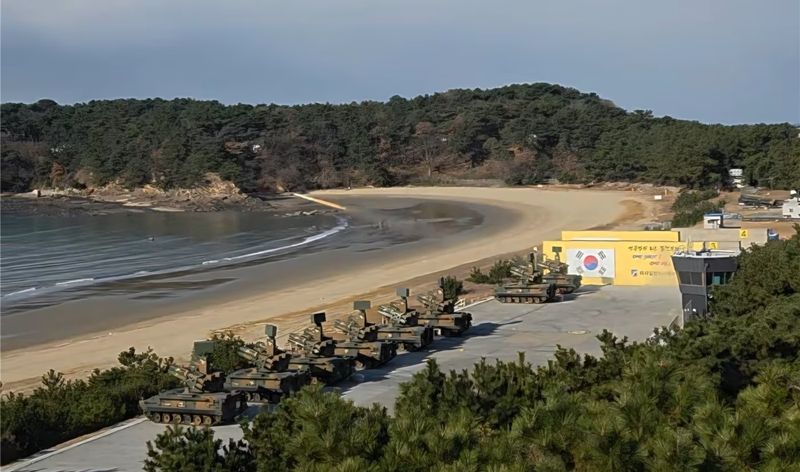
On the 3rd, the Korea Research Institute for Defense Technology Planning and Advancement (KRIT), under the Defense Acquisition Program Administration (DAPA), announced that it had successfully localized nine key components for the K-SAM Pegasus short-range surface-to-air missile system. This achievement is significant because it reduces dependence on foreign suppliers, breaks away from "technology subordination," and at the same time creates economic value.
The localized components that have completed development will go through the defense standardization process and then be applied to the K-SAM Pegasus system. KRIT projected that this localization effort will generate about 163 billion won in future sales for domestic companies.
KRIT also explained that in live-fire tests conducted at the West Coast Air Force Firing Range from 2014 through last year, over a two-year period of trials, K-SAM Pegasus units fitted with localized components achieved a 100% hit and kill rate against target drones.
The K-SAM Pegasus, which mounts missiles on an armored vehicle chassis, can detect enemy aircraft at ranges of up to 20 kilometers and engage targets at distances of up to 10 kilometers. It is mainly responsible for low-altitude air defense missions below 5 kilometers in altitude. As South Korea’s first short-range surface-to-air guided weapon system, the K-SAM Pegasus has been deployed in operational service since 1999.
[email protected] Lee Jong-yoon Reporter