U.S. Stablecoin Interest Debate Intensifies, Adding Uncertainty to Korea’s General Act on Digital Assets Design [Crypto Briefing]
- Input
- 2026-03-03 15:09:39
- Updated
- 2026-03-03 15:09:39
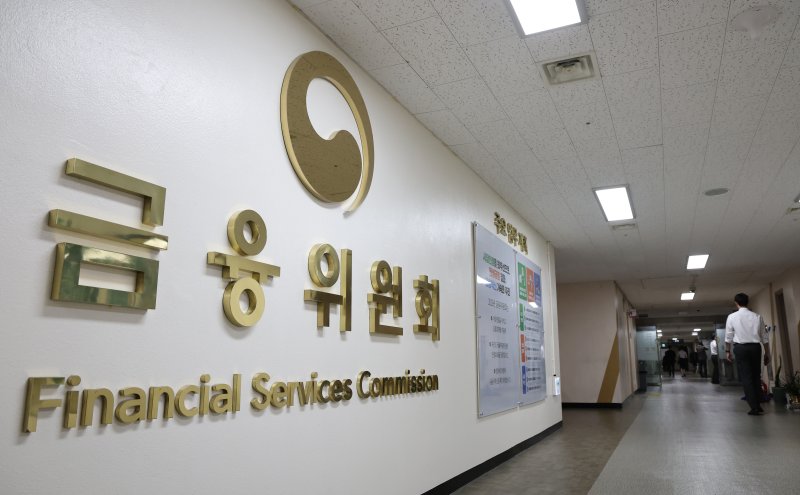
According to The Financial News, as the financial authorities prepare to convene the first Virtual Asset Committee meeting of the year on the 4th, market attention is turning to the negotiations over the U.S. digital asset market structure bill, the Digital Asset Market Clarity Act of 2025 (CLARITY Act of 2025). The legislative timeline has become uncertain after the White House’s proposed deadline of the 1st (local time) for a compromise between the crypto industry and the banking sector passed without an agreement. In particular, disputes surrounding the Digital Asset Market Clarity Act of 2025 and the GENIUS Act, the basic law on Stablecoins, over restrictions on issuance by non-banks and big tech firms and over the scope of allowed interest and rewards are expected to directly influence Korea’s phase-two legislation, the General Act on Digital Assets, including its Stablecoin framework.
According to the National Assembly and industry sources on the 3rd, the core reason for the stalemate in negotiations over the Digital Asset Market Clarity Act of 2025 is whether to allow interest and various rewards on Stablecoin balances. The crypto policy team within the White House has recommended reaching a regulatory compromise, but the gap between the crypto industry and the banking sector remains wide.
U.S. banks, concerned about erosion of their deposit base, insist that all forms of economic compensation granted simply for holding Stablecoins must be banned. By contrast, the crypto industry, including Circle Internet Financial (Circle), warns that if deposit interest and other rewards are blocked, Stablecoins will rapidly lose competitiveness as part of the global payment infrastructure. Supervisory authorities preparing the GENIUS Act, the basic law on Stablecoins, and its follow-up rules are also reportedly considering designing payment Stablecoins to function more like non-interest-bearing payment tokens.
In Korea, efforts to overhaul the virtual asset regulatory framework are also gaining momentum. On the 4th, the Financial Services Commission will hold the "2026 First Virtual Asset Committee" meeting to discuss the main direction of the phase-two legislation, the General Act on Digital Assets. Topics expected to be on the table include a licensing regime for virtual asset exchanges, mandatory segregation and trust of customer deposits, the introduction of a Stablecoin licensing system, requirements to maintain reserves of at least 100%, and bankruptcy-remote structures.
Unlike the U.S. Congress, the Korean government is reportedly reviewing a framework that would regulate Stablecoins separately as payment tokens used in commerce and as investment or asset management tokens that seek returns. In other words, payment Stablecoins would be governed under electronic financial and banking regulations, while investment or management-type tokens would be handled within the framework of the Financial Investment Services and Capital Markets Act.
Academia, meanwhile, is focusing on the fact that Stablecoins are evolving beyond mere investment assets into payment and settlement infrastructure. Lee Jeong-su, a professor at Seoul National University School of Law (SNU Law), said, "Without Stablecoins, it would be as if we could only use U.S. dollar Stablecoins on the blockchain," adding, "Given the mutual influence of global regulatory regimes, Korea must quickly establish an independent regulatory framework for Korean won Stablecoin."
However, there are also significant concerns that regulations on the governance of Stablecoin issuance consortia could stifle private-sector innovation. Requirements long advocated by the Bank of Korea (BOK), such as the "51% rule"—banks holding 50% plus one share of consortium equity—and proposals to cap the shareholdings of major shareholders of virtual asset exchanges at 15–20%, have emerged as key flashpoints in the phase-two legislative process. Industry players warn that if the 51% rule is written directly into the law and its enforcement decrees, the Korean won Stablecoin market could solidify into a closed structure dominated by commercial banks.
A virtual asset industry official commented, "Depending on what standards the CLARITY Act of 2025 sets for issuers of payment Stablecoins and for their revenue models, many of the details of Korea’s phase-two legislation will effectively be decided," adding, "We are closely monitoring policy developments to ensure that domestic regulations do not inadvertently tilt toward blocking innovation."
[email protected] Kim Mi-hee Reporter