Trump Says Ground Troops ‘Possible’ as Hormuz Tensions Flare, U.S. Warns of Incoming ‘Big Wave’
- Input
- 2026-03-03 14:06:22
- Updated
- 2026-03-03 14:06:22
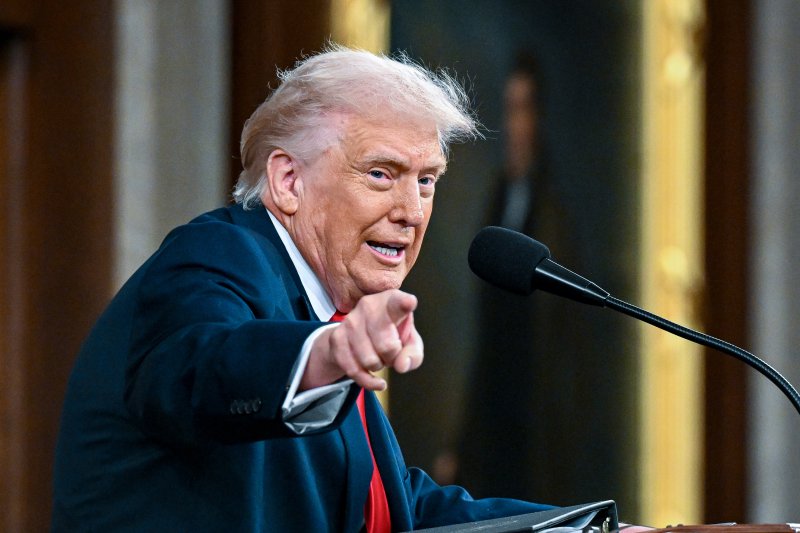
[Seoul and New York City = Reporter Kim Kyung-min, Correspondent Lee Byung-chul]As the Islamic Republic of Iran ramps up the scale of its military retaliation and provocations, the United States of America (U.S.) is further intensifying its pressure. With tensions rising across the Gulf region, President Donald Trump has raised the level of response step by step, even floating the possibility of deploying ground troops. The Islamic Republic of Iran has threatened to blockade the Strait of Hormuz, while the U.S. has announced that it struck Iranian vessels in the Gulf of Oman. Since launching large-scale airstrikes in coordination with Israel on the 28th of last month, U.S. forces have continued attacks targeting Iran’s leadership and military facilities. Trump has boasted that the operation is progressing faster than expected and has warned that an additional large-scale strike, dubbed the "Big Wave," is imminent.
"No jitters about ground troops" as Hormuz showdown escalates
In an interview with the New York Post on the 2nd (local time), Trump said, "I have no jitters about deploying ground troops," adding, "Every president until now has said there will be no ground troops, but I will not say that. We probably won’t need them, but if we do, we will send them."
His remarks are being interpreted as a signal that, beyond a limited campaign of airstrikes and precision attacks, he is prepared to commit ground forces if necessary. Deploying ground troops would go far beyond simple retaliation and could lead to physical control on the ground and intensified pressure on the regime, giving the move far-reaching implications.
Trump also highlighted the results of the operation. He claimed that the effort to eliminate Iran’s leadership is proceeding faster than anticipated and asserted that 49 key figures have been killed. Saying, "We haven’t even hit them hard yet," he suggested that the strikes so far are merely a prelude to the main phase of the campaign.
He explained that the decision to launch the attacks was made after the final round of talks held in Geneva, Switzerland. Citing intelligence that Iran had resumed its nuclear program at a site different from the facilities destroyed in past airstrikes, he said, "Because they wanted to build nuclear weapons, we completely destroyed it."
Secretary of State Marco Rubio, speaking ahead of a briefing to Congress, said, "The strongest attack has not yet come," but also cautioned that "we are not currently in a posture to launch a ground invasion," playing down the prospect of an immediate large-scale deployment of troops.
The confrontation over the Strait of Hormuz also intensified that day. The Islamic Republic of Iran, mobilizing the Islamic Republic of Iran Navy and the Islamic Revolutionary Guard Corps (IRGC), warned that it would "burn all ships passing through the strait," while the U.S. declared that it had "destroyed all Iranian vessels in the Gulf of Oman." The Strait of Hormuz is a strategic chokepoint through which 20% of the world’s seaborne crude oil shipments—about 20 million barrels per day—pass, so even the threat of a blockade sends shockwaves through global energy markets. In fact, international oil prices jumped 7% in a single day, and on news that the State of Qatar had halted natural gas production, gas prices surged 50%.
Trump said the Islamic Republic of Iran has attacked Bahrain, Jordan, Kuwait, Qatar, and the United Arab Emirates (UAE), assessing that the front lines are expanding. Iran countered that its actions are a legitimate response to airstrikes by the U.S. and Israel and hinted at further retaliation.
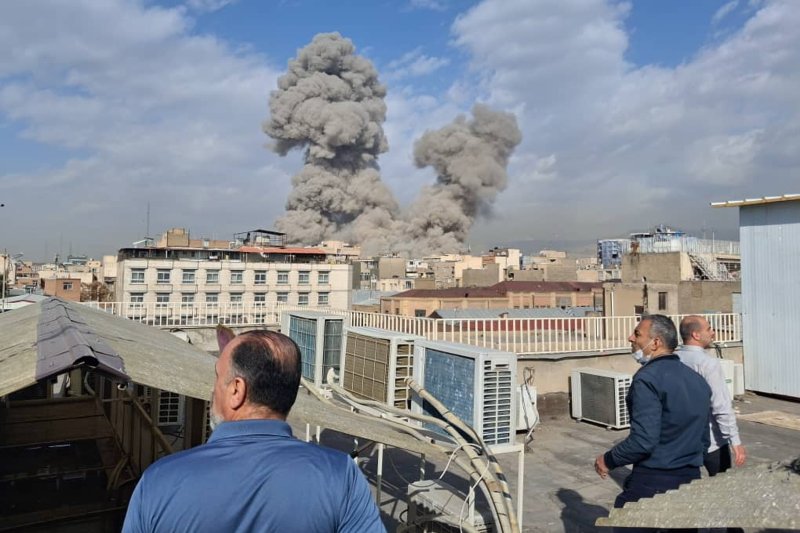
"Big Wave is coming soon"...Possibility of a prolonged conflict
On the duration of the operation, Trump said, "It looks like it will be four to five weeks, but we have the capability to go much longer than that," adding, "It doesn’t matter how long it takes. We will do what is necessary." While stressing short-term objectives, he also made clear that he is not ruling out a prolonged conflict depending on how events unfold.
In an interview with Cable News Network (CNN), he drew a line under a diplomatic solution, saying, "We don’t need to worry about a deal. This is how you deal with Iran." He placed the blame on Tehran, arguing that it was because Iran had refused to agree to halt uranium enrichment.
The United States Department of Defense (DoD) has said that the decision on when to end the operation rests with the president. The United States Joint Chiefs of Staff disclosed that more than 1,000 targets were struck in the first 24 hours.
Public opinion in the U.S. is divided. A recent poll showed that only 27% of Americans support the current strikes. Trump, however, insisted, "Regardless of the poll numbers, we have to do what is right," and claimed that "a silent majority supports this decision."
Regarding Iran’s future leadership, Trump said, "We don’t know who will be chosen. Maybe someone who actually understands things will emerge." On this point, Rubio added, "Whoever is ruling Iran a year from now, they will not have these kinds of missiles and drones."
km@fnnews.com Kim Kyung-min Reporter