Court extends Homeplus rehabilitation plan approval period by two months, MBK to inject 100 billion won
- Input
- 2026-03-03 13:48:05
- Updated
- 2026-03-03 13:48:05
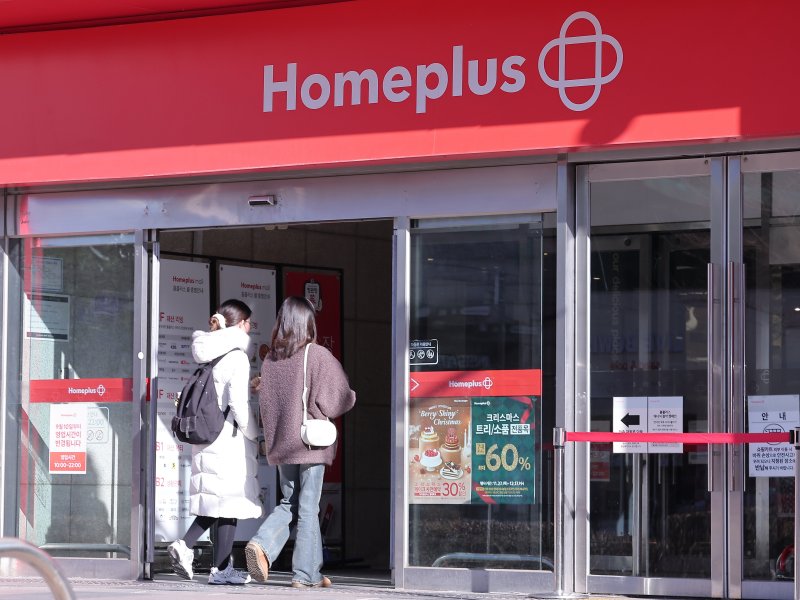
The Financial News reported that the court has approved an extension of the deadline for passing the rehabilitation plan for Homeplus, which is currently under court receivership, just one day before the original deadline. As Michael Byung-ju Kim, chairman of MBK Partners and a creditor, has executed a 100 billion won loan backed by his personal assets, the court appears to have judged that this funding can be used to urgently cover employee wages and other pressing obligations. However, other creditors such as Korea Development Bank (KDB) have drawn a line against providing debtor-in-possession (DIP) financing, leaving the actual approval of the plan still uncertain.
Presiding Judge Jung Joon-young of the 4th Division of the Seoul Bankruptcy Court, with Judge Park So-young as the assigned judge, announced on the 3rd that the court had decided to extend the approval period for Homeplus’s rehabilitation plan. Under the original schedule, the plan had to be approved by March 4 this year, one year from the commencement of rehabilitation proceedings on March 4 last year, meaning only one day remained before the deadline. The bench, however, allowed an extension of just two months, until May 4, even though the law permits an extension of up to six months.
The court explained the reason for the extension, stating, "With the 100 billion won that MBK Partners will inject first, we expect that overdue employee wages and other urgent debts can be resolved," and added, "If the rehabilitation plan is not approved and the proceedings are terminated, MBK Partners has agreed to waive its right to claim repayment of the 100 billion won, so extending the approval period does not significantly disadvantage other rehabilitation creditors or stakeholders."
This decision was driven by the rehabilitation plan submitted by the management, including Gwang-il Kim, Vice Chairman of MBK Partners. In December last year, MBK Partners submitted a "structural innovation-type rehabilitation plan" that centered on securing 300 billion won in DIP financing together with creditors such as Meritz Financial Group and policy finance institutions, as well as selling Homeplus Express, its supermarket-format (SSM) chain, to raise funds. DIP financing allows a company under rehabilitation to maintain existing management control while raising operating and emergency funds.
As the largest shareholder and administrator, MBK Partners filed an application on the 2nd to extend the approval period and submitted a written opinion the day before. To stabilize Homeplus’s operations, MBK Partners decided to execute 100 billion won in DIP loans first, and in doing so, Chairman Michael Byung-ju Kim is said to have pledged his personal assets, including his residence in Hannam-dong in Yongsan-gu, Seoul, as collateral. MBK plans to inject 50 billion won by the 4th and another 50 billion won by the 11th. It also attached a condition that if the rehabilitation plan is not approved and the proceedings are terminated, it will waive its right to claim repayment of the 100 billion won, effectively staking everything on the extension request. MBK further argued that additional time is needed to verify matters such as the submission of letters of intent, as several companies have expressed interest in acquiring Homeplus Express.
For now, the extension of the approval period has bought Homeplus some breathing room. Since the court granted the extension with just one day left before the deadline, it effectively accepted the opinion submitted by MBK Partners. During the extended period, MBK is expected to focus its efforts on securing DIP financing from creditors and pushing ahead with the sale of Homeplus Express.
Even so, the prospects for the rehabilitation plan ultimately winning approval remain unclear. Creditor Korea Development Bank (KDB) has already ruled out participating in the DIP financing. At a press briefing on the 25th of last month, KDB Chairman Park Sang-jin said, "We have nothing to do with Homeplus." Meritz Securities has also taken a cautious stance on the DIP request, citing the potential for losses. If these institutions continue to reject the DIP proposal, the court could still deny approval of the plan on the grounds of difficulties in securing funding.
Going forward, the court plans to discuss forming a business normalization task force (TF) this week, with participation from the debtor, shareholders, and the creditors’ council.
[email protected] Jung Kyung-soo Reporter