"North Korea secretly extracted plutonium to advance its nuclear program without Lee Jae-myung administration's knowledge"... Reactivated nuclear facilities after APEC
- Input
- 2026-03-03 12:41:19
- Updated
- 2026-03-03 12:41:19
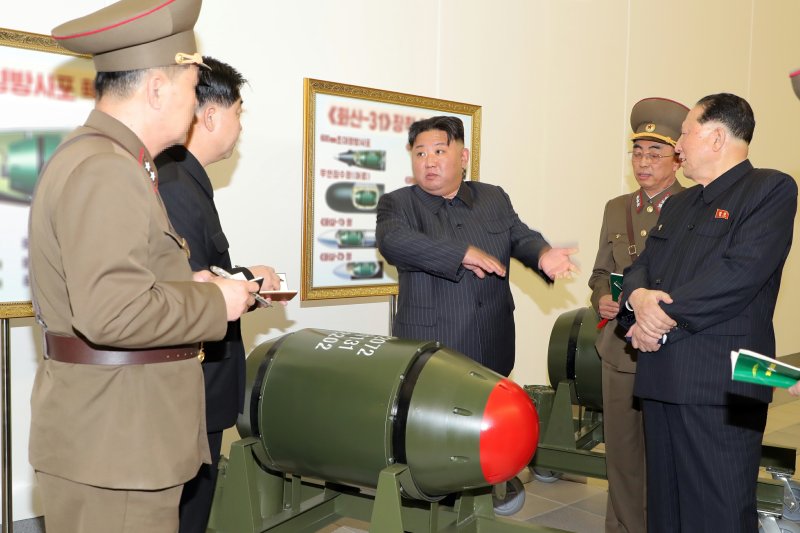
North Korea even halted operations at its nuclear facilities for several months ahead of the opening of the Asia-Pacific Economic Cooperation (APEC) summit last November. However, the International Atomic Energy Agency (IAEA) has confirmed that operations at these nuclear facilities resumed after APEC ended.
This means that the Lee Jae-myung administration's North Korea peace policy, pursued consistently under the leadership of the Ministry of Unification (MOU), has effectively been rendered meaningless. At the recent 9th Congress of the Workers' Party of Korea, North Korea declared that it would permanently exclude South Korea from the Korean nation and firmly cemented its drive to further advance its nuclear arsenal.
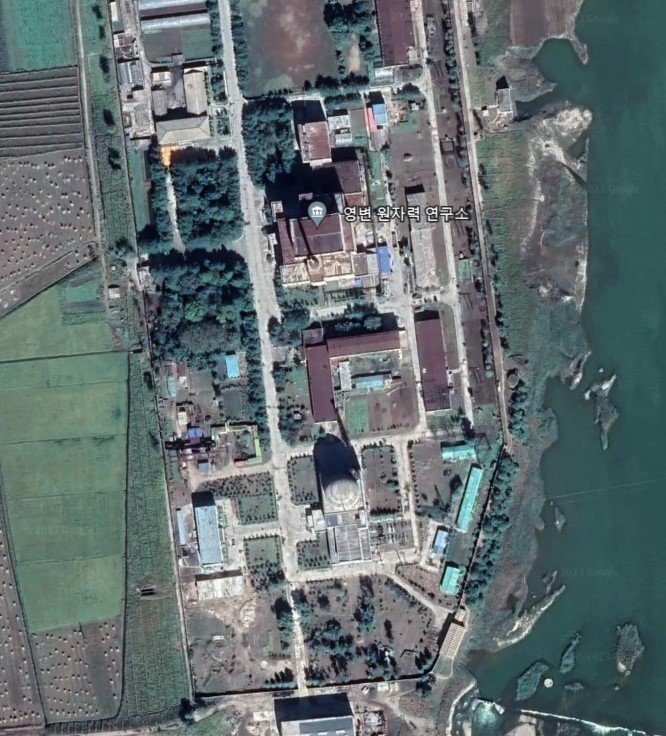
IAEA Director General Rafael Mariano Grossi stated on the 2nd (local time) in Vienna that operations at North Korea's Radiochemical Laboratory were observed between January and September last year, and that spent nuclear fuel from reactor operations was reprocessed during this period. He also explained that the Experimental Light Water Reactor (Yongbyon) within the Yongbyon nuclear facilities suspended operations from August to November last year, and that there are indications it has since resumed operating.
The IAEA is also continuing to monitor a new building at Yongbyon that is equipped with supply and cooling systems similar to those at the Kangson uranium enrichment facility. It reported that the Punggye-ri Nuclear Test Site in Kilju County, North Hamgyong Province, is in a state of readiness to support a nuclear test. The IAEA pointed out that North Korea's continued and intensified pursuit of its nuclear program is a clear violation of relevant United Nations Security Council (UNSC) resolutions.
North Korea's uranium enrichment facilities are located both at the Kangson industrial complex near Pyongyang and in Nyongbyon, North Pyongan Province. In addition, through the 5-megawatt electric (5 MWe) graphite-moderated reactor at Yongbyon and its spent fuel reprocessing facilities, North Korea has been extracting Plutonium from spent fuel rods. Highly enriched uranium is produced using centrifuges, whereas Plutonium is obtained by reprocessing fuel rods discharged from a reactor. The "Little Boy" bomb dropped on Hiroshima used a uranium design, while the "Fat Man" bomb dropped on Nagasaki was a Plutonium-based atomic weapon.
The IAEA's expression of concern over North Korea's nuclear program comes at a time when the United States has just carried out strikes aimed at preventing Iran from developing nuclear weapons, drawing particular attention. The United States has long designated Iran and North Korea as rogue states and sought to block them from possessing nuclear weapons.
The government also took the unusual step of mentioning the North Korean nuclear issue and the Iran situation together the previous day. The Ministry of Foreign Affairs explained, "As a directly concerned party to the North Korean nuclear issue, we are firmly committed to upholding the international non-proliferation regime, and on that basis we have been participating in the international community's efforts to resolve the Iran nuclear issue."
The conservative opposition criticized the Lee Jae-myung administration, saying its response to the escalating North Korean nuclear threat is at a standstill. The People Power Party warned that the emerging evidence of spent nuclear fuel reprocessing goes beyond mere threats. It argued that this implies additional Plutonium acquisition and the securing of more advanced nuclear capabilities. The party stated, "If North Korea's nuclear threat is evolving while the response remains unchanged, it would amount to dereliction of duty by the Lee Jae-myung administration," and called for fundamental countermeasures. rainman@fnnews.com Kim Kyung-soo
rainman@fnnews.com Reporter Kim Kyung-soo Reporter