Prolonged Middle East tensions may hit China’s economy, which heavily relies on Iranian oil
- Input
- 2026-03-03 14:19:33
- Updated
- 2026-03-03 14:19:33
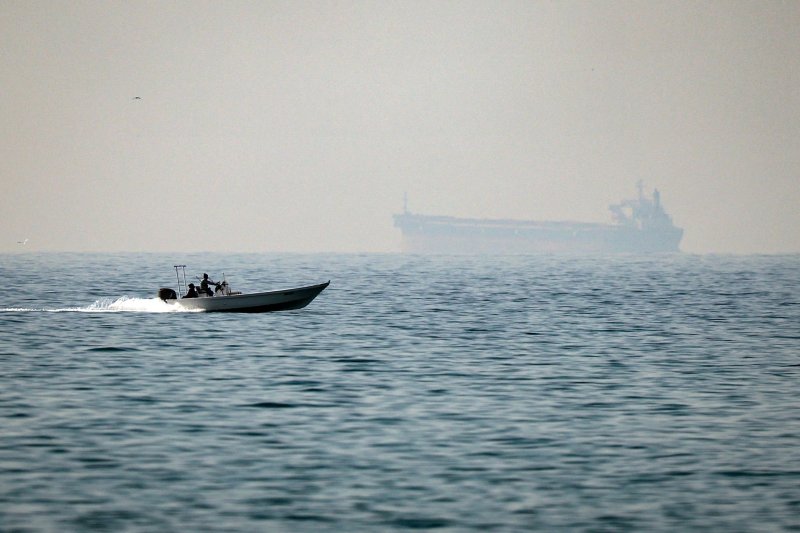
According to The Financial News, concerns are growing that if tensions in the Middle East drag on and crude oil shipments through the Strait of Hormuz decline, China’s economy could suffer a serious blow.
China has long purchased crude oil from Iran at discounted prices, but those supplies have now been cut off, and Beijing is also taking a cautious stance on providing military support.
On the 2nd (local time), Gordon Guthrie Chang, a senior fellow at the Gatestone Institute in the United States, told Fox Business in an interview that rising tensions around the Strait of Hormuz could shock China’s already fragile, export-driven economy.
Chang pointed out that the Iranian crude oil on which China has heavily depended also passes through the Strait of Hormuz.
He noted that China is trying to diversify its sources of crude imports, but warned that any reduction in cheap oil supplies would be bad news for Chinese factories that rely on low-cost energy.
Chang predicted that if the current situation continues, problems will begin to surface in China’s economy in about two months.
On the same day, the Government of Iran warned that all vessels passing through the Strait of Hormuz could come under attack.
Kyle Bass, chief executive officer of Hayman Capital Management, also appeared on Fox Business and said that about 50% of China’s crude oil imports used to pass through the Strait of Hormuz every day, but those flows have now stopped. He added that if the delivery of 10 million barrels is delayed for just one week, it would be impossible to predict the economic outlook.
Zhu Muyou, a Singapore-based crude oil analyst at Kpler, told The New York Times (NYT), "Middle Eastern crude is essential to China’s energy security, and if this crisis drags on, China will not be able to absorb the shock," adding, "This could be a catastrophe not only for China but also for the global market."
According to Kpler, China has built up strategic reserves equivalent to 115 days of oil consumption and also receives crude supplies through pipelines connected to Russia and Kazakhstan.
However, Han Lin of the consulting firm The Asia Group said, "China is trying to offset shrinking export margins by boosting domestic demand, but it will not be able to fully absorb the shock of rising oil prices."
Energy-focused outlet Oilprice.com reported that China tends to import large volumes of crude when prices are low and cut back when they are high. It noted that Beijing bought heavily and stockpiled oil last year when prices were depressed, but this year imports may fall as geopolitical tensions push prices higher.
Alex Holmes, Asia-Pacific director at the Economist Intelligence Unit (EIU), said China had been importing Iranian crude at discounted prices via third countries, but recent statistics show those volumes are no longer increasing.
Wang Yiwei, a professor at Renmin University of China in Beijing, argued that China can absorb the shock of a war involving Iran because it holds massive crude inventories and can also secure supplies from Russia, adding that Beijing is preparing for the worst-case scenario.
Kpler’s data also show that China imported 2.1 million barrels per day of Russian crude last month, 400,000 barrels more per day than in the previous month.
China, a long-time ally of Iran, was caught off guard by the latest military operations carried out by the United States and Israel.
In a statement on the 2nd, the Ministry of Foreign Affairs of the People’s Republic of China warned that the war is spreading to other countries in the Middle East and that shipping lanes in the Strait of Hormuz are under threat, and it called on the United States and Israel to halt their military operations against Iran.
Mao Ning, spokesperson for the Ministry of Foreign Affairs of China, stressed that about 20% of the world’s oil and gas passes through the Persian Gulf and the Arabian Sea, emphasizing that the Strait of Hormuz is a vital corridor for cargo and energy trade.
Amid rising tensions between the United States and Iran last month, The Wall Street Journal (WSJ) analyzed that China is Iran’s largest oil buyer and a crucial market that can prevent Tehran’s collapse under sanctions. However, it added that Beijing does not want to worsen relations with Washington ahead of a planned visit by U.S. President Donald Trump at the end of this month.
The paper also reported that if China were to deepen military ties with Iran in the Middle East, its relations with other Persian Gulf states could deteriorate, which is another reason Beijing is reluctant to offer support.
jjyoon@fnnews.com Yoon Jae-joon Reporter