US Designs a New Order for ‘Energy Hegemony’... Time for South Korea’s ‘Strategic Choice’ [Military World]
- Input
- 2026-03-02 18:38:00
- Updated
- 2026-03-02 18:38:00
■ Iran ‘surgical strike’ scenario
Experts point to signs of spontaneous internal change in Iran as the main reason Washington has ruled out deploying ground troops and instead focused on precision strikes. The Institute for the Study of War (ISW) assessed in a report early last month that “anti-government protests in Iran, led by students and young people, are becoming more organized than in the past and the regime has reached a critical threshold.” The United States has adopted a pragmatic line: it will not intervene recklessly and pay the cost of “nation-building” in countries that show no will to change from within. In this view, US military action is designed to serve as the decisive “primer” that sets off internal corrective dynamics in Iran. This scenario is fundamentally different from the Vietnam War or the Gulf War, when there was little indigenous will for change on the ground.
■ Laying the groundwork for energy hegemony
Washington’s Iran strategy goes far beyond simply reshaping the Middle East order. If Iran were to return to its former status as a pro-US, free nation, the United States would, on top of securing control over Venezuela’s energy, bring within its sphere of influence Iran’s oil reserves, which rank around third or fourth in the world. The Atlantic Council, a key think tank that sketches out the broad contours of US foreign policy, described this in its New Year report as a “major transformation of the global energy supply chain.”
Once the war between Ukraine and Russia ends, if Russia’s energy supply chains also come under Western management, China—whose economy relies heavily on imported fossil fuels—could find itself in a state of strategic suffocation. In its second term, the Trump administration aims to complete an “energy domino” strategy based on conventional energy, thereby blocking China’s economic and military expansion at the source without resorting to direct military conflict. This would amount to a 21st-century equivalent of an oil embargo, a powerful non-military deterrent widely seen as the most reliable card for constraining China’s rise. Iran’s return to normal-state behavior, drawing on the legacy of the Persian Empire, would not only advance the global spread of liberal democracy but also mark the culmination of US global energy hegemony.
■ Risk of Chinese provocations in a crisis
Concerns that China could turn more aggressive as its energy supply chains come under threat are rapidly becoming reality. The Center for a New American Security (CNAS) warned that “authoritarian and dictatorial regimes tend to resort to armed provocations, both domestically and externally, to overcome crises when the strategic environment turns against them,” strongly flagging the possibility of an invasion of Taiwan or armed provocations in the South China Sea. Inside China, rumors of a crisis surrounding President Xi Jinping and reports of friction among powerful military figures have been persistent, and the West is moving urgently to preempt any Chinese backlash aimed at covering up these internal problems. On the 16th and 18th of last month, the United States and Japan conducted the largest-ever joint air drills over the East Sea and the East China Sea, deploying four B-52 Stratofortress bombers. On the 18th and 19th, these forces then moved into the Yellow Sea, linking up with unilateral exercises by United States Forces Korea (USFK) to demonstrate overwhelming strategic deterrence.
According to analyses by US Naval Institute (USNI) News and the RAND Corporation, these exercises form the core of a “preemptive blocking” strategy designed to neutralize expected Chinese provocation scenarios in advance. In particular, the fact that the US and Japan conducted the drills without South Korea was widely interpreted as a strong warning to Beijing that “we are prepared at any time to punish China’s expansion and provocations on our own.”
■ ‘Strategic ambiguity’ vs. ‘strengthening US–ROK–Japan cooperation’
As the US energy encirclement of Iran and China tightens, the Korean Peninsula once again finds itself at a geopolitical crossroads. Some observers even compare the current grave situation to the crisis of the late Joseon period in the late 19th century. Today’s South Korea has far greater real power to shape its own destiny, yet just as the absence of clear strategic positioning led to tragedy back then, modern security experts are warning of the dangers of “strategic ambiguity.”
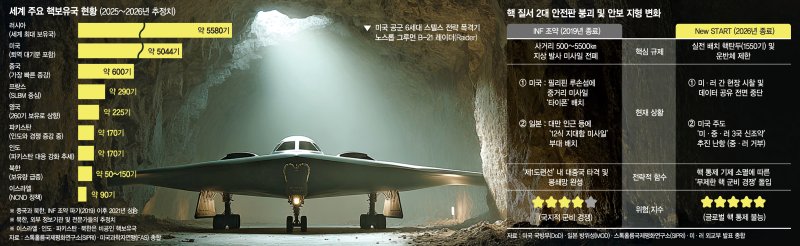
The most worrying prospect is that South Korea could become entrenched in the eyes of others as the “weak link” in Northeast Asian security. Bruce Klingner, a senior research fellow at The Heritage Foundation who reflects the views of US conservatives, delivered a stark assessment: “It is not in the US national interest to share core assets such as the redeployment of tactical nuclear weapons with partners that cannot demonstrate the will to defend themselves or that are moving in a different strategic direction.” He went on to stress the importance of “clarity within alliances,” warning that partners who fail to state their position clearly may find themselves pushed down the priority list for protection in a crisis. Given that this could be read as a guideline for alliance restructuring under the next US administration, the remarks carry significant weight.
■ Strategic cohesion among the US, South Korea, and Japan: the ‘key to survival’
South Korea’s limited participation in recent US–Japan joint air exercises has, according to some assessments, sparked embers of “strategic distrust” in Washington policy circles. Experts warn that drifting away from the core values of the alliance would create security vacuums on the Korean Peninsula and amount to voluntarily relinquishing the deterrent power needed to prevent Northeast Asia from being turned into a battlefield.
In the end, the prevailing view is that the only realistic way to sustain prosperity on the Korean Peninsula and prevent war is to irreversibly strengthen military cooperation among South Korea, the United States, and Japan. This is not merely a matter of any particular administration’s political leanings; it signifies a community of shared destiny with countries that uphold the values of liberal democracy and a market economy. A CSIS report emphasized that “only when South Korea maintains a consistent stance within trilateral cooperation among South Korea, the United States, and Japan will it possess real leverage to deter provocations by China and North Korea in advance.” The core of the National Security Strategy (NSS), which runs through the second Trump administration’s policy line, and the National Defense Strategy (NDS) that operationalizes it for the United States Department of Defense (DoD), is a return to Western Hemisphere–centric thinking in the spirit of the Monroe Doctrine, a focus on containing China, and a framework in which allies bear the “primary responsibility” for their own defense while the US provides only “limited support” such as the nuclear umbrella and other strategic assets. For South Korea to move beyond mere survival and secure real initiative amid this sweeping grand strategy that tightly links energy and security, it must first deepen the substance of its cooperation with the US and Japan. Experts commonly argue that South Korea urgently needs proactive decisions that will solidify value-based solidarity, eliminate security uncertainty, and carry the country through the waves of massive strategic change.
[email protected] Lee Jong-yoon Reporter