Three U.S. military personnel killed for the first time... Trump signals prolonged campaign with "4–5 week offensive" [Middle East under fire]
- Input
- 2026-03-02 18:30:39
- Updated
- 2026-03-02 18:30:39
■ Iran: "We will not negotiate with the United States"
Drone and missile attacks by the Islamic Republic of Iran on 14 United States military bases across the Middle East, including in Bahrain and Qatar, have intensified. At the same time, indiscriminate air raids and missile strikes on six neighboring Gulf states have expanded, raising the specter of a full‐scale regional war across the Middle East.
As the conflict both escalates and shows signs of dragging on, concerns about the global economy are deepening. United States President Donald Trump stated that the current offensive could continue for about four to five weeks. In an interview with the UK’s Daily Mail, he said, "Iran is a large country, so it could take around four weeks, or perhaps less." He also told The New York Times (NYT) that the United States would "continue the offensive for four to five weeks," warning that additional U.S. military casualties were possible.
Having lost its supreme leader and top military command in one blow, the Islamic Republic of Iran appears in no mood to accept Washington’s calls for talks. Ali Larijani, secretary‐general of the Supreme National Security Council (SNSC), declared, "We will not negotiate with the United States," signaling a determination to keep fighting and suggesting that the confrontation between the two camps will not end quickly. After the death of Supreme Leader Ayatollah Ali Hosseini Khamenei, Larijani has assumed overarching authority over Iran’s military and security apparatus.
Even so, a prolonged war would pose a significant political burden for President Trump. According to a poll conducted by Ipsos and others, only 27% of Americans support the attack on Iran. Forty‐three percent oppose it, while 29% say they are "not sure." In addition, 56% believe Trump is too quick to resort to military force. With midterm election season approaching in November, a drawn‐out conflict would inevitably increase Trump’s domestic political risks, making U.S. public opinion a key factor in whether the hostilities continue.
■ Trump: "Until our objectives are achieved"
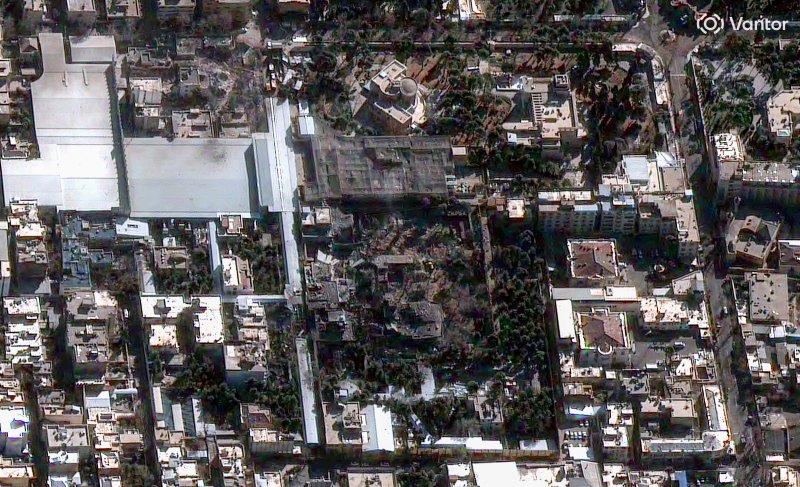
The United States and Israel carried out airstrikes for a third consecutive day. The Israeli military announced that its air force was once again bombing the "heart" of Tehran, the Iranian capital. According to UK daily The Guardian and other outlets, Israel struck IRIB, the state‐run television broadcaster in Tehran, the Revolutionary Court, and Iran’s Ministry of Defense. In a video statement posted on Truth Social, President Trump vowed to continue military operations "until all objectives are achieved." He said the current campaign had effectively decapitated Iran’s military leadership and reported that nine Iranian naval vessels and one naval facility had been destroyed.
Israel also fully scrapped its cease‐fire with Hezbollah and resumed fresh airstrikes and attacks on Hezbollah facilities and key figures inside Lebanon. In a statement on the 2nd, Rafi Milo, head of the Israeli military’s Northern Command, said, "Hezbollah chose the Iranian regime over Lebanon and attacked our citizens," warning that the group would "pay a heavy price." Milo added that "the airstrikes will continue and their intensity will increase." The Ministry of Public Health of Lebanon said that at least 31 people were killed in Israeli retaliatory strikes following Hezbollah’s attacks on Israel.
As Iran’s counterattacks intensified, the United States reported the first fatalities among its forces, saying that three members of the United States Armed Forces (U.S. military) were killed and five wounded in Iranian attacks. United States Central Command (CENTCOM) announced that since the start of the operation, U.S. forces had struck more than 1,000 Iranian targets. Since the outbreak of the war, Iran is estimated to have launched at least 370 missiles and 830 drones toward Israel and Persian Gulf countries.
There were also reports that three to four ships had come under attack in the Strait of Hormuz. According to United Kingdom Maritime Trade Operations (UKMTO), one vessel was attacked about 17 nautical miles northwest of the United Arab Emirates (UAE), and other ships were struck in waters about five nautical miles off Oman.
[email protected] Reporter