"If We Fall, You Fall Too"... Iran Launches Indiscriminate Strikes on Neighboring Gulf Countries [Middle East Under Fire]
- Input
- 2026-03-02 18:30:26
- Updated
- 2026-03-02 18:30:26
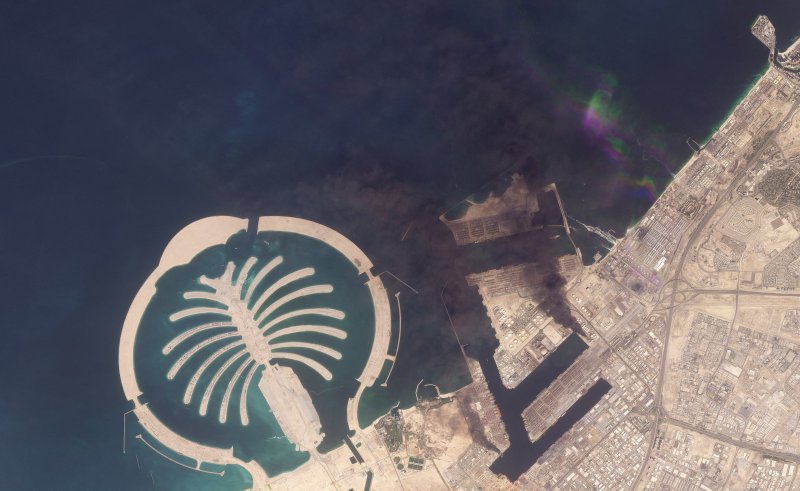
According to foreign media reports on the 2nd (local time), the Islamic Republic of Iran has, since being attacked by the U.S. and Israel on the 28th of last month, launched drone and ballistic missile strikes on major international airports and hotels in Dubai and Abu Dhabi in the UAE, as well as in Kuwait, Bahrain, Qatar, and other neighboring Gulf countries. Air raids by Iran in the capitals of these states—Manama in Bahrain, Doha in Qatar, and Kuwait City in Kuwait—have caused both casualties and property damage. The damaged facilities include hotels and ports.
In the UAE alone, the Islamic Republic of Iran reportedly fired more than 150 ballistic missiles, around 500 drones, and two cruise missiles. These attacks left three people dead and 58 injured. As a result, major airports on the Arabian Peninsula—including those in Dubai, Abu Dhabi, Doha, and Riyadh—were shut down. At Dubai International Airport, which handled the world’s largest number of international passengers last year (about 92 million), columns of black smoke rose after Iran’s drone strikes, and all flights were suspended indefinitely. Four staff members were injured at Dubai International Airport, and one person was killed by debris from an intercepted drone near Abu Dhabi Airport. Airports in Kuwait and Bahrain were also targeted by drones.
According to global flight-tracking site Flightradar24, more than 3,400 flights were canceled in a single day on the 1st at seven airports across the Middle East. The "economic lifelines" of the Gulf countries—heavily dependent on air transport for food imports and the movement of large numbers of foreign workers—have effectively been cut.
In Oman, which had recently mediated efforts to ease tensions between the U.S. and the Islamic Republic of Iran, a drone struck a commercial port, killing one foreign worker. High-rise hotels and commercial buildings in Dubai, as well as residential towers in Bahrain, were also hit by Iranian attacks.
The British Broadcasting Corporation (BBC) reported that Dubai, the largest city in the UAE, suffered Iranian drone and missile strikes for a second consecutive day, damaging Dubai International Airport and luxury hotels such as Fairmont The Palm and Burj Al Arab, and leaving many tourists stranded. Dubai resident Becky Williams told the BBC, "Yesterday, I saw around 15 interceptor missiles from the UAE being launched from behind my house," adding, "You can hear the interceptions taking place in the air."
The United States Central Command (CENTCOM), which oversees U.S. forces in the Middle East, rejected Tehran’s claim that it is only targeting U.S. bases and military assets in Persian Gulf countries in retaliation. CENTCOM said this assertion is "false" and countered, "The Islamic Republic of Iran is actively targeting civilians and has attacked more than 10 locations, including Dubai International Airport, Kuwait International Airport, Iraq’s Erbil International Airport, the Burj Al Arab and Fairmont The Palm hotels in Dubai, the Crowne Plaza Bahrain hotel, residential areas in Tel Aviv, Israel, and residential areas in Bahrain and Qatar."
Officials from the Government of Israel said that compared with June of last year, the individual strikes in the latest Iranian retaliation are less powerful but are being carried out more persistently. A former Israeli security official noted that Iran’s "drizzle-like" retaliatory air raids appear designed to drag Israel into a war of attrition, warning that the current conflict is unlikely to end within a few hours or days. Most of the Islamic Republic of Iran’s attempted retaliatory bombardments are being intercepted by the high-performance air defense systems of Israel and the Persian Gulf states, but some suicide drones and missiles are still managing to penetrate these defenses.