"More magical than AI": The 'WOW' points of the Samsung Galaxy S26 Ultra [1-Day IT Item]
- Input
- 2026-03-03 06:00:00
- Updated
- 2026-03-03 06:00:00
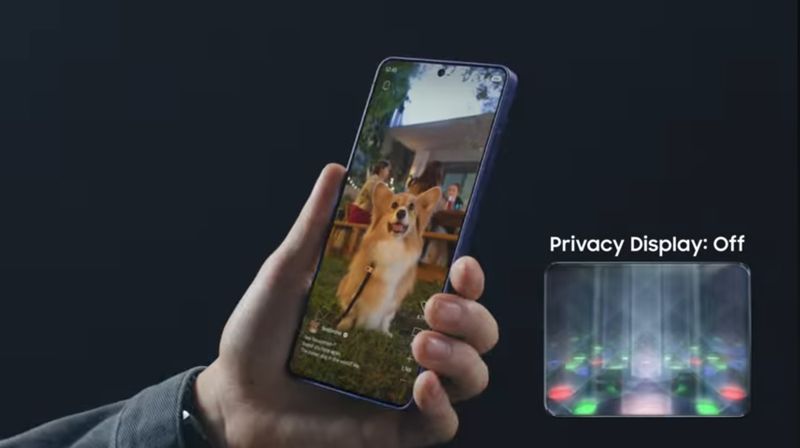
[The Financial News] At the "Galaxy S26 Unpacked" event held on the 25th (local time), what truly stunned people was not the AI features. Instead, the spotlight fell on the Privacy Display built into the Samsung Galaxy S26 Ultra. Among those watching the Unpacked event, reactions included, "This feature feels more magical than AI" and "If I had known about this earlier, I would have held off on changing my phone."

In simple terms, the Privacy Display on the Samsung Galaxy S26 Ultra is like having a built-in privacy screen protector. But describing it that way alone does not do justice to Samsung Electronics' technological leap. A traditional privacy film permanently blocks side viewing angles. By contrast, the Privacy Display lets you selectively block only the areas you want, depending on the situation, and you can turn the blocking function on and off at will. That is why people are calling it "magical." Industry insiders say this represents "a technological gap that even Apple will not be able to close in the short term."
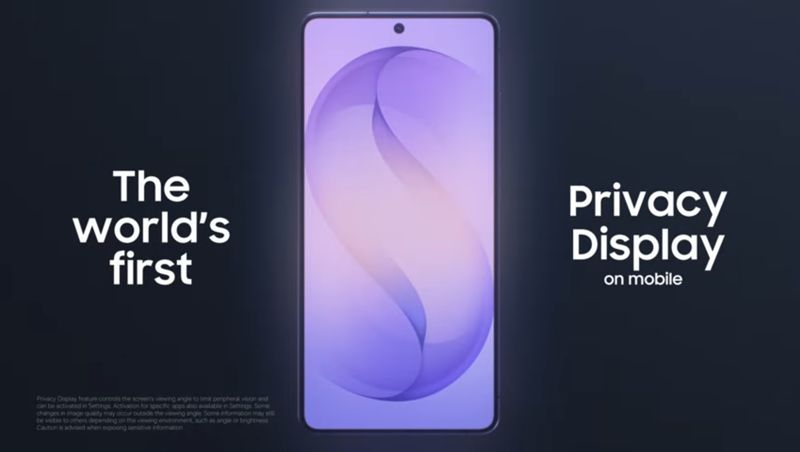
How does it work without a film? The principle of Flex Magic Pixel (FMP)
Conventional privacy films use a physical louver layer to forcibly bend the direction of light. As a result, the screen appears darker and less sharp even when viewed straight on. The Privacy Display on the Samsung Galaxy S26 Ultra, however, is based on Flex Magic Pixel technology, which controls light at the individual pixel level. In short, it works like this.Dual-pixel structure: Each pixel is split into a "Narrow Pixel" that emits light straight ahead and a "Wide Pixel" that spreads light to the sides.Intelligent blocking: When Privacy Mode is activated, the device suppresses the emission from the Wide Pixels and drives only the Narrow Pixels.Result: The user looking straight at the screen still gets the full, intense brightness of 2,600 nits. But for someone viewing from an angle of 45 degrees or more, luminance drops sharply to less than 3.5% of the frontal brightness. In practice, they see almost nothing but a black screen.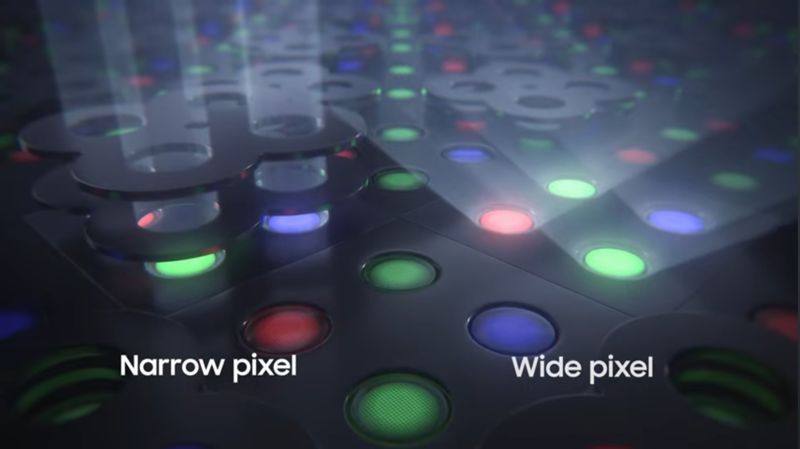
Samsung secures 150 patents over five years
To bring this feature to life, Samsung Electronics has filed around 150 patents since 2020. The biggest hurdles during development were the "blotching" that appeared when the feature was turned on and the increased power consumption. In the early manufacturing stages, image quality deteriorated when the privacy function was activated. When driven purely by software, higher power draw was also flagged as a drawback. After five years of relentless experimentation, Samsung resolved both issues. There are still slight differences in color reproduction, but ordinary users reportedly do not notice a significant gap. The end result can be summarized as follows.Lossless image quality: When the feature is turned off, the display delivers the same rich colors as a conventional wide-viewing-angle panel.Battery efficiency: Because the pixels are controlled directly at the hardware level, the phone actually consumes less battery power when Privacy Mode is on, offering almost magical efficiency.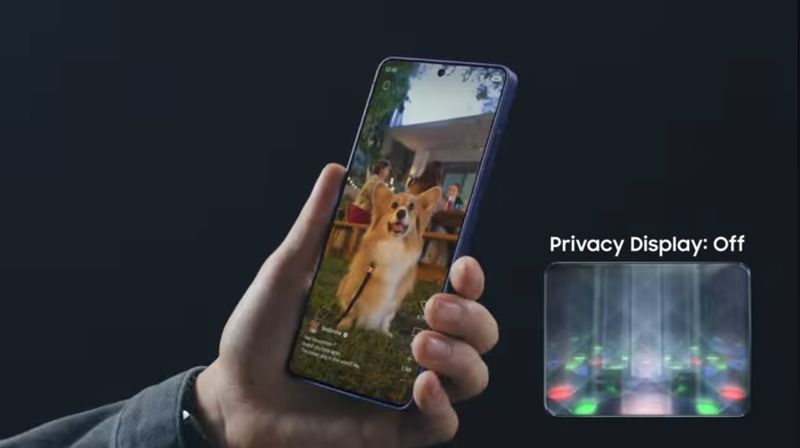
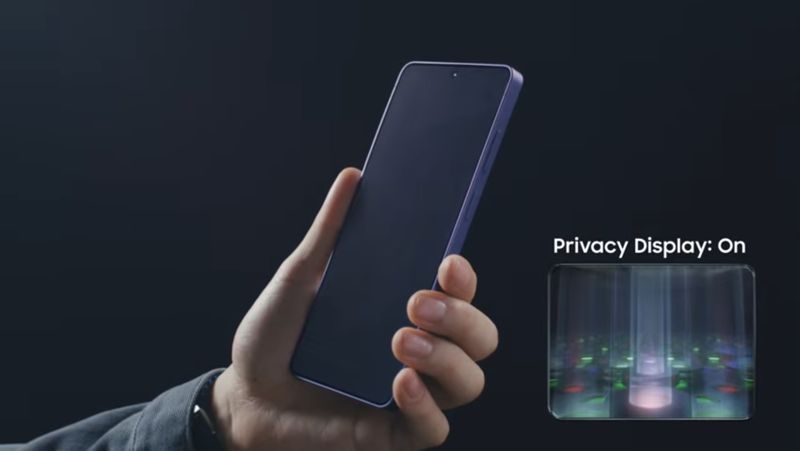
It hides itself — and can dim only part of the screen
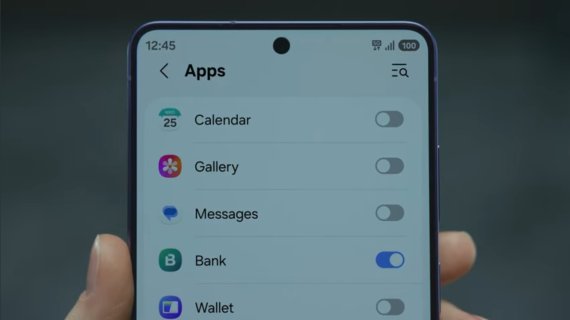
The Privacy Display on the Samsung Galaxy S26 Ultra can be turned on as needed, and you can choose to hide only specific areas of the screen.Context-aware auto activation: If the user sets it up in advance, the front camera and sensors continuously analyze the surrounding environment. When you enter a crowded subway or a busy café, the AI detects this and automatically activates Privacy Mode.When a banking or financial app is launched: The phone automatically switches to a mode that blocks the entire screen from side views.When a message notification appears: Only the top pop-up area narrows its viewing angle so that people nearby cannot read the content.When entering a password: Only the keypad area is selectively shielded to maximize security.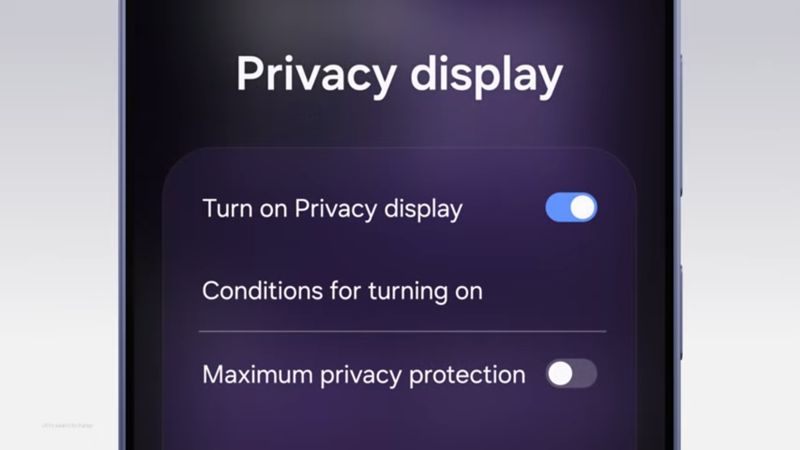
"Apple should adopt this too": Foreign media heap praise
Major foreign outlets, including The Wall Street Journal (WSJ), have been lavish in their praise of the Samsung Galaxy S26 Ultra. Many point out that although Apple has long positioned "privacy" as a core brand value, it now lags behind Samsung when it comes to display-level hardware solutions.WSJ described the Privacy Display technology of the Samsung Galaxy S26 Ultra as a "victory for hardware." The paper wrote, "Apple must follow Samsung’s innovation and adopt secure screen technology as quickly as possible." Chinese manufacturers have also started developing similar technologies, but it is expected to take considerable time for them to overcome the key patent barriers that Samsung Display has already secured, such as ultra-fine pixel-level processing and multi-layer light-shielding structures like the Black Matrix.
[email protected] Kim Sung-hwan Reporter