What’s Next for Bitcoin After the Iran Airstrikes? Expert Says This Is the Key Factor [Crypto Briefing]
- Input
- 2026-03-03 06:00:00
- Updated
- 2026-03-03 06:00:00
[The Financial News] As US airstrikes on Iran heighten global geopolitical risks, attention is turning to how Bitcoin will be affected. Experts point to a "reduction in uncertainty" and "the trajectory of oil prices" as the two most critical factors.
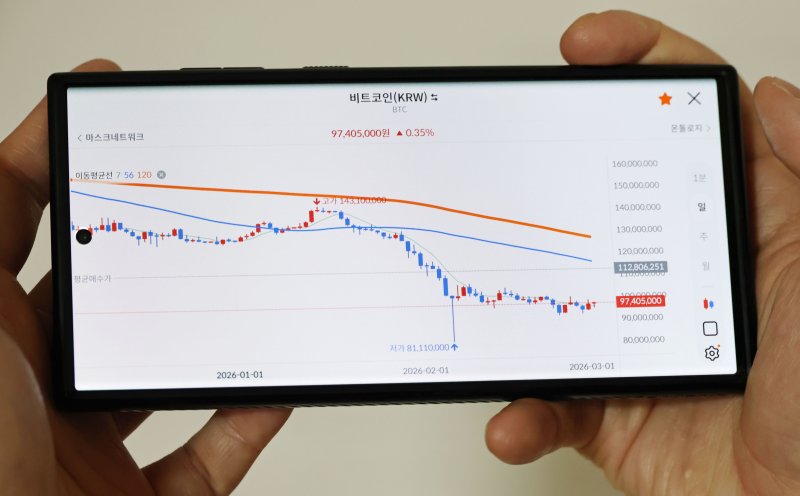
According to global digital asset data platform CoinMarketCap on the 3rd, Bitcoin was trading around the $65,000 level as of 5:05 p.m. the previous day, down 1.66% from 24 hours earlier. Over the past week, Bitcoin has risen 0.09%.
In the Korean won market, Bitcoin is trading around 96 million won. Based on data from global crypto market comparison platform Cryprice, the Korea premium stands at 0.22%.
Bitcoin fell to about $63,000 on the 28th of last month when news first broke of US airstrikes on Iran. However, it later climbed at one point to around $68,000, suggesting that geopolitical uncertainty has not had a major lasting impact.
This is largely attributed to the fact that uncertainty eased early in the crisis as the US quickly struck Iran’s top military leadership. US President Donald Trump announced that Ayatollah Ali Khamenei, Iran’s supreme leader, had been killed just 15 hours after launching the surprise airstrikes on Iran on the 28th (local time).
Ryan McMillan, Chief Investment Officer (CIO) at Merkle Tree Capital, said, "The initial wave of selling in Bitcoin when the Iran strikes began was almost a textbook reaction," adding, "Markets dislike uncertainty more than they dislike bad news. The moment the Iran situation appeared to be contained without a broader escalation, a reflexive wave of buying quickly returned."
Analysts expect that whether war-related uncertainty truly comes to an end will continue to shape market trends. US attacks on Iran and Iran’s retaliatory strikes are still under way, so the situation is not yet fully resolved.
The path of oil prices is also cited as a key driver of volatility. A sharp rise in oil prices could fuel inflation, which in turn may trigger a shift away from risk assets. The Strait of Hormuz, which handles a significant share of global crude oil shipments, is currently under blockade due to the fallout from the Iran strikes, raising the likelihood of higher oil prices.
Pratik Kala, head of research at Apollo Crypto Research, warned, "If oil prices stay elevated, there is a risk that inflation indicators such as consumer prices will come in higher," and added, "That could be negative for risk assets, including Bitcoin."
[email protected] Lim Sang-hyuk Reporter