Iran Without Khamenei, Neighboring States Hit by Missiles and Drones Seethe with Anger: A Middle East in Turmoil
- Input
- 2026-03-02 15:17:57
- Updated
- 2026-03-02 15:17:57
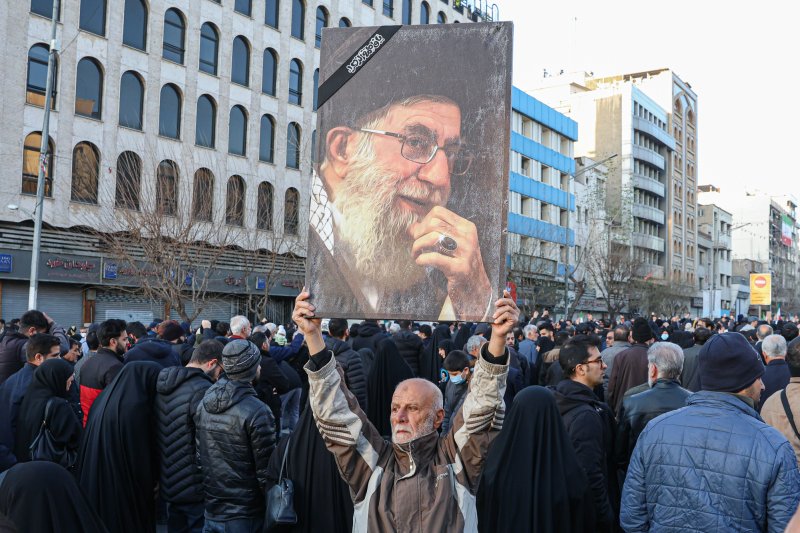
According to Financial News, the death of Supreme Leader Ali Khamenei in a U.S. and Israeli airstrike, and the absence of a clear successor, have become a major source of uncertainty for the stability of Iran and the surrounding region.
Foreign media outlets noted that Iran’s decision to fire large numbers of missiles and drones at countries around the Persian Gulf, causing damage even to hotels and other civilian facilities, was a serious miscalculation that has fueled resentment in those states.
On the 1st (local time), The Wall Street Journal (WSJ), The Washington Times and other foreign media reported that Iran is entering a difficult transition period after the death of Khamenei, who ruled for 37 years. They added that his successor is likely to have weaker authority, overshadowed by the Islamic Revolutionary Guard Corps (IRGC).
Since the 1979 Islamic Revolution, Iran has been ruled by only two supreme leaders.
The recent U.S. and Israeli airstrikes have also killed key military commanders, including IRGC ground forces commander Mohammad Pakpour.
Iran has formed an interim leadership committee of three members, including President Masoud Pezeshkian, which is expected to oversee defense and other key responsibilities until a new supreme leader is chosen.
Under the Constitution of the Islamic Republic of Iran, an 88-member assembly is tasked with selecting the next leader, but no timetable for the vote has yet been set.
The Constitution of the Islamic Republic of Iran stipulates that a new supreme leader should be chosen as soon as possible. However, with ongoing U.S. and Israeli military operations, the process is unlikely to proceed smoothly.
In the meantime, the IRGC has grown so powerful that it wields enormous influence not only in politics but also across the economy.
Mehdi Khalaji, who compiled Khamenei’s biography in 2023, said the next supreme leader may end up being largely symbolic.
Donald John Trump, then U.S. president, said in an interview with The New York Times (NYT) that there were three individuals who could potentially lead Iran in the future, though he did not name them.
He did not answer when asked who those figures might be, or whether there was a chance that Ali Larijani, a pragmatist who previously served as Iran’s chief nuclear negotiator, could emerge as the country’s next leader.
Diplomatic experts warned that Iran’s decision to launch missiles and drones at countries around the Persian Gulf in response to U.S. and Israeli airstrikes was a grave miscalculation.
According to WSJ, Iran fired missiles and drones at a minimum of nine countries, including the Sultanate of Oman and the six Arab states of the Persian Gulf that have been mediating U.S.–Iran nuclear talks. By striking wealthy Persian Gulf nations, Iran appears to be trying to force the U.S. and Israel to scale back the intensity of their attacks.
However, after hotels, ports and airports came under attack, there have been growing calls within these Gulf states for a firm response against Iran.
WSJ reported that countries such as the Kingdom of Saudi Arabia (Saudi Arabia) and the United Arab Emirates (UAE) are unlikely to simply watch Iran’s attacks. It said they may move to strike missile and drone bases inside Iran.
Anwar Mohammed Gargash, diplomatic adviser to the UAE president, condemned Iran’s latest attacks as a shortsighted and irrational move that proves Iran is its own greatest threat, regardless of who becomes the next Iranian leader.
Iran alone launched more than 150 ballistic missiles, over 500 drones and two cruise missiles at the UAE, killing three people and injuring 58.
The UAE has closed its embassy in Tehran and withdrawn its diplomats.
The Financial Times (FT) analyzed that Iran’s tactic of sending large numbers of drones, including low-cost models, against Israel and neighboring states is intended to exhaust their air defense systems.
WSJ reported that as infrastructure in Gulf countries has been damaged and civilians killed, public anger—unlike in June last year—is now directed at Iran rather than the U.S. and Israel, and that these states appear ready to accept a change of regime in Tehran.
Experts note that at a time when tourism, real estate and finance are becoming increasingly important as complements to the oil industry, Gulf states have little desire to live under renewed threat of missile and drone attacks from the Iranian regime.
Saudi political analyst Ali Shihabi suggested that the best-case scenario now would be for Iran to follow a path similar to that of the Bolivarian Republic of Venezuela.
He pointed out that after Venezuelan President Nicolás Maduro was extradited to the U.S. in January, the remaining government began cooperating with Washington. He argued that Iran could likewise avoid chaos and civil war, and instead see the emergence of a modernized but weakened regime, by following a similar course.
Meanwhile, as major airports across the Middle East have been shut down and flights suspended due to Iran’s missile and drone attacks on Gulf states, tourists in the region—including South Koreans—have been left stranded and anxious about how to return home.
The Korean Embassy in Egypt and local Korean community associations have been inundated with inquiries from travelers seeking ways to get back home, and many are reportedly trying to return via alternative routes.
Major airports in Dubai and Abu Dhabi in the UAE, Doha in the State of Qatar, and Riyadh in Saudi Arabia have been closed, and flights operated by Emirates, Etihad Airways, Qatar Airways and other major Middle Eastern carriers have been completely canceled.

[email protected] Yoon Jae-joon Reporter