Cases Keep Piling Up but Offices and IT Systems Lag Behind, Raising Fears of Chaos Seven Months Before Prosecution Is Dismantled
- Input
- 2026-03-03 14:58:02
- Updated
- 2026-03-03 14:58:02
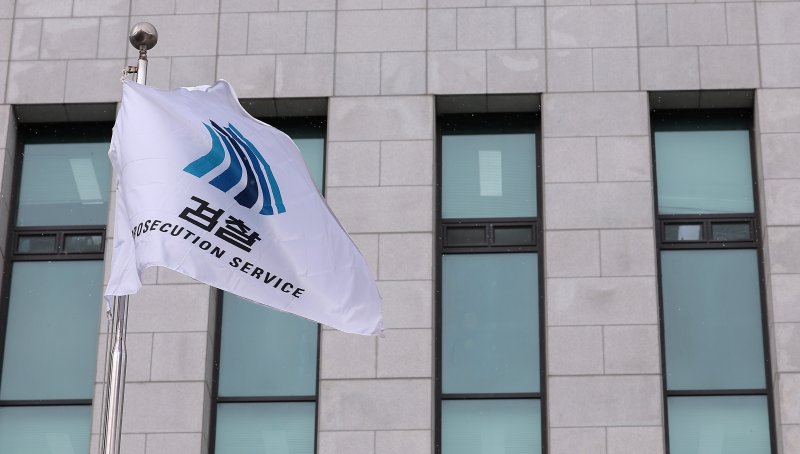
With about seven months left before the dismantling of the Prosecutors' Office and the launch of the Public Prosecution Office and the Serious Crime Investigation Agency, concerns are mounting over both shoddy case handling and inadequate administrative infrastructure. Many fear that, under staff shortages and the de facto October "deadline," a large number of cases will be rushed through, while even basic physical preparations such as securing office space and overhauling IT systems may not be completed in time.
According to the supplementary provisions of the draft Indictment Agency Act released for public comment on the 3rd, once the two new bodies are established, most cases in which prosecutors directly initiated investigations into the six major crime categories—corruption, economic crimes, public officials, elections, defense procurement, and major disasters—must be transferred to the Serious Crimes Investigation Agency or other relevant investigative bodies.
Cases nearing the statute of limitations and those specified by presidential decree may continue to be handled by the Public Prosecution Office. However, even these must be handed over if they are not concluded within six months.
For frontline prosecutors, the fact that the Prosecutors' Office will cease to exist in seven months presents a dilemma. In a situation where their own futures are uncertain, some may feel there is little reason to invest their remaining time and energy in resolving cases.
In other words, some in the legal community predict that prosecutors may simply "hold on to" files and then pass them on to other investigative agencies later. There is also grumbling that, with prosecutors being reassigned one after another to three major special counsel investigations—those involving Kim Keon Hee, alleged insurrection, and Corporal Chae—as well as a second comprehensive special counsel probe, they lack the capacity to pursue investigations even if they want to.
A prosecution official said, "In reality, many of the prosecutors who had reached peak investigative capacity—those with eight or more years of experience and authority to make final decisions—have left for special counsel teams, overseas study, leave of absence, or resignation, leaving most offices staffed only with rookie prosecutors and senior-level prosecutors such as deputy chiefs." The official added, "Because the pace at which a rookie prosecutor handles cases is vastly different from that of an experienced one, even working through the night will not be enough to clear the backlog of unresolved cases."
Another prosecution official noted, "Each prosecutor’s office has 300 to 400 cases piled up, and there is no clear solution either inside or outside the prosecution." The official lamented, "It is unrealistic to rely solely on the personal sense of duty of individual prosecutors."
Even if the Public Prosecution Office ends up using the existing Prosecutors' Office buildings, securing office space for the Serious Crimes Investigation Agency—which is expected to launch as a massive organization with about 3,000 staff—remains a major challenge.
Relocating and installing facilities, as well as overhauling the Korea Information System of Criminal Justice Services (KICS), is also expected to require substantial time and money. KICS is an electronic management system used by criminal justice agencies to create, obtain, store, transmit, and receive criminal justice information. It is used by officials across the prosecution, police, courts, and the Ministry of Justice.
Attorney Kim Jong-min of MK Partners Law Firm, who previously headed the team in charge of building and operating KICS at the SPO, stated, "Overhauling KICS requires not only a great deal of time but also significant financial resources," adding, "Given the sheer volume of pending tasks, it is unclear whether a budget has even been secured for KICS."
Even if these physical preparations are completed, the issue of securing personnel such as investigators will remain. In a survey conducted last December by the Supreme Prosecutors’ Office Prosecution System Reform Task Force, only seven prosecutors—just 0.8%—said they wished to work at the Serious Crimes Investigation Agency.
A legal community source predicted, "Under the current amendment to the Public Prosecution Office bill, the provision that would have given preferential treatment to prosecutors in a dual-track investigator system has been removed, so prosecutors are likely even less inclined to work at the Serious Crimes Investigation Agency."
Meanwhile, the Prosecution Reform Task Force under the Prime Minister's Office is beginning discussions on the issue of supplementary investigative powers for the Public Prosecution Office, which is considered the most contentious aspect of prosecution reform.
Opinions are sharply divided. One side argues that granting Public Prosecution Office prosecutors the authority to order supplementary investigations would undermine the principle of separating investigation and indictment and leave room for arbitrary use of power. The other side contends that if even this authority is removed, it will become difficult to oversee investigative agencies and the state's ability to respond to crime will be weakened. To address this, a joint public forum with the Korean Bar Association (KBA) will be held on the 11th, followed by a comprehensive forum hosted by the Prosecution Reform Task Force on the 16th.
[email protected] Lee Hwan-joo and Kim Dong-gyu Reporter