Battles Intensify While Quiet Talks Continue: U.S. and Iran Seek a Way Out
- Input
- 2026-03-02 12:32:52
- Updated
- 2026-03-02 12:32:52
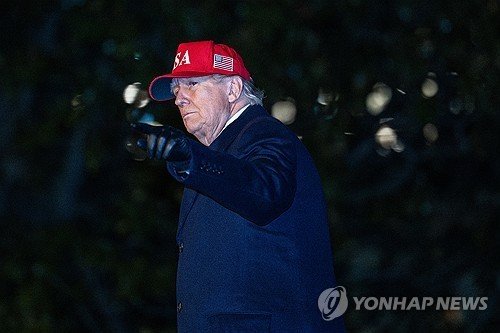
Financial News, New York City – Lee Byung-chulThe United States of America (U.S.) and the Islamic Republic of Iran (Iran) have exchanged attacks for a second straight day, yet neither side has completely shut the door on negotiations. The fighting is escalating on the battlefield, but behind the scenes there are signs of a possible return to talks, creating a dual-track situation. However, with U.S. troops now killed, the war itself is intensifying.
On the 1st local time, President Donald Trump said that the Iranian side had conveyed its willingness to resume negotiations. Major foreign media outlets, citing sources, also reported that Iran has been exploring ways to restore dialogue with Washington, D.C.
In an interview the same day with the U.S. current affairs magazine The Atlantic, Trump raised the possibility of an exit strategy from the current war. He said, "They want to talk, and I agreed to talk. So we are going to talk." At the same time, he pressed Tehran, saying, "They should have done it earlier" and that "they are trying to accept an easy and practical proposal far too late."
He also disclosed that some senior Iranian officials who had previously taken part in negotiations with the United States were killed in the latest airstrikes. This suggests that the negotiation channel itself may be reshaped. With the old negotiating line effectively destroyed, any future talks may unfold under a new power structure.
There were even reports that Iran made the first move. The Wall Street Journal (WSJ), citing Arab and U.S. officials, reported that Ali Larijani, secretary of the Supreme National Security Council of Iran (SNSC), used Oman as a mediation channel to inform the U.S. side of Tehran’s willingness to restart nuclear talks. This came immediately after the United States and Israel launched a large-scale missile strike against Iran.
Larijani is emerging as the key figure who, amid the military confrontation with Israel and the U.S., oversees Iran’s security and military response while also leading the diplomatic track to find an exit from the war. However, he is not part of the three-person leadership structure formed after the death of Ali Khamenei. With a power vacuum following the supreme leader’s death, the negotiation channel itself appears to be undergoing a reorganization.
Experts interpret these moves both as an "urgent diplomatic signal to prevent a full-scale war" and as a "tactical attempt to buy time under military pressure." The assessment is that Iran, which is poorly positioned to sustain a prolonged conflict, is actively searching for a diplomatic way out.
On the ground, however, the fighting is only growing fiercer. In Iran’s latest counterattack, a U.S. military base in Kuwait came under fire, leaving three U.S. soldiers dead and five wounded. Iran’s retaliatory strikes also killed at least nine people in Israel and four more in neighboring Middle East countries.
In a six-minute video statement released that afternoon, Trump expressed condolences for the three U.S. service members killed in the operation and said, "Sadly, there will be more losses before this is over." He added, "There may be more casualties, but we will take every possible step to prevent that from happening."
By expanding its attacks beyond Israel to include countries around the Persian Gulf, Iran may have paradoxically increased the chances that these states will step in as mediators. Kuwait, the State of Qatar, and Oman all host U.S. bases while maintaining diplomatic channels with Iran, making them stakeholders who have no interest in seeing the conflict escalate further.
Trump, facing a midterm election in November, also bears the political burden of a protracted war. His strategy of maintaining military pressure while keeping the door to negotiations open is widely seen as an attempt to manage both domestic and international risks at the same time.
[email protected] Lee Byung-chul Reporter